

1978 Hot Wheels
1978 Hot Wheels Cool One: Green Dragster
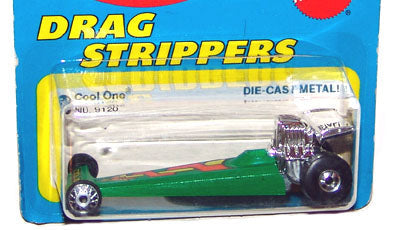
The green 1978 Cool One is a long, low dragster with tiny front wheels and much larger rear tires. The name runs down its nose, while the exposed engine sits behind the cockpit. It is a different casting from the Cool-One ice-cream van introduced decades later.
Reference photograph: green Cool One, item 9120, in Drag Strippers packaging. Photo: South Texas Diecast Collectors.
What the 1978 green car shows
The green release uses yellow, orange and black decoration, chrome interior and engine details, and an unpainted Hong Kong base. Its front and rear wheels are deliberately different sizes. The photograph shows the Drag Strippers card and its printed Cool One name.
Look closely at the narrow nose. The lettering and stripe can lose small sections without the damage being obvious in a side photograph. Ask for a top view with the whole front end in frame.
The casting was already around
Cool One debuted in 1976, so 1978 is the year of this green release, not the first year of the casting. The earlier plum car carries a lightning bolt and Zap decoration. Yellow Inferno uses the same casting with its own name and flame graphics.
That history matters when a loose dragster arrives without a card. Paint and lettering distinguish the releases; a familiar outline is only the starting point. Keep the green Cool One separate from both the plum car and yellow Inferno in your collection notes.
Check the small front wheels first
A bent front axle is easy to overlook behind the body. View the car head-on and from underneath, checking whether both small wheels sit squarely. Inspect the thin front section and the exposed engine for broken details or glue.
The long nose also makes touch-ups noticeable under soft light. Look along its edges for changes in gloss or paint covering worn printing. Describe repairs directly instead of treating an unusually clean finish as proof of originality.
Keep the card with the condition notes
On a packaged example, inspect the blister around the front of the dragster and the larger rear wheels. The reference photo helps identify the release; it cannot establish the condition or authenticity of another car.
Use the used-car checklist for the broader inspection, and compare loose cars separately from unopened examples.

