Ammo ZOMBIE SKIN 20 ML
$6.95
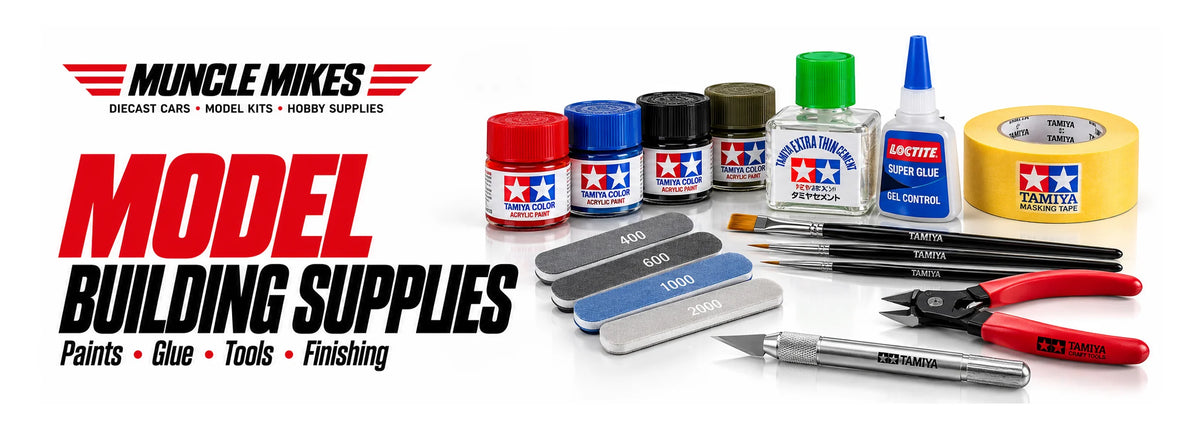
Choose model-building supplies by material, dimensions, and pack contents—not just the model's scale.
Una construcción limpia empieza con los materiales correctos para unir piezas, corregir juntas, añadir detalles, preparar superficies y aplicar el acabado. Esta colección reúne adhesivos, láminas, perfiles, abrasivos, masillas, enmascarado y otros materiales para maquetas, dioramas y ferromodelismo.
Comprueba el material antes de elegir pegamento. Un cemento para plástico compatible no sirve automáticamente para resina, metal, espuma, piezas transparentes o superficies ya pintadas. Haz una prueba en material sobrante, usa una cantidad controlada y respeta el tiempo de curado.
Compara el material, la forma, el grosor, el ancho, el diámetro y la longitud. Las medidas exterior, interior y de pared no son intercambiables. La escala orienta el proyecto, pero no sustituye las dimensiones reales.
Distingue entre una junta elevada, un hueco y una pieza desalineada antes de retirar material. Deja curar los adhesivos y masillas, protege el detalle y avanza hacia granos más finos cuando sea necesario.
Combina estos materiales con herramientas de modelismo, pinturas y acabados y maquetas de plástico. La ficha individual controla el contenido, las medidas y la disponibilidad.
From the first dry fit to the final detail: find adhesives, abrasives, plastic sheet and shapes, masking materials, and finishing supplies for your next model-building project.
Choose by material, dimensions, and pack contents—not just the model's scale.
Match the adhesive to the material, joint, and finish. Understand why clear parts, painted surfaces, and mixed-material assemblies need different decisions.
Tell a gap from a step, correct the fit first, then refine the surface without flattening curves or sanding away panel lines.
Start with the kit instructions. Confirm whether glue and paint are required, then plan the tools for removing, cleaning, and holding the parts. A snap-fit kit and a glue-together kit do not need the same supplies; buy for the actual project rather than assuming every kit needs a full workbench.
No. Plastic cements act on compatible plastics, while cyanoacrylate adhesives form a bonded layer. Choose by the actual materials and the adhesive's directions. Suitability for styrene does not automatically mean suitability for resin, metal, foam, paint, or clear parts.
Compare the material, cross-section, thickness, width, and length with your plan. For tubing, distinguish inside diameter from outside diameter. Check the measurement units and the number of pieces in the pack. The model's scale alone does not identify the stock size you need.
Choose for the defect and the surface. Use the least aggressive abrasive that will correct the problem, then refine the scratches with finer grades. There is no single sequence for bare plastic, filler, paint, and clear parts. Follow the product directions and protect raised detail and surrounding contours.
No. The collection artwork represents the category. Each product listing identifies the item and package contents being sold. Glue, paint, tools, and model parts are not included together unless the listing explicitly says so.