

1986 Hot Wheels
Hot Wheels Jeep CJ-7: White, Yellow and Roll Patrol Guide
White paint does not identify a Hot Wheels Jeep CJ-7 by itself. The hood graphic, interior, windshield surround and wheels separate several similar releases. This guide puts the white, yellow and olive versions together so you can compare the actual details instead of jumping between year pages.
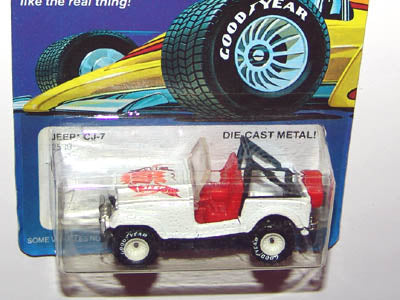
Header photo: the white 1986 Real Riders Jeep CJ-7, item 2539. Reference photographs below are from the South Texas Diecast archive unless otherwise credited; original watermarks are retained.
White 2539: blackwalls and Real Riders
The 1986 white Jeep has ribbon-style hood decoration. Item 2539 appears with standard blackwall wheels and with white-hub off-road Real Riders. The Real Riders entry specifies a red interior and clear glazing. These are wheel and package comparisons within the same CJ-7 family.

The header photograph shows the white-hub Real Riders version. Compare the tires as well as the hubs: rubber tires and a familiar body do not rule out an aftermarket swap. Keep a close-up of each wheel face with the underside photograph.
A white 2539 with maroon-and-orange hood decoration and off-road wheels is also listed for 1989. That short entry does not make every white example a 1989 car. The photographs here identify the earlier packaged examples; an exact later package claim needs its own evidence.
The 1988 white and yellow cars

White item 3953 has an eagle hood graphic, black interior and blackwalls. The reference describes no white windshield frame. That is not an instruction to accept a broken windshield: check the remaining glazing and attachment points for cracks or glue.

The yellow 3954 has ribbon-style hood decoration. A yellow body alone does not establish a promotional release or a Real Riders version. Ask for an overhead view in neutral light so the graphic and cabin remain visible.
Olive Roll Patrol: the package matters

The olive Action Command release uses the Roll Patrol name and item 9375. Black wheel variants are documented. The loose photograph shows the camouflage, green seats and black roll bar, but cannot establish which package a different loose Jeep originally came from.

The 1990 collector #12 entry also uses item 9375: olive body and base, camouflage hood, green interior and black blackwalls. Those shared features are why an olive loose car needs more than a color match for an exact-year label.
Inspect the open body before paying for condition
Look at the windshield, roll bar, rear spare and cabin from above and behind. Check thin parts for missing ends, cracks and adhesive. Ask whether any interior or glazing pieces were transferred from another car. Do not assume a removable roof or an accessory is included because another manufacturer’s Jeep supplies one.
A clear front view helps show an uneven axle or a wheel sitting too far into its arch. On a Real Riders example, inspect tire splits and flat spots without pulling the rubber off. Document replaced parts even when the repair looks tidy.
Keep the later Trailbuster separate
The original CJ-7 family began in 1982. The 1991 rework belongs to the Trailbuster and later Roll Patrol family. The reused name can conceal a different body, so match the casting before applying a year or series description.
Use the loose-car checklist to keep condition, repairs and packaging in separate notes. These photos illustrate identified reference examples, not a promise that an offered car has the same parts or history.
Jeep CJ-7 inspection workflow
Use a repeatable sequence: verify white, yellow and olive finishes, roof or roll-bar details, wheels, graphics and base. Identify each pictured Jeep independently instead of combining details from several releases. This keeps identification evidence separate from condition, seller claims and asking price.
- Identity: record the casting or vehicle name, visible decoration and base evidence.
- Condition: photograph both sides, the top, base and the specific moving or projecting parts named in this guide.
- Comparison: match the same release and component configuration; do not use a merely similar color or body as proof.
For a loose example, note wheel alignment, paint loss, glazing, interior and base wear separately. For packaged examples, inspect the toy and the package as two objects: a clean card does not prove an untouched car, and an original car can survive in a worn package. Ask for missing views before purchase rather than filling gaps with assumptions.
Continue with the loose Hot Wheels path. Product availability can change, so the collection is a shopping route, not evidence that any historical version is currently in stock.

