

Guías para coleccionistas
Model Train Yard Design for Beginners: Build a Yard That Works
A yard is more than several parallel tracks. A useful yard gives the switcher somewhere to work, gives cars a reason to move and avoids forcing every classification move onto the main line.
Decide what the yard is supposed to do
A storage yard, classification yard, passenger terminal and engine facility have different track needs. Define the job before adding turnouts.

The ladder controls capacity
The turnout ladder is the sequence that fans one route into several tracks. Compact turnouts save length, but gentler turnouts are friendlier to long cars and locomotives. Use the actual manufacturer's geometry when laying out the ladder.
Give the switcher a lead
A yard lead lets the switching locomotive pull cuts of cars clear of the ladder without repeatedly entering the main. The lead should be useful for the train lengths you plan to classify.
Keep classification tracks reachable
Long tracks are not automatically useful if the ladder geometry wastes half their length or creates tight S-curves at the entrance.

Plan arrival and departure moves
If through trains will enter the yard, decide where locomotives can arrive, cut off and leave without trapping the switcher.
Test with full-length cars before fastening track
Push the longest cars through the ladder slowly in both directions. Yard problems often appear during pushing moves before they show up during ordinary forward running.
MM's #4 vs #6 turnout guide explains turnout geometry, while the freight-car guide helps plan traffic. Browse model trains and rolling stock for the yard you intend to operate.
Three yard-design mistakes to avoid
First, do not make every classification track a different awkward length simply because the ladder was squeezed into the corner. Second, avoid placing the only yard lead where every switching move blocks the main. Third, do not add more parallel tracks than your turnouts and aisle access can actually support.
A smaller yard with clear functions usually operates better than a dense fan of track with no room to switch. Draw sample moves on paper—arrival, classification, locomotive escape and departure—before buying the final turnout count.
Leave room for actual switching work
When sketching track, draw a typical cut of cars at scale instead of treating every track as an empty line. Couplers, locomotive length and clearance at the ladder determine whether the plan functions. A yard that works with paper rectangles is much more likely to work with real rolling stock.
Current examples to compare
Use these current listings as concrete examples while applying the buying checks above. Compare the exact listing rather than assuming every release has the same packaging, finish or condition.
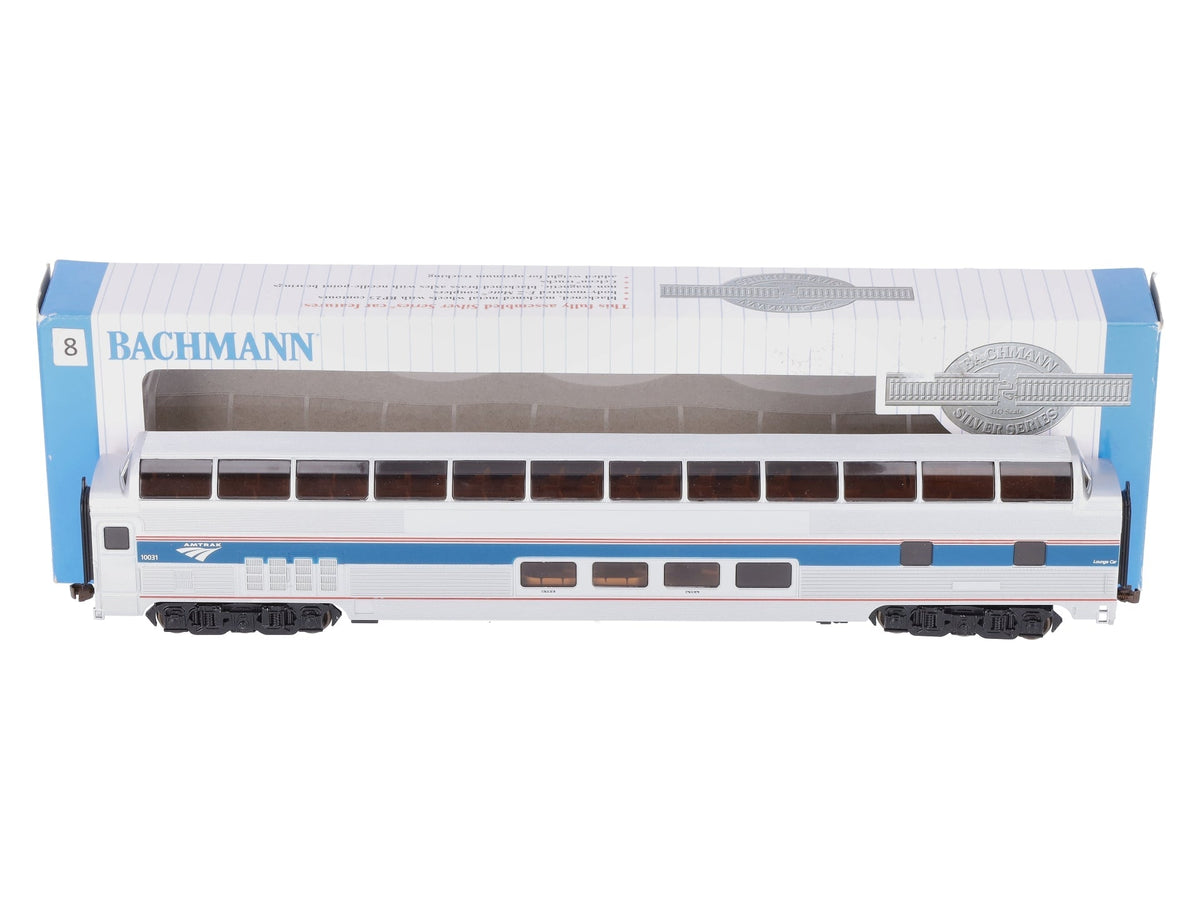
- Bachmann HO Scale Amtrak 10031 Phase VI 85-Foot Budd Full Dome — review the current product page for the exact version, condition, availability and included details.
- Bachmann HO Scale Pennsylvania 3158 250-Ton Steam Crane and Boom Tender — review the current product page for the exact version, condition, availability and included details.

