

Guías de Modelos Diecast
Hot Wheels for Sale: Find the Exact Casting and Release
To find the Hot Wheels car you actually want, match the vehicle, version and condition before comparing listings. A familiar model name or a matching paint color is only the beginning: wheels, graphics, packaging and any stated modifications can separate two otherwise similar cars.
Decide how the purchase will join your collection. Keeping a car in its original blister, displaying it loose and starting a custom build create different requirements. That choice tells you which photographs and package details deserve the closest look.
Identify the car and then the release
Record the full casting name—the vehicle design represented by the miniature—followed by the visible color, decoration and wheel design. Add the series, item number and release information when the listing or packaging establishes them. Keep the vehicle name separate from the toy’s release information; do not fill a missing release year from a year embedded in the car’s name.
For an unpackaged car, compare the base markings with the body and the photographs. A base photo adds evidence, but one marking alone is not a complete release identification. If you need a particular factory version, ask for the missing view or reference before treating two listings as interchangeable.
Choose the format that fits your collection
| Format | Why choose it | What to check |
|---|---|---|
| Loose car | Display and handle the miniature without keeping a retail card. | The actual car’s condition, whether it rolls as described, and any accessories included. |
| Car on its retail card | Keep the vehicle and its packaging together. | Card edges, corners, hanger, blister clarity and seal; a package photo should show the exact item. |
| Finished custom | Choose a particular modified appearance or wheel setup. | Which changes are disclosed and what the photos show; do not record it as an untouched factory variation. |
| DIY custom kit or separate wheel set | Buy parts for your own project. | The exact contents, assembly work and fit. A wheel set is not a complete car. |
A loose car can suit a display even when its original packaging is absent. A packaged car can suit a collector who wants the card artwork and series information as well as the vehicle. Neither format guarantees a particular condition: inspect the item being sold rather than relying on a broad label such as “collectible.”
Read the photographs as a condition report
Begin with both sides and the top. Look for paint chips along edges, marks on the roof and windows, uneven decoration and wear on the wheel finish. Then inspect the base and axles when those views are available. For a carded item, look beyond the front artwork to the corners, back and blister attachment.
Use the description to distinguish an observed defect from a detail the photograph cannot settle. Reflections can hide a scratch, and a still image cannot prove smooth rolling. If rolling matters for your intended use, seek a specific condition statement instead of assuming that an attractive display photo is a running test.
A loose NSX example
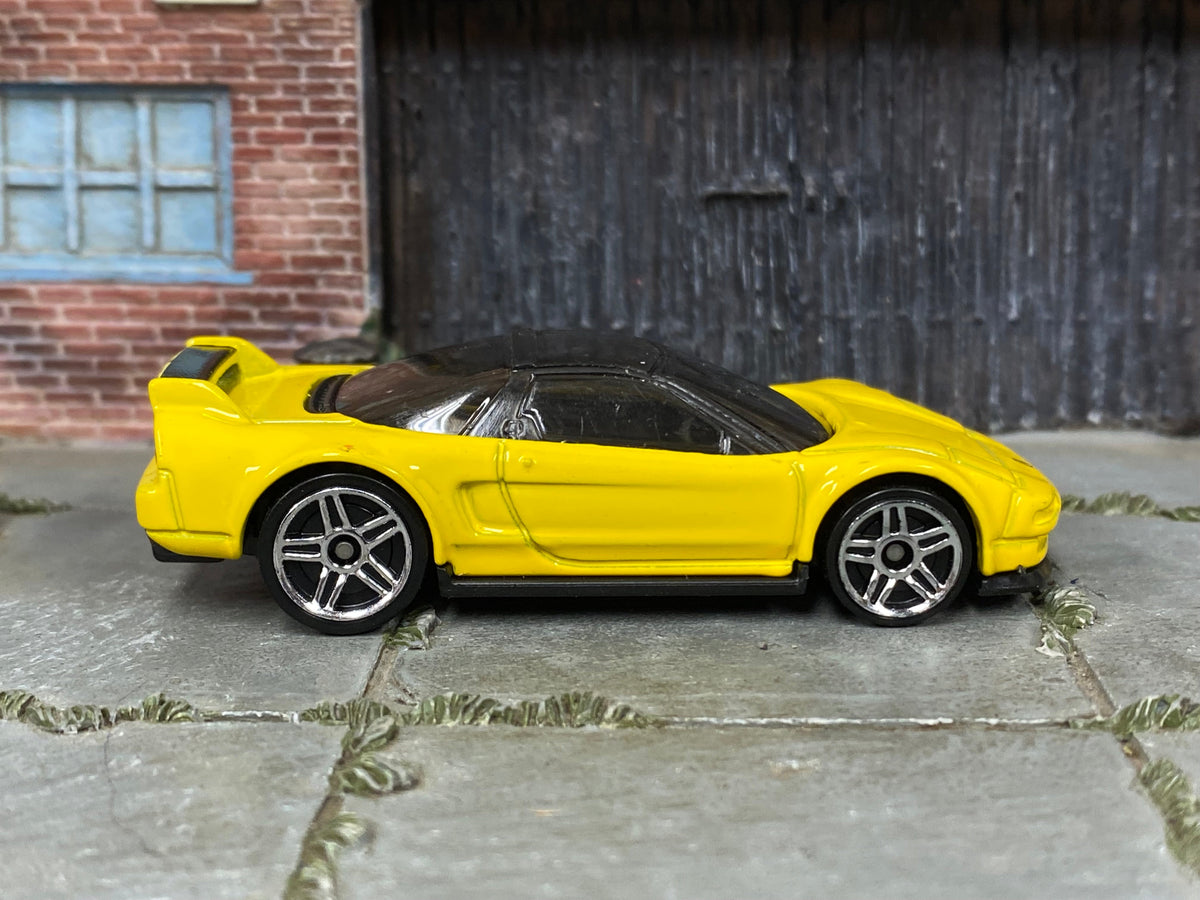
The yellow NSX shown here demonstrates how to narrow a broad search to an individual listing. Its useful identifiers are the ’90 Acura NSX casting, yellow body and silver wheels; its loose format and stated wear belong in the purchase decision as well.
Hot Wheels ’90 Acura NSX — yellow with silver wheels

This listing is for one loose, unpackaged car. It describes window and roof scuffs, paint chips and body marks, and wear on the wheel finish. Review all three photographs for the visible condition; original packaging and display scenery are not included.
Use this as a condition-comparison example, not as a reference for every yellow NSX release. The listing does not establish a particular release year or rarity claim. If one of those details is essential to your collection, resolve it before buying.
Keep a useful collection record
Save the listing name, your identifying notes, the package format and condition photos together. Record disclosed custom work separately from factory release information. This helps you distinguish an intentional color variation from a duplicate purchase and remember why you chose a particular example.
For a display tray or case, check the actual car or packaged item against the usable compartment dimensions. Leave room to remove it without rubbing the sides. A scale label alone is not a measurement of the card, blister or storage space.
Questions before you buy
Are two cars with the same name and color the same release?
Not necessarily. Compare the wheels, graphics, base details and any series or item information that survives with the car. If the evidence is incomplete, describe what is visible and leave the exact release unconfirmed.
Does a loose Hot Wheels listing include the original card?
Check the stated contents. The NSX example above is explicitly sold without original packaging. Do not treat a photograph of display scenery or another package as an included accessory.
How can I compare a custom with a factory car?
Compare the appearance and condition you want, then identify the disclosed modifications. A repaint or wheel swap is part of a custom’s description; it does not by itself establish an original factory variation.
Which photos should I request if condition is unclear?
Ask for the specific missing area: the opposite side, roof and windows, base and axles, or card corners and blister seal. A targeted view is more useful than another wide shot of the same side.
Browse loose Hot Wheels cars to compare individual castings and condition descriptions. The diecast model guides offer more help with scale and display choices. You can also read this guide in Spanish.

