

Guías de Trenes en Miniatura
N Scale Trains: Track, Curves, Control and Small-Space Plans
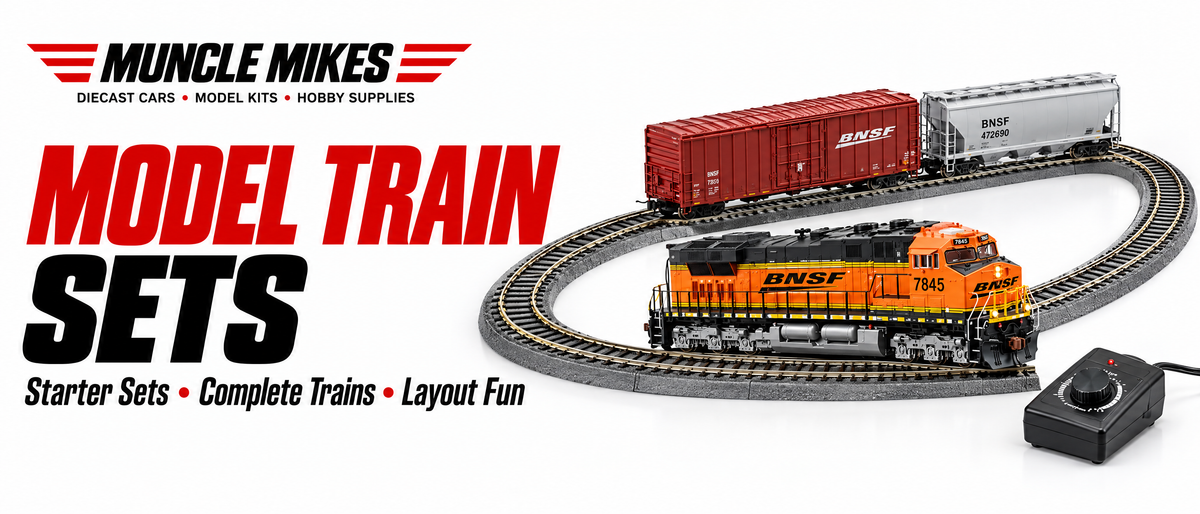
N scale trains fit long runs, yards and scenery into less space than HO, but the smaller format makes track quality and reliable pickup especially important. In North America, N scale is commonly around 1:160; other markets can use nearby scale ratios. Use the exact manufacturer's scale and gauge description for each product.
The phrase includes locomotives, rolling stock, track, structures, vehicles and complete sets. The existing N-scale starter-set guide focuses on first sets; this page covers the wider railroad.
Plan the railroad around reach and curve radius
N scale makes more layout possible, but it does not remove the need for access. Keep every turnout and hidden section within comfortable reach. Use the longest planned cars and locomotives when selecting curve radius, not only the short equipment that came with the first set.
Broader curves improve appearance and can reduce operational stress. Leave clearance for overhang on parallel curves and near structures.
Choose one track system for the core layout
| Component | What to match | Why it matters |
|---|---|---|
| Track | Brand, rail profile, roadbed, connectors and curve geometry | Similar-looking sections may not join cleanly. |
| Locomotive | Control type, minimum curve and coupling system | Determines operation and compatible trains. |
| Rolling stock | Coupler height, wheel gauge, car length and era | Affects reliability and visual consistency. |
| Structures | Scale, footprint and platform clearance | Prevents oversized scenes and contact with trains. |
| Road vehicles | Scale ratio and purpose | 1:148 or 1:160 products may suit different regional contexts. |
KATO, Micro-Trains Line and Minitrix are current MM collection paths, but brand alone does not establish direct track or coupler compatibility with another system. Read the exact product.
Keep track and wheels exceptionally clean
Small contact areas make dirt, oxidation and poor rail joints more noticeable. Follow the track and locomotive maker's cleaning instructions. Avoid fibers, excess liquid and aggressive abrasives that can remain on the rail or damage finishes.
Check wheelsets for free rolling and proper seating. When a locomotive stalls in one location, test another locomotive or powered car before assuming the motor is at fault.
Plan control before buying several locomotives
Know whether the layout will use conventional DC, DCC or another system. DCC-ready and DCC-equipped are different labels. Decoder space, installation requirements and current draw vary, so use the exact locomotive documentation.
A simple DC starter loop can be the right first step. Upgrade only when the operating plan requires independent locomotive control or additional functions.
Use the smaller scale to tell a larger story
N scale excels when track, scenery and long trains share the scene. Plan industries, stations and staging before filling every open area with structures. Preserve access to turnouts and rerailing points.
Browse KATO, Micro-Trains Line, Minitrix, starter train sets and model-train structures.
Test turnouts and couplers at slow speed
Turnouts expose alignment and electrical problems that a simple oval can hide. Push each car through by hand, then run the shortest and longest wheelbases at slow speed in both directions. Watch the points, frog and guard rails rather than increasing speed to force a car through.
Coupler height and free movement matter in switching. One dragging trip pin or stiff coupler can pull a light N-scale car from the rails. Correct the individual car before blaming the whole layout.
Frequently asked questions
What scale is N scale?
It is commonly around 1:160 in North America, while some markets use nearby ratios. Use the exact product label for the model and accessories.
Is N scale good for a small room?
It can fit more railroad into a compact area, but the plan still needs access, safe edges and suitable curves.
Can I mix N scale track brands?
Only with verified mechanical and electrical compatibility or proper transition pieces. Do not force unlike roadbed systems together.
Why does an N scale locomotive stall easily?
Dirty rail, poor joints, wheel contamination, pickup issues and tight geometry can all matter. Diagnose the track and locomotive separately.

