

Hot Wheels: historia y coleccionismo
Larry Wood's Hot Wheels Legacy: Tri-Baby, Thunder Roller & Bone Shaker
Larry Wood's contribution to Hot Wheels is best explored through the designs themselves. A futuristic car, a heavy truck and a skull-grille hot rod offer three different ways to see his work. This is a design-history guide, not a product called The Legacy of Larry Wood.
Tri-Baby marks the beginning
NHRA’s 2026 firsthand interview records Wood joining Mattel in 1969 and describes Tri-Baby among his early designs. It also connects his work with Bone Shaker. Keep the career account separate from the exact retail edition you collect.
For a collection, distinguish the first casting from later editions celebrating it. An anniversary model can represent the same design story without being an original example from the first production period.
Thunder Roller brings the idea to a big rig
Mattel credits Wood with designing Thunder Roller in 1983. Its later GXJ26 special edition revisits that truck, illustrating the difference between a design's introduction and a subsequent collector release.
A designer display need not contain only passenger cars. Compare silhouettes and the way different vehicle types fill the available shelf space.
Bone Shaker creates a recognizable hot-rod profile
The exposed-engine and skull-grille design offers a different visual direction from the earlier examples. Choose a particular factory edition or a disclosed custom rather than assuming every Bone Shaker has the same wheels and construction.
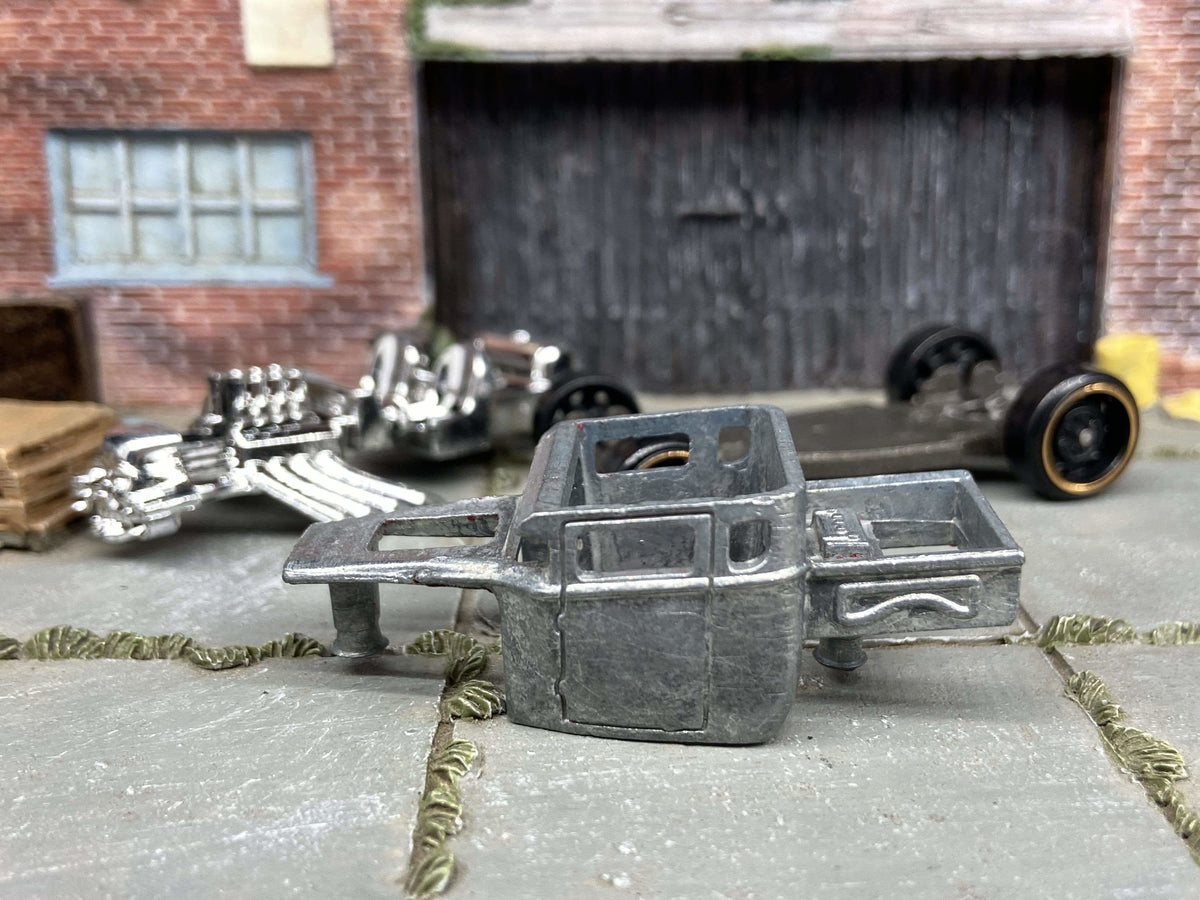
The header shows the store's prepared Bone Shaker donor. It is an aftermarket project starting point, not Wood's personal car or a factory development sample.
The designer's work extends beyond one brand
Wood's own biography lists projects involving Toyota, show cars and other automotive work, and records the launch of Larry Wood Design in 2023. His design history is broader than the miniature cars most collectors first encountered.
Keep the credited role and project attached to each source. A real-car design, toy casting and later decorative edition can involve different contributions.
Build a collection with traceable credits
Record casting name, exact release, condition, package and the source of the designer attribution. A signature on an outer protector should not be described as a signature on the original car or card.
Use the designer-event guide for recording an encounter. The personal meaning of that experience is separate from a resale estimate.
Choose the example that fits your purpose
Browse loose cars for a vehicle-focused display, carded releases for packaging or finished customs for an aftermarket interpretation. A thoughtful selection of documented designs tells a clearer story than an unverified all-time ranking.
Build a designer display with contrasting silhouettes
Choose a small number of documented Wood designs that show different ideas, rather than treating every popular Hot Wheels as his work. Describe what you can see: body proportions, exposed components and the relationship between the wheels and body. Keep that visual comparison separate from the release-history source.
For each position, record the exact edition actually displayed. A donor, restoration and factory collector version should retain their respective descriptions. If a signature is part of the collection, note the object signed and the circumstances separately. A design-focused shelf can honor a creative career while remaining clear about later contributions, current condition and the aftermarket work added by somebody else.
Photographs for the comparison


