

Matchbox: historia y coleccionismo
How to Tell Matchbox and Hot Wheels Apart: Read the Marks
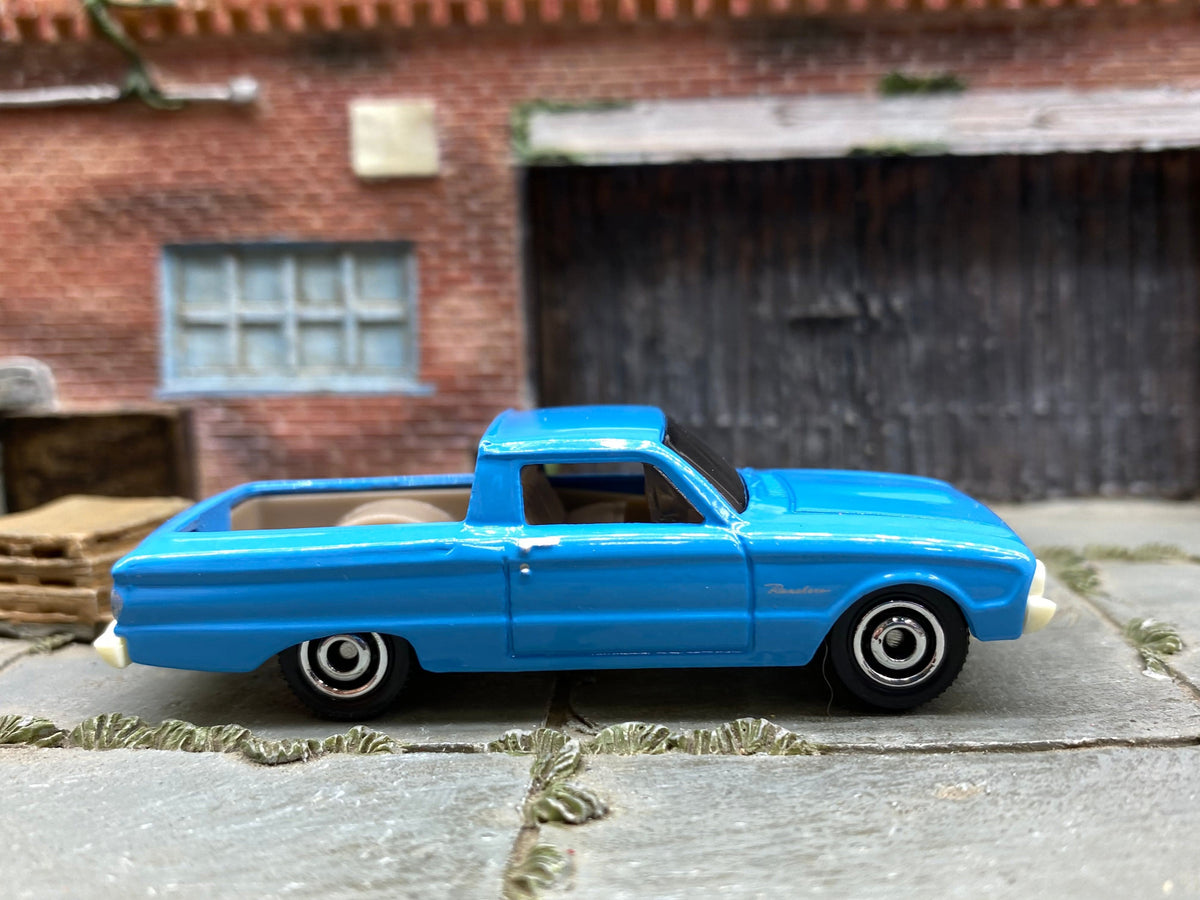
The toy-brand mark is a stronger starting point than style.
A realistic body, bright paint or large wheel is not a brand certificate. Photograph the miniature's readable marks, then compare its body and packaging with an identified product record. Keep the brand question separate from the exact release, originality and condition.
The featured light-blue Matchbox Ranchero and the product photos below compare identified offers, not a visual rule that can classify every unmarked car.
Read the underside without damaging it
Support the car gently and photograph the whole base in clear light. Copy the toy brand, maker wording, casting name, country wording and readable codes exactly. Keep illegible fields unknown; do not scrape finish or dismantle an original to uncover a mark.
A Ford or Mercedes-Benz badge names the full-size vehicle subject, not necessarily the miniature maker. Likewise, a copyright date is not automatically the particular toy's release year. Preserve each mark in its own field rather than compressing everything into one guessed label.
Mattel alone does not distinguish these brands
Mattel's own catalog contains both Matchbox and Hot Wheels products. A Mattel reference therefore identifies a parent-company connection without settling which of those toy brands made your car. Look for the specific brand wording and a matching casting record.
For older examples, retain historical maker wording such as Lesney when it is actually observed. Do not replace the inscription in your collection notes with a modern company label. An exact transcription remains useful when you later examine an older reference.
| Field | Keep separate from |
|---|---|
| Toy brand or maker mark | Full-size vehicle badge and modern parent-company wording |
| Casting name and shape | Exact color release or catalog year |
| Base and body match | Assumption that all parts are factory original |
| Wheels and alterations | A visual shortcut for the underlying brand |
| Package identity | Proof that a loose car belongs with a nearby card |
| Confidence and unknowns | A sales claim stronger than the available evidence |
Compare the whole casting, not one familiar name
Use window shapes, grille, bumpers, body openings and proportions to match an identified example. A familiar real-car name can cover different miniature castings. A replaced base or altered assembly can also make the marks and visible body disagree.
If the body and base do not match your reference, record the mismatch. Do not force an identification simply because one word is recognizable. Clear front, rear, side and underside photos are more useful than a distant mixed-lot image.
Three catalog examples show why branding and appearance are separate


A supplied package needs its own match
Read the package brand, casting name and product identifiers, then compare them with the enclosed or accompanying car. An unrelated card beside a loose car does not transfer its identity to the car.
For a used offer, ask whether packaging is original, reproduced or supplied separately. Establish car-to-package consistency separately from the originality of the vehicle. A matching package does not prove that wheels, paint or other components have never been changed.
When the mark is missing, keep the conclusion provisional
Gather all six views and compare distinctive features against documented examples. Include approximate measurements when useful. Ask a knowledgeable collector for the evidence behind an identification, not merely a confident brand name.
If evidence remains insufficient, use “brand unconfirmed” in the record. That is more useful than an incorrect label copied into a later sale. Use the early Matchbox checklist after the first brand inquiry when a find appears historical.
Identify before making the buying comparison
Once brand and casting are supported, compare condition, supplied contents and known modifications in loose Matchbox, loose Hot Wheels or finished customs. For a display project, the diorama comparison answers scale and fit questions rather than brand authentication.
A good label states what the evidence establishes.
Read the mark, match the casting and document any disagreement. Then identify the particular release and condition without using realism, heft, speed or wheel material as substitutes for the record.

