

Matchbox: historia y coleccionismo
Lesney No.26 GMC Tipper: Bed Present vs. Chassis Only
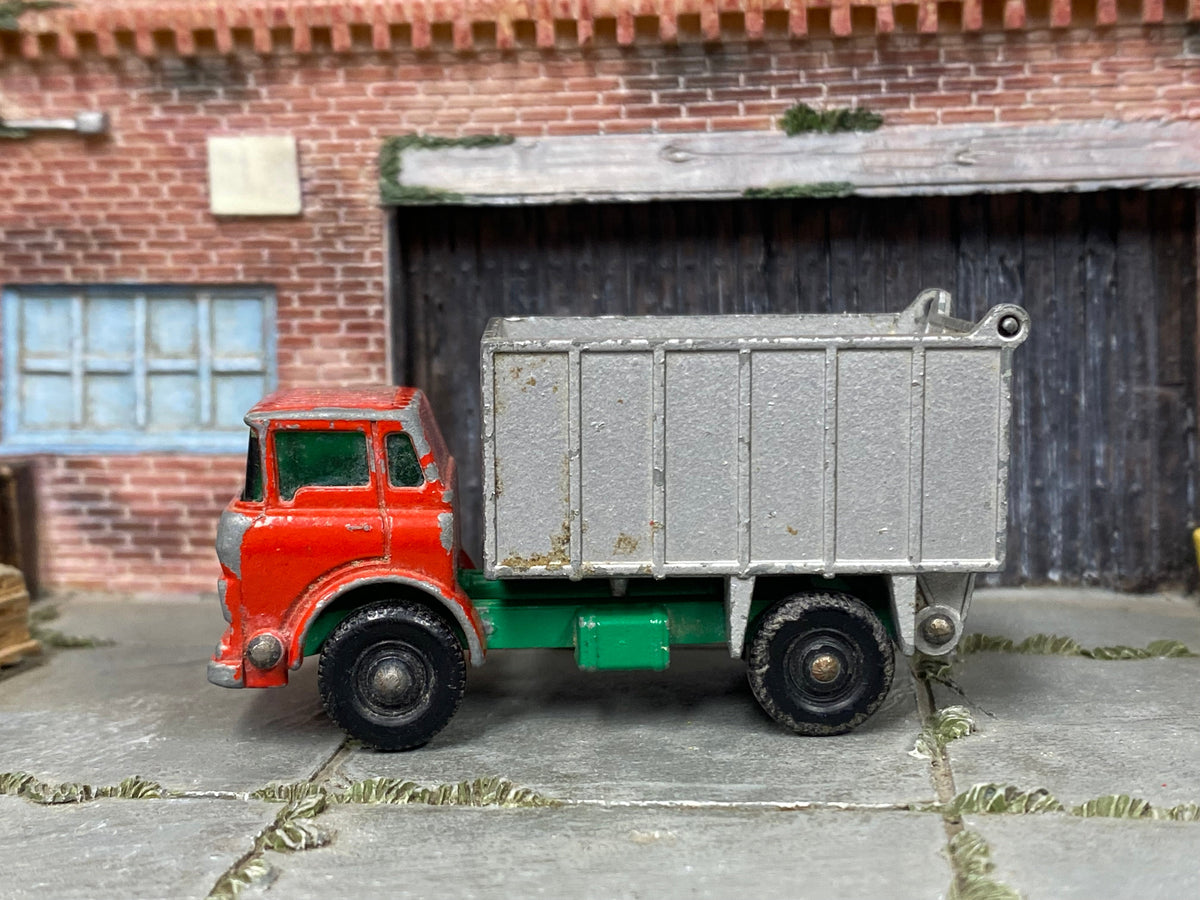
When you compare Lesney No. 26 GMC Tipper trucks, check the tipping body before judging the rest of the model. The two red-cab, green-chassis examples shown here look similar at a glance, but one listing includes the silver bed and the other is cab and chassis only. They are specific current offers, not a complete guide to every No. 26 variation.
What comes with each example?
| Detail | Silver-bed truck | Cab and chassis only |
|---|---|---|
| Included body | Silver tipping body is present | Bed is missing and is not included |
| Cab and chassis | Red cab and green chassis | Red cab and green chassis |
| Wheels | Regular black wheels, as described | Regular black wheels, as described |
| Condition and box | Unrestored, playworn with visible chips and scuffs; no box | Unrestored, incomplete and playworn with paint loss, chips and scuffs; no box |
Each offer is for one exact photographed item. Read its current listing and gallery before ordering, since condition and availability can change. The product descriptions identify the base wording as “GMC Tipper Truck No. 26, Made in England by Lesney”; inspect the base photos of the actual truck when that marking matters to your identification.

A present bed and a working bed are different checks
The silver-bed example includes the tipping body, but the listing does not establish whether its hinge moves smoothly. If operation matters to your display or project, confirm the bed’s movement and attachment before buying. Also look at the rear and mounting points for wear or damage; a body can be present without being in perfect working order.
Condition deserves its own check. Chips, scuffs and age wear do not tell you whether a part is missing, just as a complete truck is not automatically in better cosmetic shape. Compare the included-parts description with the photographs instead of relying on one broad label such as “playworn.”
When a chassis-only example makes sense
The incomplete truck can suit a parts study, an unfinished display or a restoration project. Before choosing it for restoration, identify the replacement bed you need and verify that its attachment and dimensions fit this casting. The listing does not confirm that any particular loose spare will fit, so do not assume that a silver bed from another Matchbox truck is interchangeable.

Compare the project cost with the price of a more complete example, including the time and parts needed to finish it. A lower purchase price alone does not establish that restoration will cost less. If your goal is an original-condition collection, a documented complete truck may be a more direct choice.
Record the work and check the details
Photograph the cab and chassis before restoration. Keep a note of original parts, replacements, paint changes and repairs. If the truck is later displayed or sold, describe replaced parts and restoration clearly; a cleaner finish and original completeness are separate qualities.
For a careful inspection, compare both sides, the rear, the top and the base wherever the gallery shows them. Confirm whether the bed is present, then note the paint, wheels and chassis. The early Matchbox identification checklist can help you organize those observations. Choose the example that fits your display or project with its included parts understood.
Explore related Matchbox resources
For more original loose models, browse loose Matchbox cars and vintage Lesney Matchbox. If you are planning a custom project, check the parts and contents on custom Matchbox cars and Matchbox DIY kits. Visit the Matchbox collector hub for more guides.

