

Matchbox: historia y coleccionismo
Matchbox Emergency Vehicles: Choose the Right Ambulance, Police or Fire Model
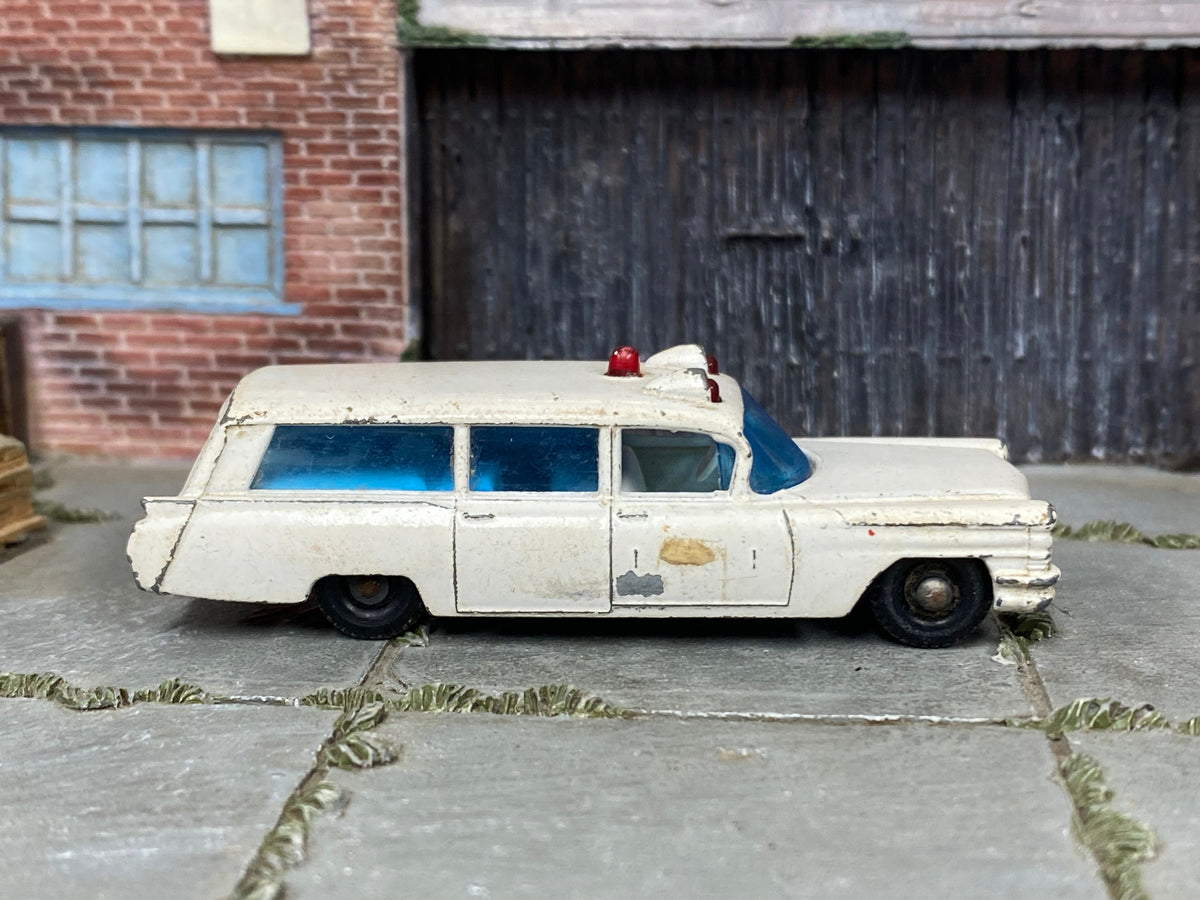
The right Matchbox emergency vehicle is the one that matches your collecting goal. Decide whether you want a vintage ambulance, a modern patrol fleet or a fire-service scene before comparing body shape, equipment and decoration.
An attractive generic emergency livery is not automatically a replica of a named department. Keep the miniature's actual specification separate from the real-world vehicle you hope it represents.
A vintage ambulance you can inspect
The Lesney Matchbox No.54 S&S Cadillac ambulance in the store catalog has a white body, blue glazing, red roof beacons and regular black wheels. The listing describes a playworn, unrestored loose example with visible chips and no box.
Its actual-item photographs let you compare the body and condition instead of relying on a generic illustration. The base photograph records the No.54 model identification and Lesney England wording.

Choose the period and vehicle first
For a period display, compare the vehicle style with the surrounding cars and buildings. A classic ambulance and a modern box-body ambulance create different scenes, even though both perform an emergency-service role.
For a replica of a particular fleet, obtain a dated photograph or specification of the real vehicle. Check the body version, light equipment, unit number and markings against that reference rather than assuming every police stripe or fire-service color has the same meaning.
Look at the equipment that defines the model
Inspect beacons, lightbars, ladders, booms and rear-body details. Check whether a projecting piece is present and whether a visible moving part is actually intended to operate.
A missing beacon affects completeness; it does not prove the underlying casting was inaccurate. Keep wear, missing components and design differences in separate notes.
Check the scale of the whole scene
Measure model length, width and height where display fit matters. Do not assume an ambulance, large fire appliance and passenger car all share identical scale merely because they fit small retail packages.
Use the diorama scale guide to compare vehicles with doorways, figures and neighboring models.
Buy a documented example, not an unsupported award
A claim that one model is the most accurate ever made needs a defined comparison and real measurements. Choose the exact miniature by its features and condition instead.
For older finds, use the Matchbox identification checklist. For the featured ambulance, review the current product page's five actual-item photos and availability before ordering.
Give the scene one identifiable emergency role
An ambulance scene needs a pickup or arrival point; a fire scene needs room around the apparatus; a patrol scene may need only a parked vehicle and an ordinary street. Sketch that role first. It prevents buying a dramatic truck that cannot fit the intended scene and helps explain which equipment you actually want to see.
Build a purchasing checklist around the chosen model: body version, livery, roof equipment, completeness and visible wear. Leave department identity blank if the decoration cannot establish it. With the vintage Cadillac, the linked photographs support the disclosed body and condition; they do not document a modern department’s fleet or certify emergency equipment operation.
Photographs for the comparison


