

Matchbox: historia y coleccionismo
Vintage Lesney Matchbox No. 54 S&S Cadillac Ambulance – White: Collector Identification & Condition Guide
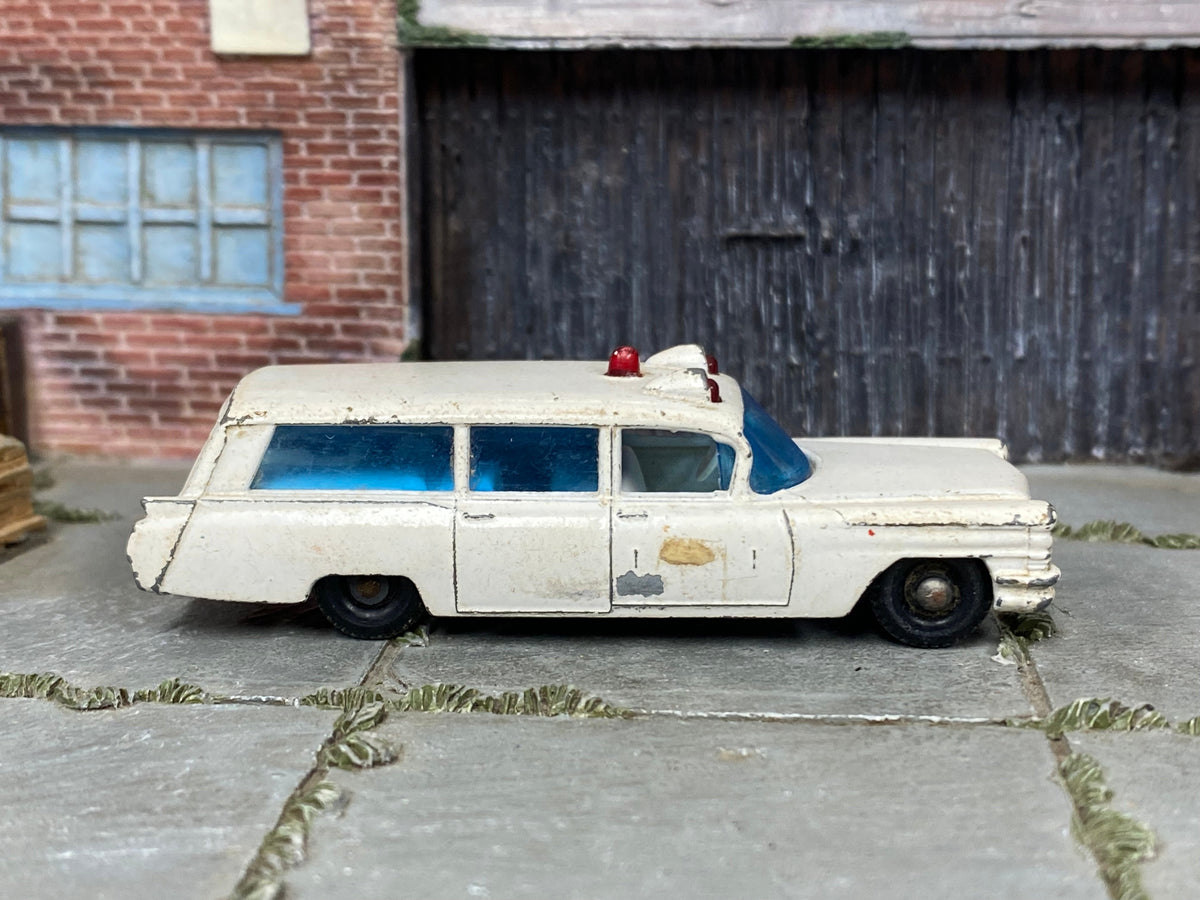
This white Lesney No. 54 S&S Cadillac Ambulance is a loose, playworn example with blue glazing, red roof beacons and regular black wheels. Its condition is part of what you are choosing: the white finish is chipped, the side decoration survives unevenly, and the rear photograph shows an uncovered opening. Examine those details before deciding whether it belongs in your collection.
The Muncle Mikes listing identifies this individual item as VM-20260914-06, describes it as unrestored, and supplies one ambulance with no box. The five photographs show the offered example. This guide explains what those views establish and which questions still need an answer.
Read the underside before assigning a variation
The base photograph clearly shows “MATCHBOX” SERIES, No. 54, S&S CADILLAC AMBULANCE and MADE IN ENGLAND BY LESNEY. Those markings connect the miniature to its casting identity. No. 54 is the model number; it is not the year this particular toy was made.

Use the base together with the body and wheels. A number copied from another listing is less useful than a photograph of the actual underside. Keep the photographed wording in your collection notes, and record this example’s finish and condition separately from the casting name.
The listing calls these regular black wheels. All four are visible in the underside image, but a still photograph does not test whether they roll freely, whether an axle is straight or whether the model sits evenly. Ask for an operating check if rolling ability matters to you. Do not describe this individual ambulance as tested on the strength of the gallery alone.
The two sides tell different condition stories
Compare both profile views instead of judging the car from the first photograph. One side retains a red cross on an aged, discolored label area. The other has much less recognizable decoration remaining. Paint loss exposes darker metal at several edges, including the corners and lower portions of the body.
Look especially at the door outlines, roof edges, front corners and rear fins. Record chips, scuffs and the surviving label areas as you see them. A bright white thumbnail can hide how uneven the finish is, while an enlarged image makes it easier to decide whether the wear is acceptable.
The blue glazing and three red roof beacons are visible in the front three-quarter view. Their presence helps describe the current configuration; it does not establish that every surface is scratch-free or that the parts are untouched factory originals. The seller’s “unrestored” description is a disclosure about this offer, not a substitute for examining the photographs.
Check the uncovered rear opening

The rear image is essential to this buying decision. It shows the interior through an uncovered opening, with paint wear around the rear edges. Do not assume that a closing panel, loose stretcher or other separate piece comes with the ambulance simply because another example has one.
The current description promises one photographed item and no box; it does not separately list a rear closure or loose medical accessory. Confirm the supplied pieces before buying if completeness is your priority. A recognizable casting and present roof beacons do not establish a complete set of original components.
When comparing offers, keep that question separate from paint condition. An example with cleaner paint may still have a missing component, and a worn example may retain parts you need. Compare equivalent contents before treating two prices as a useful condition comparison.
What the period catalogue adds
The 1966 Matchbox Collector’s Guide, International Catalogue, lists No. 54 as “Cadillac Ambulance.” Its entry gives 73 mm and the notation “87-1 HO Scale”, conventionally expressed as 1:87. That is useful period reference information, rather than a reason to label this toy an exact 1:64 miniature.
Those catalogue figures are not a fresh measurement of VM-20260914-06. They also do not date the manufacture of this individual example to 1966. If it must fit a tight display compartment or share a measured diorama scale, confirm its actual length, width and height, including the roof beacons. The photographs contain no ruler.
For a broader method of matching a base, body and wheels, use the early Matchbox identification checklist. The diorama scale and proportion guide explains how to compare measured models with a scene.
Review the actual ambulance
Use all five item photographs to check the wear, surviving decoration, base and rear opening. The product page has the current price and availability.
Choose the example for the collection you want
This offer suits a buyer who accepts visible play wear and wants to assess the actual surviving model. Someone seeking a boxed example, intact decoration or confirmed complete rear fittings has different requirements. No box, condition grade, rarity premium or future resale value should be inferred from the casting name.
If you add it to your shelf, keep the item photographs and note the rear-opening question alongside the worn labels and chipped finish. Support the body when handling it rather than lifting by a beacon. Store it with enough separation that neighboring models cannot rub the paint or roof details. Preserve the record of its received condition before making any changes.

