

Guías de Trenes en Miniatura
Magnetic Model Train Uncouplers: Delayed Action and Placement
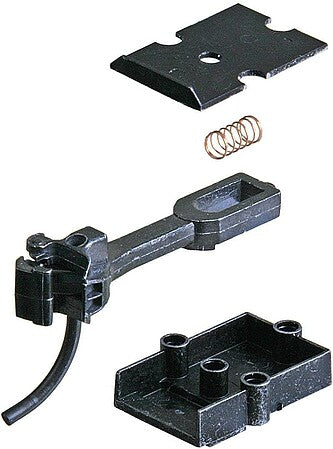
A magnetic uncoupler opens compatible knuckle couplers without lifting the car by hand. The magnet acts on the coupler trip pins when the slack and position are correct. Delayed action adds a second benefit: after uncoupling, the operator can push the car to a spotting location without the couplers immediately locking again.
Reliable operation depends on the whole system. Coupler height, trip-pin height, free centering, car weight, clean wheels and level track all matter. A stronger magnet cannot correct a binding coupler box.
How delayed action works
Kadee explains that its Magne-Matic trip pins move over the uncoupler and place the couplers in an open delayed position. The operator moves the joined couplers over the magnet, creates slack, then pulls away. The offset couplers can push the car to a final spot.
The move requires practice because tension keeps knuckles engaged. Slow control and a deliberate slack movement are more important than speed. Test with two known-good cars before judging the magnet location.
Choose placement from the switching move
Place an uncoupler where the train can stop straight and where the operator can see or mark the target. Between-the-rails products may specify a rail code and mounting method. Kadee’s #321, for example, is intended for straight Code 100 track and needs tie modification for lower rail codes.
Avoid curves unless the exact uncoupler and coupler geometry are designed for them. Car ends are already offset on a curve, which can prevent the trip pins and knuckles from centering as expected.
- Gauge every coupler and trip pin.
- Use a straight, level test track.
- Mark the magnet center discreetly.
- Test pushing and pulling movements.
- Keep access available before scenery is finished.
Permanent magnet or electromagnet
A permanent magnet is simple and always active. That can cause an unwanted uncoupling when a train pauses with slack over it. An electromagnet acts only when energized but needs wiring, control and safe installation.
The right choice follows the traffic pattern. A lightly used industrial spur may suit a permanent magnet. A busy main or yard throat may benefit from operator control or a different uncoupling method.
Uncoupler choices
| Choice | Best when | Watch for |
|---|---|---|
| Permanent magnet | Simple installations at predictable spotting points. | Always active when couplers are over it. |
| Electromagnet | Busy routes where the operator chooses when to uncouple. | Requires power, wiring and control. |
| Manual pick | Occasional moves with easy physical access. | Requires reaching into the scene. |
Plan the next step
Build a removable straight test section with the intended rail, magnet and two gauged cars. Practice the complete slack-and-delay move before selecting permanent locations.
Keep exploring this topic
Questions builders and collectors ask
Why do cars not uncouple over the magnet?
Check coupler and trip-pin height, free centering, alignment over the magnet and whether slack was created.
Why do cars uncouple when I do not want them to?
A permanent magnet can act whenever slack develops above it. Relocation or controlled activation may be needed.
Can I place a magnet on a curve?
Straight track is the safer default unless the exact product instructions support the geometry.
Do all knuckle couplers work with magnetic uncouplers?
No. Confirm the coupler has the required magnetic trip-pin system and is adjusted to the correct height.
Return to Model Train Guides for more Muncle Mikes guides.

