

Noticias y novedades para coleccionistas
GreenLight Hot Pursuit: elige por cuerpo policial, época y escala
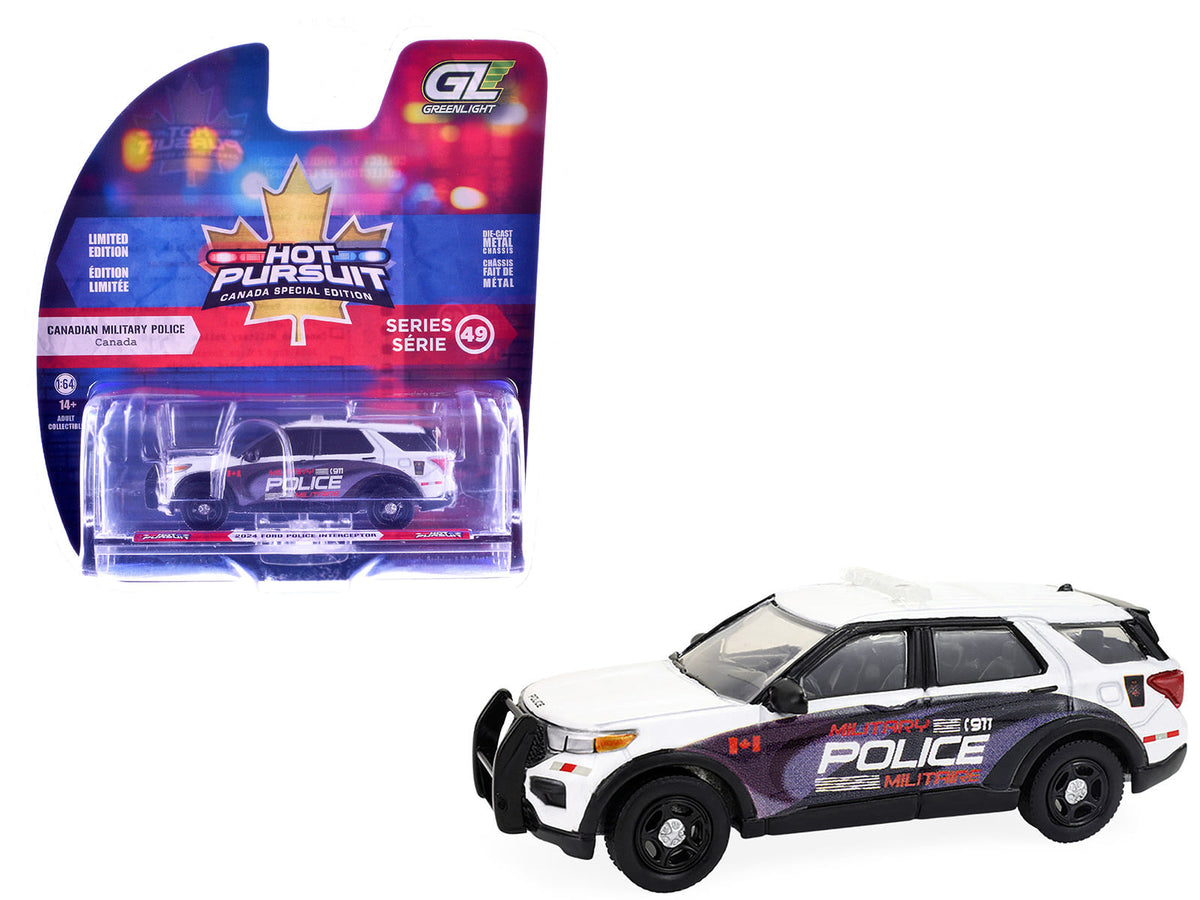
Organiza tu colección de vehículos policiales GreenLight alrededor de una idea: un cuerpo policial, una época o un tipo de vehículo. Así resulta más fácil elegir modelos que tengan sentido juntos y evitar una edición parecida con otros distintivos, años o escala.
Hot Pursuit es una línea de GreenLight, no un nombre genérico para todos sus vehículos policiales. Esta guía compara tres ejemplos Hot Pursuit a escala 1:64 y muestra cómo un modelo mayor de Artisan Collection puede cumplir otra función en la exposición.
Empieza por el nombre del cuerpo policial
Si tu colección se centra en un cuerpo concreto, los rótulos y emblemas forman parte de la identidad de la edición. Lee el nombre completo y observa las fotografías. Un SUV blanco con decoración policial no representa automáticamente la institución que buscas.
El Ford Police Interceptor Utility de 2024, referencia 43065E, lleva la decoración Canada Military Police de Hot Pursuit Canada Special Edition. Puede servir de referencia para una colección de esa edición o de vehículos utilitarios policiales modernos.
La descripción indica escala 1:64, neumáticos de goma, carrocería y chasis metálicos y una longitud aproximada de 3 pulgadas. También especifica embalaje G-Blister con vitrina apilable. Son características de esta referencia; no describen todos los empaques antiguos de Hot Pursuit.
El Interceptor de la imagen principal está actualmente agotado en esta oferta. Su fotografía sigue siendo un ejemplo útil de la decoración de la policía militar canadiense y del embalaje. Un sedán blanco sin distintivos es una opción diferente: no sustituye a ese cuerpo policial si esa identidad es el objetivo de tu colección.
Elige una época sin convertir un intervalo en un año exacto
Algunas ofertas indican varios años representados. Conserva esa distinción: el Dodge Diplomat blanco sin distintivos, GL43006, figura como 1980–1989. El Ford LTD Crown Victoria blanco con barra de luces, GL43007L, figura como 1980–1991.
Ambos pueden formar parte de una exposición por época sin afirmar que reproduzcan la flota exacta de una institución en un año concreto. La identidad del vehículo representado no demuestra por sí sola cuándo utilizó un cuerpo policial esa configuración.
| Modelo | Identificación que conviene comprobar | Enfoque de colección |
|---|---|---|
| Ford Police Interceptor Utility | 2024; Canada Military Police; 43065E | Un cuerpo identificado o vehículos utilitarios modernos |
| Dodge Diplomat | 1980–1989; blanco sin distintivos; GL43006 | Vehículos sin rotular o una fila de sedanes de época |
| Ford LTD Crown Victoria | 1980–1991; blanco con barra de luces; GL43007L | Sedanes policiales Ford o comparación entre épocas |
El Interceptor y el Crown Victoria indican una longitud aproximada de 3 pulgadas; la descripción actual del Diplomat no aporta su longitud. Esas dos medidas no establecen el tamaño del Diplomat ni un ancho, altura o embalaje común. Mide el espacio de la exposición que quieres preparar.
Con distintivos o sin ellos: el efecto de cada modelo
Un modelo rotulado identifica el cuerpo policial mediante su decoración. Uno sin distintivos puede aportar un contraste más discreto dentro del mismo tema. Ninguno es automáticamente más coleccionable: lo útil es decidir qué añade a tu exposición.
No asignes un modelo sin distintivos a una institución que la oferta no identifica. Si lo personalizas, distingue una edición de fábrica de una decoración aplicada por su propietario. Una miniatura modificada no debe presentarse como una variante policial original de GreenLight.
GL43006: un Diplomat blanco sin rotular

Este Diplomat sirve como ejemplo cuando buscas una apariencia discreta. En la fotografía se ven ruedas negras y un lateral sin identificación policial. La imagen no lo atribuye a un cuerpo concreto.
GL43007L: un Crown Victoria blanco con barra de luces

Considera este Ford por su carrocería de sedán y el equipo visible en el techo. Su descripción actual indica neumáticos de goma, carrocería y chasis metálicos y unas 3 pulgadas de longitud. La apariencia de la barra no demuestra que las luces o el sonido funcionen.
Reserva otro espacio para una pieza central mayor

El Jeep CJ-5 de Maryland State Police de 1983, referencia 19124, ofrece otra posibilidad: un modelo beige y verde 1:18 de Artisan Collection. Sus medidas indicadas son aproximadamente 7,5 × 4 × 3,75 pulgadas, en orden de largo, ancho y alto.
La oferta especifica que no tiene paneles practicables, aunque sea de mayor escala. Sí indica ruedas orientables y neumáticos de goma. Un modelo grande no garantiza puertas o capó que se abran; elígelo por el vehículo y la presentación que quieres.
Coloca una pieza central mayor en otro nivel o sección. Para una calle en miniatura con proporciones coherentes, mantén los vehículos y accesorios de la escena en la misma escala. Este Jeep puede ser el foco de la exposición, pero no un compañero del mismo tamaño para los sedanes 1:64.
Si te interesa alguno de estos ejemplos, consulta su referencia GreenLight, escala y disponibilidad actual. Indica también la medida, el empaque o la función que necesitas confirmar. Esta consulta no garantiza existencias ni una fecha de reposición.
Antes de comprar
Compara referencia, año o intervalo representado, nombre exacto del cuerpo policial, escala y decoración. Después revisa precio, disponibilidad y estado del embalaje en la oferta actual.
Si conservas los modelos empaquetados, compara el formato de caja o vitrina con tu colección. Si los expones fuera del embalaje, observa techo y laterales para comprobar la decoración y el equipo que te interesa. Los detalles decorativos no permiten deducir luces, sirenas ni piezas practicables.
Preguntas sobre los modelos policiales
¿Todos los GreenLight policiales son Hot Pursuit?
No. El Jeep de esta guía pertenece expresamente a Artisan Collection. Comprueba el nombre de la serie de cada referencia.
¿Hot Pursuit siempre significa escala 1:64?
No. GreenLight también ha publicado modelos Hot Pursuit a escala 1:24. Los tres ejemplos pequeños de esta guía son 1:64; la serie no sustituye a la escala de la referencia exacta.
¿Hobby Exclusive garantiza una variante chase?
Las ofertas del Diplomat y del Crown Victoria comentadas aquí no ofrecen esa garantía. No conviertas una etiqueta de lanzamiento en una promesa de recibir un Green Machine u otra variante chase.
¿Conviene reunir un cuerpo policial o varios?
Elige uno si la conexión con esa institución es el centro de tu colección. Combina varios si prefieres comparar tipos de vehículos o decoraciones. Una selección pequeña y deliberada puede ser un buen comienzo.
Para calcular el espacio de una fila o una pieza central, consulta la guía de escalas GreenLight y dimensiones de exposición.
Explora también el catálogo de modelos diecast de distintas marcas y escalas. Es una selección amplia, no una colección exclusiva de Hot Pursuit; comprueba fabricante, escala y contenido de cada oferta.
Vuelve al Centro de Guías y Aprendizaje para Coleccionistas para continuar con otra elección de modelos o exposición.

