
Storage
How to Organize Hot Wheels: Inventory, Locations & Duplicate Checks
Updated September 22, 2026 · A practical collection workflow
Organize Hot Wheels by giving every physical car a record and every record a location. A spreadsheet, notebook or suitable collector application can all work. Consistent information matters more than an elaborate tool.
Start with one manageable tray rather than trying to identify the whole collection at once. Keep “not yet identified” separate from a guess, and retain the photograph that supports each important detail.
Use separate item IDs and release descriptions
Give each physical item a permanent ID, such as MM-0001. Two identical cars should still have different item IDs when their condition, purchase records or locations differ.
Use a separate release description for the casting and version. That lets you find duplicates without losing the history of individual examples. A change of storage box should change the location field, not the car's permanent ID.
Build a useful record
| Field | What to record |
|---|---|
| Item identity | Permanent ID, brand and complete casting name |
| Version | Body color, decoration, wheels, interior, glazing and supported release information |
| Condition and changes | Wear, missing parts, repairs, repainting or wheel swaps |
| Package format | Loose, carded, boxed or part of an identified set |
| Evidence | Photographs, receipt and reference notes |
| Location and status | Case and position, displayed, stored, loaned, traded or sold |
Keep purchase cost separate from a later estimate of value. Record the date and method of any estimate instead of overwriting the original cost. A market estimate is not automatically an insurance appraisal.
Use one intake routine for every purchase
Place new arrivals in an intake tray. Match them with the order, photograph the condition and record any discrepancy before discarding shipping material. Check the exact casting and package before moving the item to permanent storage.
For a custom, record the changes stated in the listing and anything you later modify. For an unidentified loose car, keep a temporary description and the source photograph rather than inventing a release year to fill the cell.
The casting-identification guide can help separate a design name from release details.
Photograph for identification, not only appearance
Take a clear side view, the opposite side and an underside view, adding the top and packaging where relevant. Use consistent file names such as MM-0001-base and MM-0001-left. Include a close-up of a mark or repair that distinguishes that example.
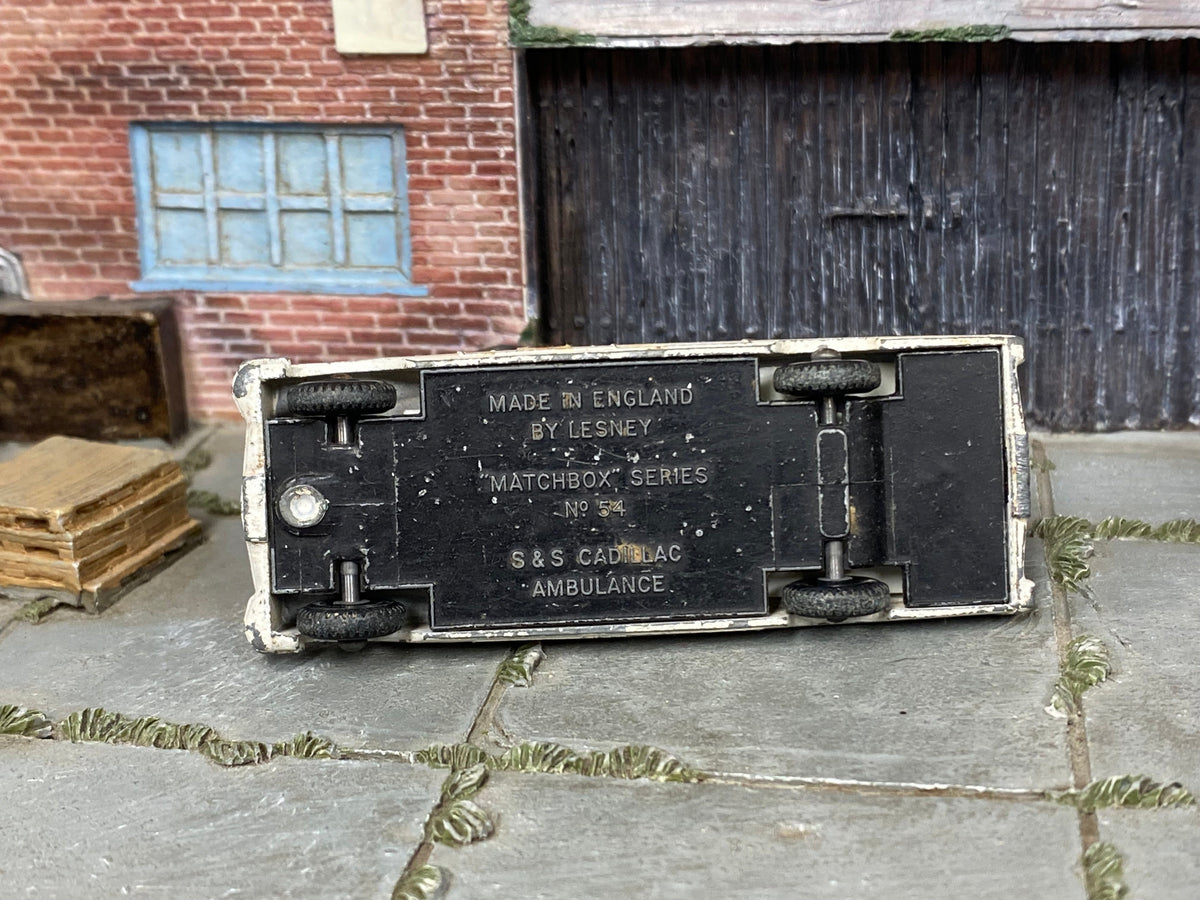
The header is an actual base photograph from the Lesney No.54 ambulance listing. It illustrates why an underside view belongs beside a display photograph: the base provides identification information that a side view does not show. The ambulance is a Matchbox example, not a Hot Wheels casting.
Assign a storage address
Label a container C01 and its positions C01-01, C01-02 and so on. Keep a diagram with the container and use the same codes in the inventory. For carded rows, include the row and position rather than simply writing “closet.”
When rotating a display, update the location immediately. For an item taken to a show, use a temporary travel location and reconcile the list when it returns. Do not rely on memory for the handful of cars that are always being moved.
Check duplicates at the right level
Search by brand, casting and version before buying. Two cars with the same body color may differ in wheels or decoration; two identical releases may be deliberate duplicates for play and display.
Add a reason field for intentional duplicates, such as upgrade candidate, spare donor or trading stock. Keep wanted items on a separate list so an unpurchased car is not accidentally counted as owned.
Back up and review the system
Keep a second copy of the inventory and photographs separate from the device you use every day. Test that you can open the copy. Protect receipts and private location information instead of publishing the complete record with a public collection photograph.
At a regular review, select a few records and retrieve the actual items. Correct missing locations and unresolved identifications before adding more complexity. For capacity planning, use the large-collection storage guide.
Then browse loose cars or finished customs against a clear wanted list. The next purchase should have both a place in the collection and a place to live.
Organize different item types with different location records

Loose item
Twin Mill — loose
A loose car needs an item record and a physical bin, drawer, shelf or case location.

Carded item
2022 Glory Chaser — carded
Record package condition and storage location separately from the casting identity.

Custom item
Mercedes AMG GT3 custom
Record modifications so a custom is never mistaken for a factory variation later.
