

News
The Evolution of Hot Wheels: History from 1968 to Today
Hot Wheels began in 1968 with sixteen cars and a play system that made rolling performance part of the appeal. Its history then branched into new designs, track sets, collector programs, full-size custom cars and digital play. Following those changes helps explain why two cars with the same name can represent very different releases.
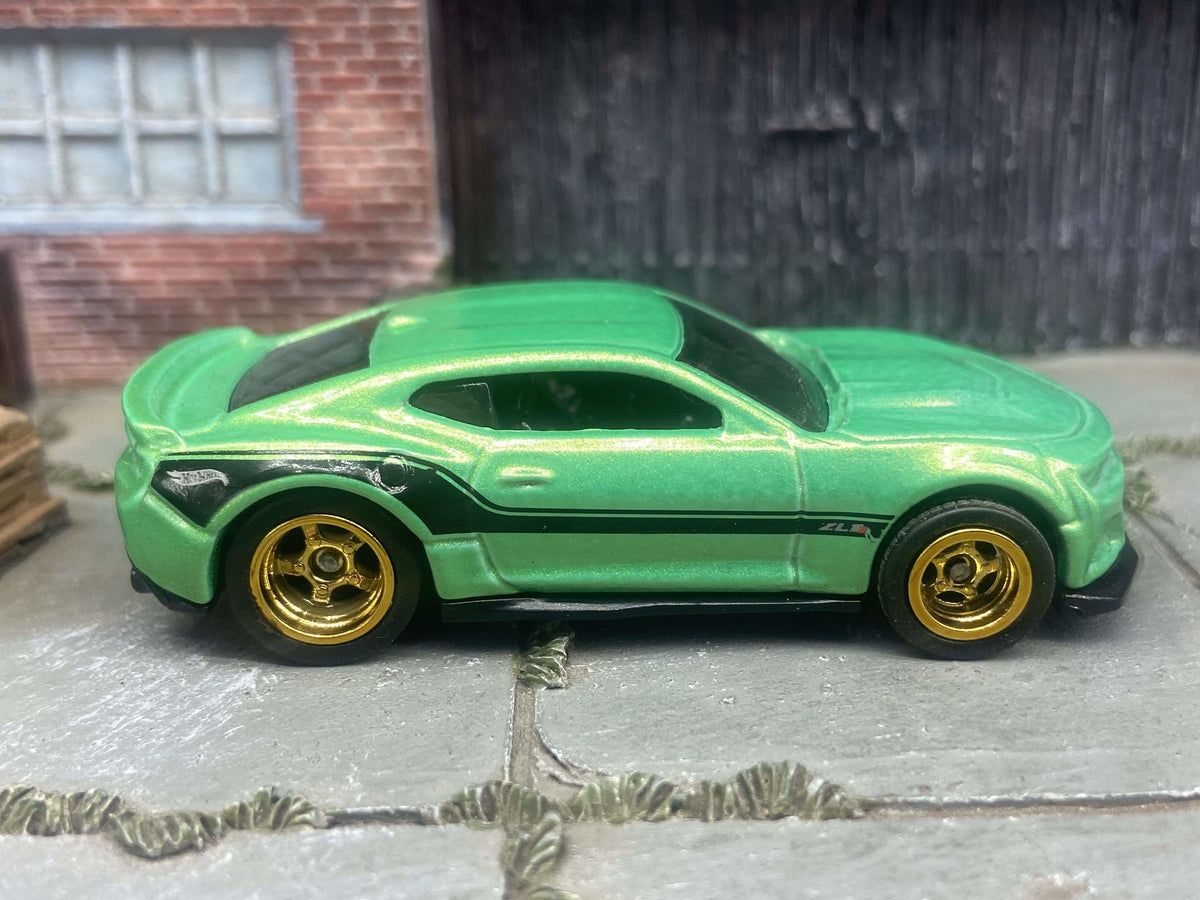
The green Camaro pictured here is a modern Muncle Mikes custom. It provides a practical example of the distinction between a real vehicle’s model year, a toy’s release and a later modification.
A short timeline of the major changes
| Date | Development | What changed for collectors |
|---|---|---|
| 1968 | Mattel launches the Original 16. | Custom styling and rolling play form the starting point. |
| 1968–1977 | The period collectors call the Redline Era. | An era to research, rather than an authenticity test based on a tire stripe. |
| 1995 | The first Treasure Hunt series contains twelve models. | A named collector series adds another identity to the casting and its release. |
| 2001 | HotWheelsCollectors.com launches on July 29. | An official online home connects collecting news and community. |
| 2002 | Red Line Club begins in March. | Membership becomes a distinct route for collector releases. |
| 2018 | The fiftieth anniversary and the first Legends Tour. | The brand revisits its origins while seeking a full-size custom to become a miniature. |
1968: the Original 16 established the Hot Wheels identity
Mattel introduced the first Hot Wheels cars in 1968. The group now commonly called the Original 16 combined stylized American performance-car subjects, custom-car influence, bright finishes, distinctive wheels, and track-oriented play. The cars were not simply miniature replicas; the line’s identity came from the relationship between vehicle design and the orange-track system.
The launch group is a useful starting point, but a later recreation can carry the same casting name. The Original 16 launch history explains the first-year idea. To identify an individual example, compare its color, interior, windows, wheels, base, country, packaging and condition.
The 1968 Beatnik Bandit collector guide shows that deeper process for one Original 16 subject. A family-level history can tell you why the car matters; it cannot identify every variation or value an unseen example.
1968–1977: the Redline Era became a collector framework
Mattel’s collector community groups 1968 through 1977 as the Redline Era. The name refers to the red stripe associated with wheels of the period, but a visible red line is not enough to authenticate a car. Later releases, reproductions, replacement wheels, and customs can repeat that styling.
For an original-era candidate, inspect the complete object: casting and tooling details, country and base markings, body finish, graphics, windows, interior, wheel design, axle construction, package, accessories, condition, and evidence of previous work. The original Redline identification guide separates those clues from shortcuts based on a tire stripe or base copyright date.
The end of the Redline Era did not end Hot Wheels. It marks a useful collector boundary within a brand that continued changing materials, wheels, packaging, themes, and manufacturing over later decades.
Original designs helped Hot Wheels become more than miniature licensed cars
Hot Wheels has long combined licensed real-world vehicles with Mattel-created designs. Original concepts allowed designers to exaggerate engines, proportions, stance, aerodynamics, and fantasy features without being limited to a production automobile. Twin Mill is one example of a design whose identity comes from Hot Wheels itself. Mattel’s Garage of Legends history records the unveiling of a full-size Twin Mill at SEMA in 2001. That date belongs to the real car, not the original introduction of every Twin Mill toy.
This distinction matters when identifying a toy. A real-vehicle name, a Hot Wheels casting name, and a marketing series can be three different labels. Use the Hot Wheels casting and variation identification guide to move from the physical car to the exact release instead of assigning a year from memory.
Track and playsets remained part of the brand’s history
Cars and track developed together. Straight-line racing, loops, launchers, service centers, garages, stunt sets, and multi-lane raceways gave collectors and children different ways to use the cars. A track set also has its own identity, product number, contents, instructions, moving features, electronics, and condition.
A familiar playset name does not establish its exact parts or mechanism. The Hot Wheels Service Center guide and the Super 6-Lane Raceway V1983 guide show how product numbers, contents and condition affect a purchase or display plan.
Packaging and annual assortments created another layer of collecting
A Hot Wheels release is not only a casting. The retail card can document a collector number, series, assortment, language, branding, and package format. The car itself adds color, graphics, wheels, interior, windows, base, and country details. Those combinations can change across releases and markets.
Case openings are useful evidence only when tied to the exact carton code and observed contents. One case cannot stand for every release in a year. The L2593-977MPR case guide explains how to preserve the carton code, opening sequence, card condition, and car inventory without converting one observed assortment into a universal checklist.
1995–2002: collecting gains new programs and an online home
Mattel’s retrospective on twenty-five years of Treasure Hunts dates the first twelve-model series to 1995. The casting name was no longer enough: collectors also needed to identify the particular series and edition. Super Treasure Hunts later added another category, but the details should be checked for the specific release.
Mattel’s 2022 club history dates HotWheelsCollectors.com to July 29, 2001, and Red Line Club to March 2002. The distinction matters: Red Line Club is a membership program; the Redline Era describes the earlier 1968–1977 collecting period.
Premium lines, convention items, commemorative sets and collaborations added further collecting choices. Symbols, wheel materials, paint, package wording, membership benefits, sale rules and availability can change. Compare an old release with evidence from its own period, and check current terms when considering a present-day membership or offer.
2018: the anniversary looks backward and the Legends Tour looks outward
For its fiftieth anniversary, Mattel revisited the Original 16 through later recreations. At the same time, the Legends Tour began in 2018 as a traveling car show in partnership with Walmart, seeking a full-size custom worthy of becoming a Hot Wheels miniature. Mattel’s account of the following year’s tour describes that first-year launch.
These are different ways of connecting car culture and collecting. An anniversary toy revisits an earlier design; a Legends project starts with a full-size build. Neither an old casting name nor retro packaging makes the resulting miniature an original-era toy. Record the actual edition and its release evidence.
The modern brand serves several interests
Modern Hot Wheels can serve children who want track play, casual buyers, casting-focused collectors, premium-model collectors, customizers, Red Line Club members, collaboration fans, full-size car enthusiasts, gamers, and digital collectors. The same brand can support inexpensive mainline cars and limited collector releases without making them equivalent products.
A physical toy, a track set, a customized miniature, a full-size show car and a game vehicle are different things even when they share a name. Mattel’s current brand history includes Hot Wheels Unleashed and Forza alongside physical play and events. A digital version does not establish which physical car is included in a purchase; read the specific offer.
How to evaluate a Hot Wheels history claim
| Evidence type | What it can support | What it cannot prove alone |
|---|---|---|
| Official Mattel history or product material | Brand milestones, official program framing, named products, and current terms. | The identity or originality of an unseen physical example. |
| Retail card or box | Package wording, product numbers, series, language, and listed contents. | That the enclosed car has never been swapped, opened, or altered. |
| Base markings | Tooling and legal text associated with the physical base. | The individual car’s retail year by themselves. |
| Case-opening record | Contents observed in one documented carton. | A complete annual lineup, factory frequency, or universal assortment. |
| Collector memory | Useful leads, ownership history, and personal context. | A verified date or variation without supporting evidence. |
| Current product listing | The item, photographs, condition, price, and availability stated now. | Historic availability or the contents of an older package or case. |
A practical research path for any Hot Wheels car
- Photograph the physical example. Include both sides, front, rear, roof, base, wheels, windows, interior, and package.
- Transcribe every marking. Preserve spelling, country, numbers, copyright text, and package wording exactly.
- Identify the casting before the release. Separate the model family from color, graphics, wheels, and package variation.
- Compare release-specific evidence. Match the complete combination instead of selecting the most famous version.
- Record condition and originality. Disclose repainting, replaced wheels, opened fasteners, repairs, missing parts, and package damage.
- Keep unresolved fields unresolved. A documented question is better than a confident but unsupported identification.
Hot Wheels history questions
When did Hot Wheels begin?
Mattel launched the first Hot Wheels cars in 1968 with the group now known as the Original 16.
What years are considered the Redline Era?
Mattel’s collector community groups 1968 through 1977 as the Redline Era.
Does a 1968 copyright date mean my car was sold in 1968?
No. A base date can relate to tooling or legal text and may appear on later releases. Identify the complete car and package.
Are all red-stripe wheels original Redline wheels?
No. Later releases, replacements, reproductions, and customs can use red-line styling.
Can one sealed case show every car released that year?
No. It records one carton code and one observed assortment, often with duplicates and omissions.
Is every modern Hot Wheels intended for collectors?
No. The current brand serves several audiences and product tiers. Identify the exact product and program rather than treating the whole catalog as one collector line.
Where should I start with a car I found?
Photograph the whole car and transcribe its base and packaging marks first. The identification guide linked above explains how to compare the casting and variation. Avoid cleaning or modifying a potentially important original before recording and researching its condition.
Choose what you want to collect next
Pick the part of the history that interests you: an early casting, a documented Treasure Hunt release, a track set or a modern custom. Then compare individual examples within that goal. A brand milestone gives context; the offered car still needs its own clear description and photographs.
Browse loose Hot Wheels or carded Hot Wheels and Matchbox, checking each listing’s identity and condition. The carded category also includes collecting supplies, so confirm whether the offer is a car or a separately sold protector. For a question about a current listing, contact Muncle Mikes with its link and the detail you need clarified.
This history guide was written by Mike Graves. Muncle Mikes is an independent reseller and collector resource and is not affiliated with or endorsed by Mattel.
Return to the Hobby Learning Center for collecting, display and project guides. For collection lists and release research, use the Hot Wheels and Matchbox collector guides.

