The complete guide to Hot Wheels Treasure Hunts (1995–Present)
Hot Wheels Treasure Hunts are the limited-run chase cars that turned ordinary peg hunting into collector legend. This guide covers Treasure Hunt identifiers, history, values, and smart buying tactics from 1995 to the present—so you can spot authentic TH and Super TH, avoid fakes, and build a collection with confidence. Whether you’re sorting Hot Wheels loose lot finds or chasing premium collector cars, you’ll learn how to decode packaging, paint, wheels, and tampo tells in minutes. Hot Wheels Treasure Hunts remain the most searched diecast cars niche for dedicated collectors.

Casting overview: Treasure Hunts series
Treasure Hunts are a yearly series (not a single casting). The table summarizes foundational identifiers collectors use across years.
| First production date | Series identifier | Designer / Program | Sets it has come in | Variation names and castings |
|---|---|---|---|---|
| 1995 (premiere Treasure Hunts series; ~10,000 per model in debut year) | Regular TH (flame icon on card/car), Super TH ($uper; Spectraflame + Real Riders) | Mattel Hot Wheels mainline program; yearly selections | Mainline segments; premium features for Super TH; occasional store exclusives | Olds 442, ’67 Camaro, ’57 T-Bird (1995), evolving annual selections; Super TH variants |
How to identify Hot Wheels Treasure Hunts vs Super Treasure Hunts
Packaging and flame icon cues
Early Treasure Hunts used green labels and clear card art tells; modern regular THs are flagged by a small flame icon on the card or car. Super Treasure Hunts ($uper) feature premium finishes, often Spectraflame paint, and Real Riders rubber tires—packaging does not always explicitly mark “Super,” so rely on physical features. Scan blister art, set segment badges, and fine-print identifiers before purchase. Hot Wheels Treasure Hunts remain a top target in vintage Hot Wheels hunts and diecast cars lots.
Paint, wheels, tampo, and casting tells
Regular THs may use standard paint and wheels; Super THs typically use Spectraflame finishes and distinct tampo layouts (not universal, but common), plus Real Riders wheels. Examine lens reflections on spectra paint, look for tampo quality, and check wheel cores for premium construction. Confirm flame icon positions on card and car, and compare wheel tread to standard plastic sets. These cues help avoid misidentified finds when sorting a Hot Wheels loose lot.
Authenticity checks and known fakes
Authenticity hinges on matching the year’s official list, card segment, and physical features. Cross-check model/year against an official yearly checklist to validate if a casting was released as a TH or Super TH. Beware repaints with aftermarket wheels: look closely at tampo registration, interior rivet signs, and card glue lines. Keep a reference open while hunting to confirm legitimate combinations and avoid re-cards or swapped wheels.
Timeline of Treasure Hunts and collector history
1995 premiere and early limited runs
The Treasure Hunts program launched in 1995 with a curated set of twelve models and limited production (around 10,000 per model reported for the debut year). Early releases like the Olds 442 and ’57 T-Bird set collecting norms, with green stripe branding and clear chase demarcation, fueling a new wave of peg-hunting culture. This era established the “thrill of the hunt” and the value of card art details.
Shift to flame icon and modern segmentation
Over time, Hot Wheels evolved packaging segmentation and identifiers, ultimately marking regular Treasure Hunts with a small flame icon on the car/card and distinguishing Super THs by premium features. The shift away from earlier “green stripe” branding to subtler cues increased the need for educated identification, especially across mainline segments and yearly themes.
Yearly checklists and expanding selections
Collectors rely on yearly checklists to confirm which castings were designated as TH or Super TH, preventing mislabeling and guiding authentic acquisitions. With new selections arriving annually—including modern favorites—staying current is part of the hobby. Reference checklists make it simple to verify legitimacy during trades or listings.
Values, rarity ranges, and buying strategy
Typical value ranges (loose vs carded)
Regular THs commonly trade in accessible ranges when loose, while Super THs command higher premiums due to spectra paint and Real Riders. Carded, well-centered examples generally sell higher than loose; early-year pieces with clean cards can fetch multiples. Condition factors include blister clarity, card corners, tampo quality, and wheel originality—critical for accurate valuation in collector cars.

Smart buying tactics: checklists, condition, and provenance
Use a trusted yearly checklist during purchases, inspect tampo alignment, and verify wheels and paint against known Super TH characteristics. Document provenance for premium examples and avoid repackaged or swapped-wheel items. For quick sourcing, targeted searches and filtered collection pages help isolate authentic inventory fast, especially when sorting mixed diecast cars.
Where values move: sets, castings, and collector demand
Demand spikes around culturally loved castings, limited short-run years, and clean carded stock. Values track with authenticity assurance and rarity visibility—Super THs typically hold stronger. Historical identifiers like the green label era add collector interest, but modern flame icon clarity has broadened mainstream appeal. Reference lists keep value conversations grounded over time.
Variations and sets within Treasure Hunts
1995 lineup highlights
The inaugural 1995 lineup included models like Olds 442, ’67 Camaro, and ’57 T-Bird among twelve total releases, each produced in limited quantities. These castings illustrate early Treasure Hunt visual language and set expectations for yearly chase models. The list structure from 1995 remains foundational for modern identification habits.
Modern selections and yearly rollout
Modern Treasure Hunts include regular THs across mainline segments and Super THs with premium features. Annual reveals extend across diverse casting families, from classics to modern icons, with checklists aggregating official selections for collectors to verify. Keeping a year-by-year reference handy prevents wishful mislabeling.
Packaging segments and exclusives
Packaging segmentation evolved to highlight “New for” badges and segment markers, while exclusives and limited runs occasionally intersect with TH visibility. The subtlety of modern iconography means collectors should rely on multiple cues: card icon, paint, wheels, and tampo placement. Comparing official lists ensures sets align with expectations.
Storage, protection, and preservation
Carded protection basics
Use rigid protectors sized to Hot Wheels cards to prevent corner dings and blister deformation. Store vertically to avoid blister warp and keep away from direct sunlight to protect tampo and spectra finishes. Archive premium Super THs in dust-free cases with desiccant packs to stabilize humidity.
Loose display and cataloging
For loose Treasure Hunts, choose display cases with UV-resistant acrylic and secure wheel rests to prevent flat-spotting on rubber tires. Catalog models by year and segment to align with official lists, and photograph details (wheels, paint, tampo) to preserve provenance and facilitate future valuation.
Cleaning and long-term care
Avoid aggressive cleaners; use microfiber cloths and gentle compressed air for dust. Inspect tampo lines and avoid wheel swaps that affect authenticity for Super THs. If you’re combining storage with vintage Hot Wheels assortments, separate premium finishes from harsher plastics to prevent rubbing or color transfer.
Shop Treasure Hunt casting search links
Click any casting title to open a pre-filled search on Muncle Mikes (new tab).
| Casting | Open search | Notes |
|---|---|---|
| Olds 442 | Olds 442 | 1995 Treasure Hunts premiere lineup piece |
| ’67 Camaro | ’67 Camaro | Early Treasure Hunt casting, high collector interest |
| ’57 T-Bird | ’57 T-Bird | 1995 series appearance; check wheel/tampo details |
| Ferrari F40 (Super TH year) | Ferrari F40 | Modern Super TH example; spectra + Real Riders cues |
| Porsche 911 (Super TH year) | Porsche 911 | Contemporary Super TH example; verify icon and finish |
Essential links for collectors
- Internal /collections/loose-hot-wheels — curated loose selection for quick sorting.
- Internal /collections/custom-hot-wheels-with-rubber-tires — Real Riders-style customs.
- Internal /collections/diy-kits-build-your-own-hot-wheels — DIY kits for display-ready builds.
- Internal /collections/hot-wheels-decals — decals and detail upgrades.
- Internal /collections/loose-matchbox — complementary Matchbox lots.
- External Hot Wheels Wiki: 1995 Treasure Hunts — definitive premiere year details.
- External HWtreasure: Treasure Hunt Checklist — year-by-year checklist.
Ready to level up your hunt?
Shop authentic finds and build smarter with our curated selection of Hot Wheels Treasure Hunts. Browse carded and loose, compare identifiers, and secure premium castings in minutes. For instant wins, start with our Loose Hot Wheels collection.
Collector history notes
| General info | Collector notes | Stories or rumors |
|---|---|---|
| 1995 debut set with ~10,000 units per model reported; 12-piece lineup. | Early green stripe branding faded into modern flame icon cues; Super THs use premium features. |
|

Frequently asked questions
What is a Hot Wheels Treasure Hunt?
A Hot Wheels Treasure Hunt is a limited-run chase car in the mainline, identified by specific packaging and flame icon cues; Super Treasure Hunts feature premium finishes and wheels for higher rarity.
How do I spot a Super Treasure Hunt?
Super Treasure Hunts typically have Spectraflame paint and Real Riders rubber tires; packaging may not label “Super” directly, so verify the finish, wheel type, and official yearly checklist.
Are early Treasure Hunts different from modern ones?
Yes—early Treasure Hunts used clearer green label branding, while modern regular THs use a small flame icon and Super THs rely on premium physical features.
Do values differ between loose and carded Treasure Hunts?
Generally, clean carded examples command higher values than loose, with early-year and premium Super THs showing stronger price resilience.
Where can I verify if a casting was a Treasure Hunt?
Use a reliable yearly checklist and compare identifiers; reference lists ensure the model and year officially qualify as TH or Super TH before buying.
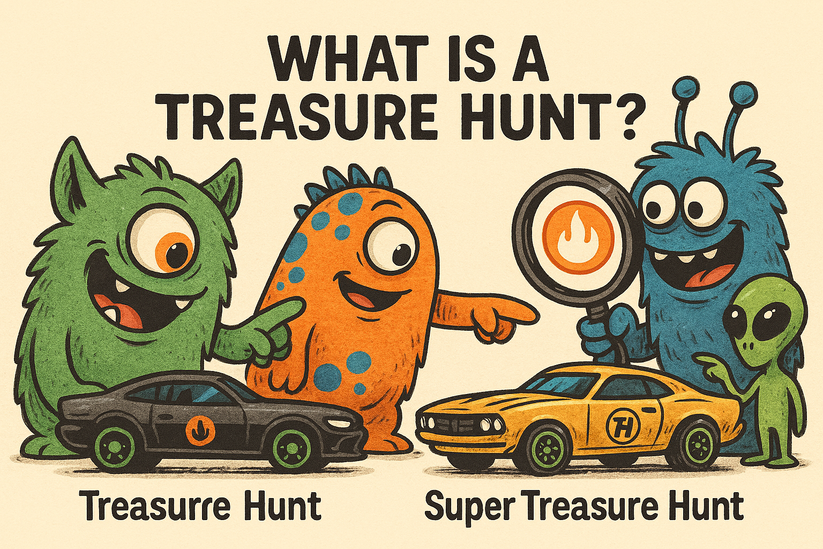
Spot Real Hot Wheels Treasure Hunts Instantly
Learn exactly how to identify Treasure Hunts & Super Treasure Hunts — even if you're a beginner. Instant download. Simple steps. No more missed finds.
Download the Guide