
Hot Wheels
Hot Wheels by Mattel: Brand History, Collecting & Custom Builds
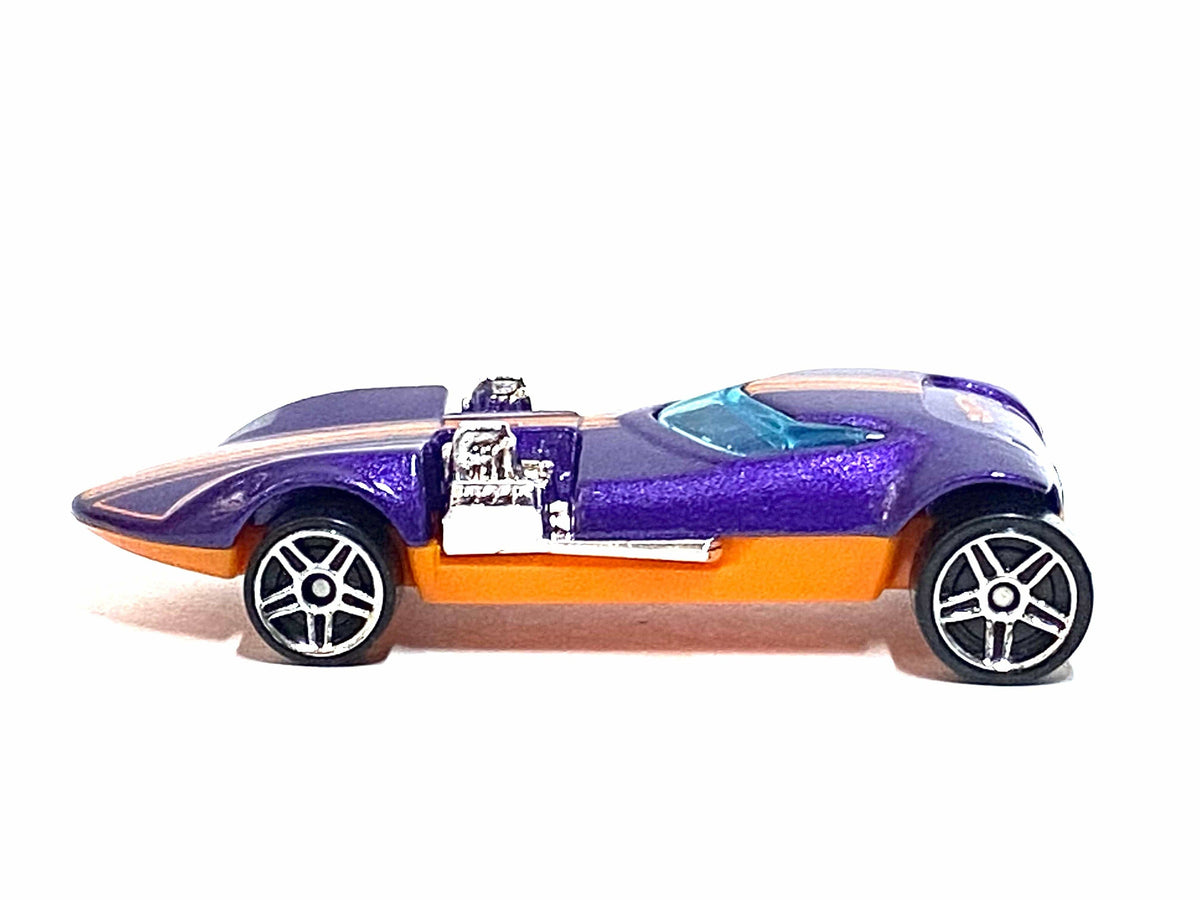
Choose your part of the Hot Wheels hobby.
Collect a casting you remember, pick a car for the track or build a custom with your own wheel choice. Hot Wheels by Mattel gives you many starting points; the useful decision is what you want to do with the next car.
At Muncle Mikes, you can compare individually listed loose cars, packaged collectibles, finished aftermarket customs and prepared DIY donors. Each format offers a different experience, so start with the result you want.
Updated September 22, 2026. Header: a purple-and-orange Twin Mill from the current catalog, not an original 1968 launch model.
The original idea: custom-car character and rolling play
Hot Wheels launched in 1968 with sixteen models. The Strong National Museum of Play describes Elliot Handler's interest in California custom cars, Harry Bradley's design leadership and engineering aimed at low-friction rolling. Bright Spectraflame colors and flexible racing track completed the early concept. Read The Strong's historical account.
For the actual launch names, use the Original 16 checklist. For later milestones, continue with The Evolution of Hot Wheels. This guide focuses on choosing between today's collecting and building options.
Choose the purchase format before the special edition
| Your goal | Start here | What to compare |
|---|---|---|
| Enjoy the car outside its package | Loose Hot Wheels | Casting, decoration, visible condition and completeness. |
| Keep the retail presentation | Carded collectibles | The car, card, blister and any supplied protector separately. |
| Display a completed modified car | Finished custom Hot Wheels | The exact wheel setup, finish work and included items. |
| Choose the finish and build it yourself | Prepared DIY donors | Preparation, original components and supplies needed separately. |
A donor kit and a finished custom are not equivalent packages. Neither should be confused with a factory premium release merely because all three can share the same casting name.
Two examples: a loose Twin Mill and a finished Challenger custom
The purple-and-orange Twin Mill shown above is an ordinary loose-car catalog offer. Its three photographs let you compare the model and visible condition without relying on a sealed-package description.
The red, white and black 426 Challenger Drift Car is a different kind of purchase: a finished custom with chrome mag wheels and rubber tires. The actual modifications are part of its identity.
For the hands-on alternative, our Challenger comparison guide separates that completed car from a prepared donor. Choose by the specific offer, not a general assumption that every Hot Wheels arrives with the same wheels or accessories.
Learn the difference between a casting and a release
Use the casting name to identify the design, then compare the version: body color, decoration, wheel configuration, interior, glazing and packaging. Keep a model's copyright marking separate from the date of a particular retail release.
A seller's broad title can hide differences that matter to an exact collection. Compare the actual photos and ask for an underside view when the base contains information you need.
The Redline identification guide covers older cars. The Treasure Hunt history guide explains why special-release identification rules need the correct year.
Make custom Hot Wheels your own without mixing up originality
For a wheel swap, choose a suitable donor and measure tire diameter, width, axle spacing and clearance before ordering parts. For a repaint, test fit first and plan a compatible finishing system.
A custom can retain its original body graphics while using replacement wheels. Another may include a repaint or more extensive work. Record what changed rather than describing every modified car as a factory rarity.
Use the wheel-swap master guide with the wheels-and-tires collection. An individual kit's contents determine which parts you need to supply.
Keep play, display and purchase claims separate
For play, follow the age guidance and instructions on the actual vehicle and playset. Check physical clearances instead of treating a common brand name as a universal track-fit guarantee. Adult hobby customs and unfinished donor kits are not substitutes for a toy chosen for a young child.
For collecting, set a focus you can enjoy: one casting, a vehicle theme, a favorite color or a series. Compare delivered cost and matching completed sales when price research matters. You do not need a rarity story to justify a car you simply like.
Find a finished car—or start your next build.
Muncle Mikes is an independent reseller and customizer, not affiliated with or endorsed by Mattel. Current product pages specify each offer's price, contents and availability.
