

Best Of
Best Classic Muscle Car Diecast Models to Buy
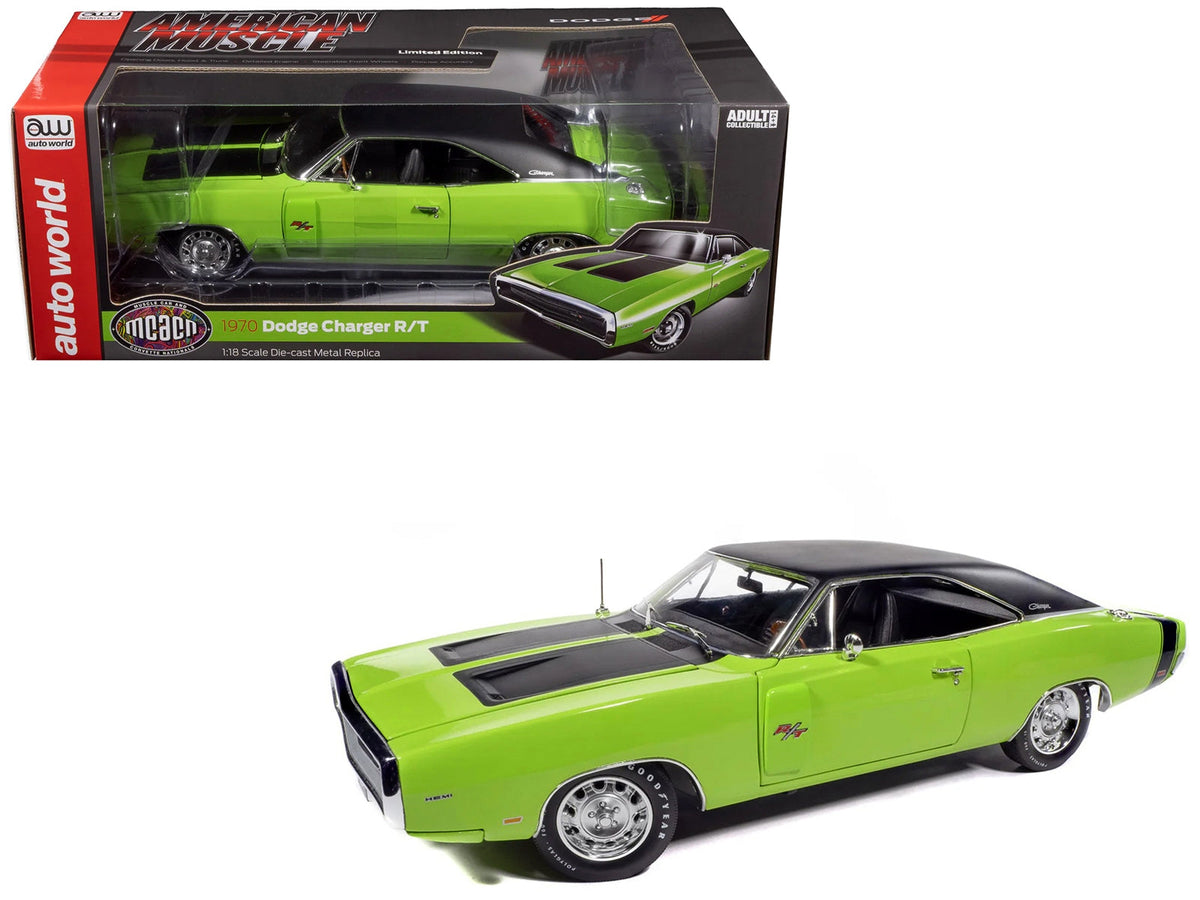
Featured example: 1970 Dodge Charger R/T MCACN Sublime Green – Auto World 1:18.
Classic muscle-car diecast collecting works best when the shelf represents an era rather than a random group of powerful cars. A few carefully chosen Ford, GM and Mopar icons can tell the story clearly.

Choose representative nameplates
Mustang, Camaro, Chevelle, Charger, Challenger and GTO are natural anchors.
Use factory colors and race liveries deliberately
A stock-looking shelf tells a different story from a custom or drag-racing display.
Mix manufacturers, not scales, for a cleaner look
One scale with multiple brands often creates better visual consistency.

Customs can form their own muscle sub-theme
Rubber tires and period-style mags work especially well when the goal is a modified street-machine look.
What cars count as classic muscle for a collection?
Collectors often focus on American performance cars from the 1960s and early 1970s, though definitions vary.
What scale is best?
Choose one that fits your shelf; 1:64 supports the broadest lineup in a small space.
Should customs be mixed with stock cars?
They can be, but a dedicated custom row often looks more intentional.
Current 1:18 muscle models make a coherent era shelf
Auto World examples include the 1970 Dodge Charger R/T, 1969 Dodge Coronet Super Bee and 1967 Corvette Stingray. Keeping those in one scale makes Ford, GM and Mopar comparisons much easier visually.
For a wider American-performance mix, continue to Best American Muscle Diecast Cars.
Use one scale for a cleaner muscle-car lineup
Mixing Ford, GM and Mopar is visually coherent when scale stays consistent. For deeper marque paths, continue to the Mopar guide, Mustang guide or Chevrolet guide.
Define the collection rule before adding another car
A focused rule makes each purchase easier to judge. You might collect one manufacturer, one body style, racing liveries, trucks, premium wheel releases or a timeline of generations. Record the exact casting and version you already own so a different color does not become an accidental duplicate.
Use product photographs to confirm wheels, graphics, packaging and condition rather than relying on the model name alone. When a set contains several cars, decide whether the complete theme belongs together or whether singles better fit existing manufacturer displays. Find related identification and organization help in the collector guides hub.

