

Collector Guides
How Big Is a 1:64 Scale Car? Size, Display Space and Buying Guide
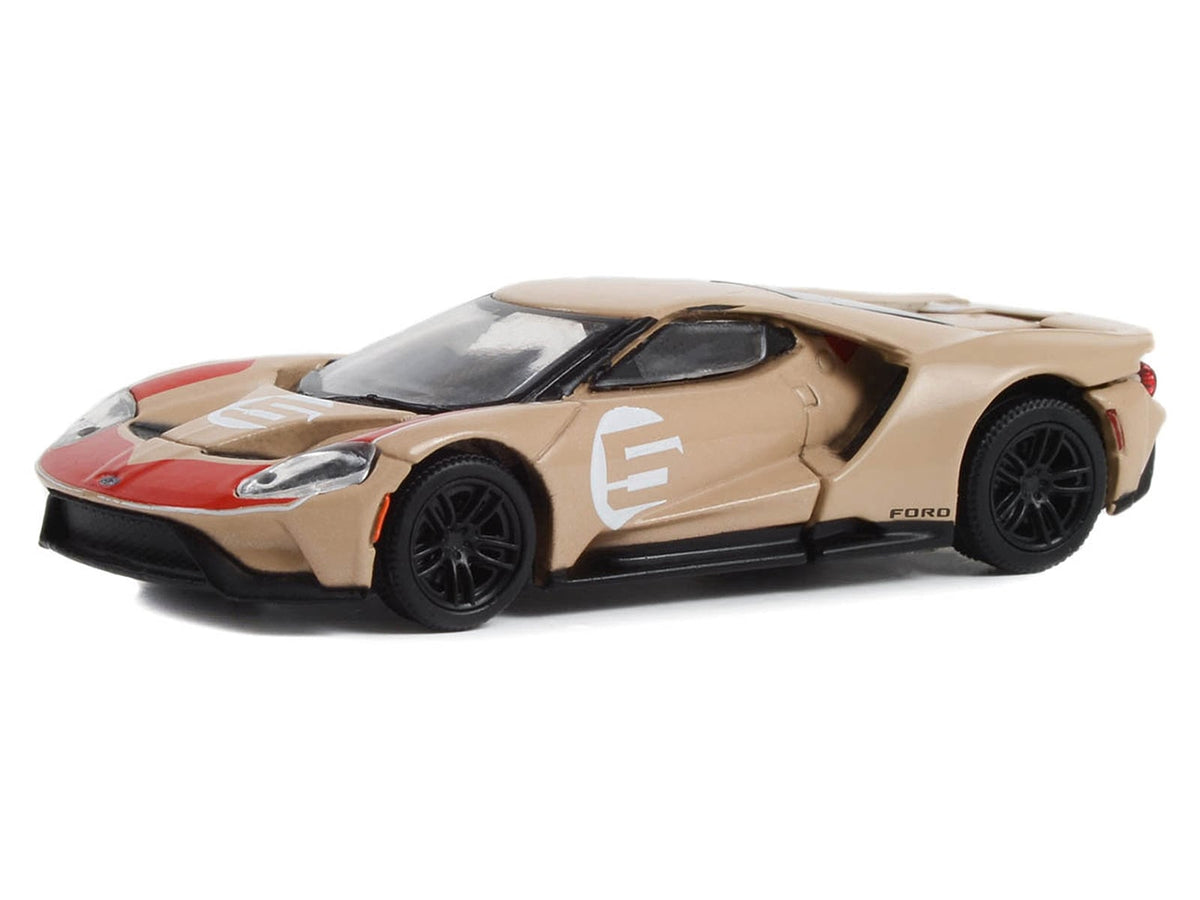
Featured example: Gold-and-red 2022 Ford GT Heritage Edition model by GreenLight, 1:64 scale.
A 1:64 scale car is small enough to fit many models on a shelf, but there is no single universal length. Sports cars, pickups, vans and transporters all occupy different footprints because they scale from different real vehicles.

Think in shelf rows, not one exact measurement
The useful question is how many of your chosen vehicle types fit on the shelf. A row of compact coupes uses different space than a row of pickups or vans.
Leave room to see the car
Packing 1:64 cars bumper-to-bumper maximizes capacity but reduces visual impact. A little spacing makes wheels, paint and body shape easier to appreciate.
Cases need height and width clearance too
Tall trucks, open doors, accessory racks and diorama pieces may require more room than the car body alone suggests.

1:64 is ideal for thematic depth
Because the footprint is small, collectors can build manufacturer, racing, movie, JDM or muscle-car themes without needing a room-sized display.
How many 1:64 cars fit on a shelf?
It depends on shelf width, vehicle type and how much spacing you leave between models.
Are all 1:64 cars exactly to scale?
Not always. Toy-oriented lines may vary, while collector models may follow scale more closely.
Is 1:64 good for dioramas?
Yes, because cars, figures and accessories can share a compact display footprint.
What 1:64 looks like in real shopping terms
One reason 1:64 is so useful is the range of subjects available. The current catalog includes realistic collector cars such as the GreenLight 2022 Ford GT Heritage Edition, detailed JDM releases such as the Inno Models Nissan GT-R R35, plus trucks and transporters that occupy much more space even though the scale number is the same.
For display planning, pair this guide with How Many 1:64 Cars Fit in a Display Case? and How to Display Hot Wheels and 1:64 Diecast Cars.
Who should choose 1:64?
Choose 1:64 if you want to collect many manufacturers, build dioramas, rotate seasonal displays or create deep sub-collections such as JDM, police vehicles, movie cars or one racing era. The small footprint lowers the penalty for trying a new theme, while the huge product range makes it easier to compare brands at the same nominal scale.
Measure the display before choosing
Nominal scale is a ratio, not a promise that every model will occupy the same footprint. A long sedan, truck or aircraft remains longer than a compact subject at the same scale, and stands, mirrors or open panels can add usable width and height. Measure the shelf or case, then compare the exact dimensions and photographed configuration on the product page.
Also decide which details matter at normal viewing distance. Larger scales can support more visible interior and opening-part detail, while smaller scales make it easier to build a broad collection in limited space. Use the collector guides hub to compare scales and display approaches before committing to one format.

