

Storage
How Many 1:64 Cars Fit in a Display Case?
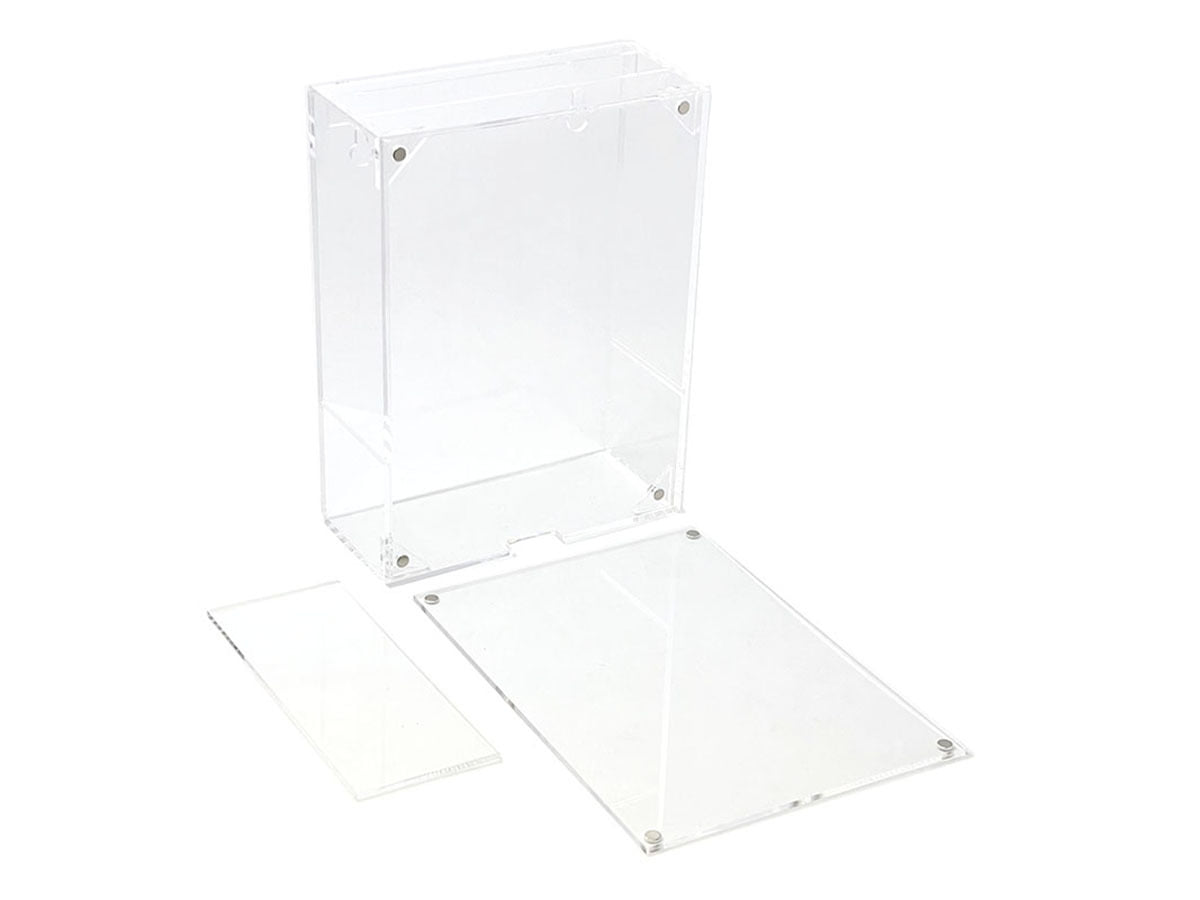
Featured example: Premium Single Display Case with Shelf | MiJo 1:64.
Count the cars you want to display, then measure the largest ones. A case that suits a row of small coupes may not work for vans, transporters or wide customs. Usable shelf space and clearance matter more than the number printed in the product name.

Measure inside the case
Use the clear width, depth and height of each shelf or compartment. Dividers, shelf supports and door hardware can take up space that is included in the outside measurements.
Try the row on a table first
Mark out the usable shelf area and arrange your cars inside it. Leave enough room to pick one up without rubbing its neighbor. Count that arrangement rather than packing the cars bumper to bumper.
Check the awkward vehicles separately
Test your longest transporter, tallest van and widest custom against the available space. A few larger models can change how many cars fit on a shelf, even when everything is described as 1:64.

Keep some spaces open
If you add cars regularly, leave room for the next few. It saves rearranging the whole case whenever a new model arrives and gives you more freedom to group similar cars together.
Compare cases and cars
Compare real case capacity instead of guessing
A single-car collector case solves one-car presentation, while the 24-car Acrylitower spinner is designed around a much denser display. Those two products illustrate why “how many fit?” has to be answered from the exact case dimensions and the type of vehicles you own.
If trucks, vans or oversized 1:64 models are part of the collection, reduce the expected capacity and leave extra clearance. Continue to Best Display Cases for 1:64 Diecast Cars for enclosure types and display tradeoffs.
Measure the display before choosing
Nominal scale is a ratio, not a promise that every model will occupy the same footprint. A long sedan, truck or aircraft remains longer than a compact subject at the same scale, and stands, mirrors or open panels can add usable width and height. Measure the shelf or case, then compare the exact dimensions and photographed configuration on the product page.
Also decide which details matter at normal viewing distance. Larger scales can support more visible interior and opening-part detail, while smaller scales make it easier to build a broad collection in limited space. Use the collector guides hub to compare scales and display approaches before committing to one format.

