

Collector Guides
What Order Should You Paint a Plastic Model Kit?
There is no single paint order that fits every model kit. The useful question is which surfaces become difficult to reach after the next assembly step.
Read the instructions for trapped areas
Cockpits, interiors, engine bays and wheel wells often need color before surrounding parts close. Mark those steps before assembly begins.

Build logical subassemblies
A model car might be divided into body, chassis, interior and engine. An aircraft might use cockpit, fuselage, wings and landing gear. Working in subassemblies gives you access while keeping related parts aligned.
Do not paint solvent-weld surfaces unnecessarily
Plastic cement works on compatible bare plastic. Heavy paint on the mating faces can prevent the solvent from reaching the styrene. Mask or clean those hidden joint areas where appropriate.
Paint large exterior surfaces after seam work
Body halves, fuselages and other structural pieces usually need gluing and sanding before the final exterior finish. Painting first can mean destroying the finish while removing the seam.

Leave fragile details until they are safe
Mirrors, antennas, exhaust tips and landing gear are easy to knock off while the model is being handled for painting. The instruction sequence may show them early even when a careful builder chooses to prepare them separately.
Plan decals and clear coats as part of the sequence
The surface under a decal and the finish above it both affect the final appearance. Test unfamiliar paint and clear combinations before committing to the model.
Browse Revell, AMT and Tamiya kits, then use the exact instruction sheet—not a generic order—as the final authority for your project.
A practical four-stage paint sequence
- Hidden detail: interiors, cockpits, engine parts and wheel wells that become hard to reach.
- Structural assembly: glue major pieces and clean seams before exterior finish.
- Main colors: primer, body or camouflage colors and masking work.
- Final detail: decals, trim, fragile parts and compatible clear finish if desired.
This sequence is a planning framework, not a rule. A kit with separate body panels, plated parts or a complex interior may need a different order. The best sequence is the one that preserves access and keeps finished surfaces away from sanding and glue work.
Current examples to compare
Use these current listings as concrete examples while applying the buying checks above. Compare the exact listing rather than assuming every release has the same packaging, finish or condition.
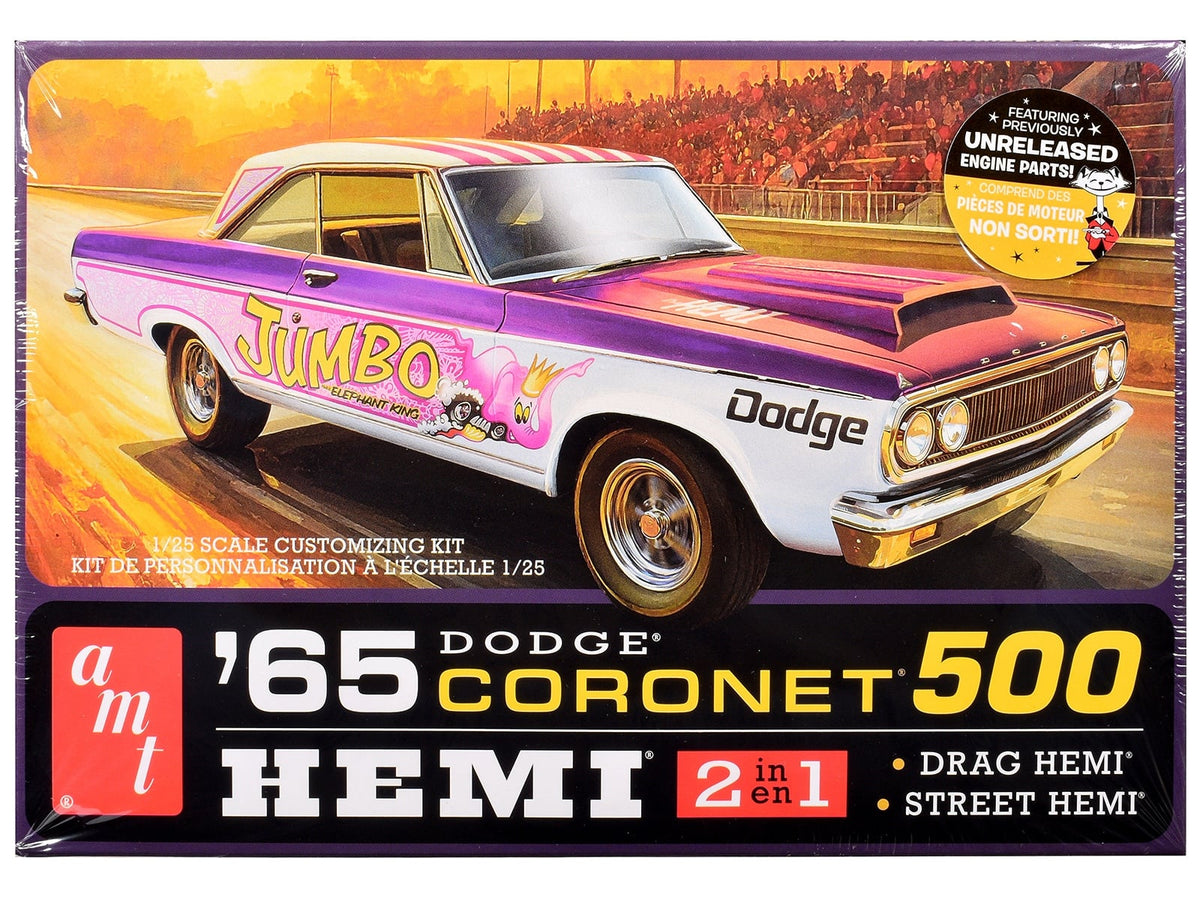
- AMT 1965 Dodge Coronet 500 Hemi 2-in-1 1:25 Model Kit #1499M — review the current product page for the exact version, condition, availability and included details.
- Toyota GR Supra — Tamiya 1:24 Model Kit — review the current product page for the exact version, condition, availability and included details.

