

Diecast Model Guides
Diecast Collecting Guide: Scales, Materials, Brands and Value
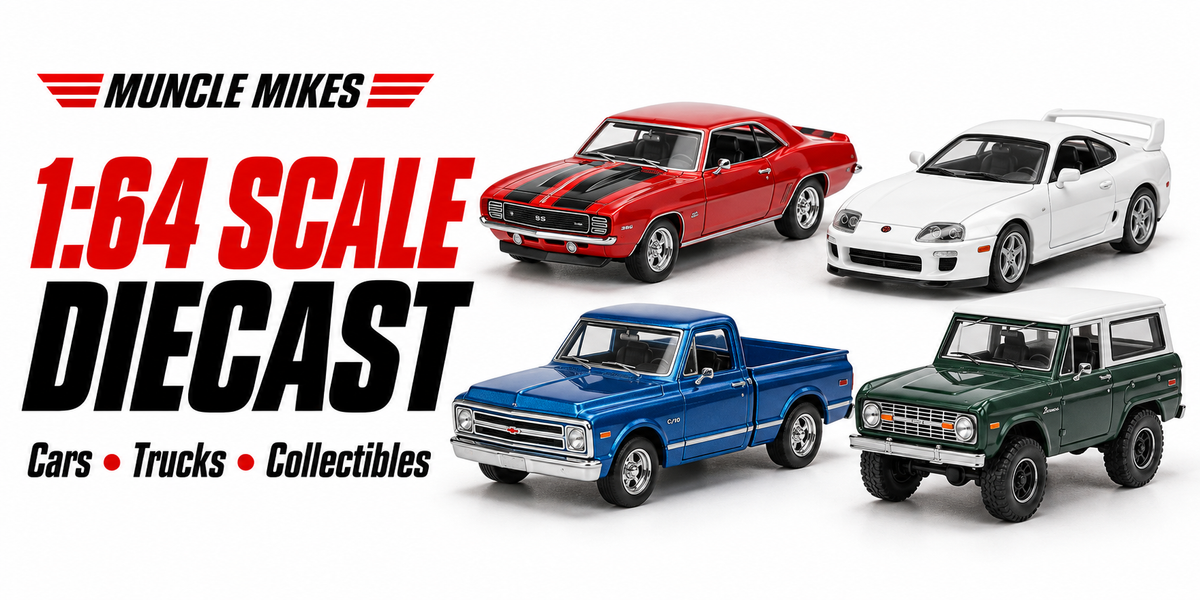
Diecast collecting can mean a loose 1:64 car, a detailed 1:24 display model, a construction machine, an aircraft, a movie vehicle, or a limited racing release. The shared material does not make those products interchangeable. Scale, manufacturer, casting, opening features, wheel type, packaging, and exact variation all shape what the model is and how it should be collected.
This guide gives the broad category a clear starting point. It explains scales, materials, packaging, variation control, display, and buying checks without pretending every model follows one formula. Muncle Mikes organizes thousands of models by scale and brand, including 1:64 diecast models, 1:43 models, and brand collections such as Jada and MINI GT.
What diecast means
Die casting is a manufacturing process in which molten metal is forced into a mold. In collectible models, the body or major structural parts may be metal while windows, interiors, tires, trim, bases, and accessories use plastic, rubber, resin, or other materials. “Diecast” therefore does not mean every part is metal, and a heavier model is not automatically more accurate or valuable.
Read the exact product description for materials and features. Some models have opening doors, hood, or trunk; others are sealed-body miniatures built for clean proportions. Some use rubber-like tires, while others use hard plastic wheels. Those are design choices, not universal quality rankings.
Choose scale by space and purpose
1:64 scale
The 1:64 category is compact, broad, and suited to collecting many vehicles in limited space. It includes simple play-oriented cars, premium replicas, racing liveries, custom-culture releases, and finely detailed collector models. The nominal scale can vary by manufacturer or casting constraints, so use actual dimensions when a display case or diorama must fit precisely.
1:43 scale
At 1:43, body lines, wheels, interiors, and printed details are easier to see while shelf demands remain manageable. This scale is common for road cars, motorsport, emergency vehicles, and European subjects. Packaging and display-base dimensions can be much larger than the model itself.
1:24 and larger
Larger models create strong visual impact and often include more opening features or detailed interiors. They also require more shelf depth and protection from dust. A collector who wants a few centerpiece cars may prefer this format, while a collector building a broad make-and-model library may favor smaller scales.
Collect the exact model, not just the vehicle name
A real vehicle can appear in many diecast releases. The manufacturer may change color, wheels, interior, graphics, base, packaging, production market, or included figure. Record the brand, item number, scale, casting or model name, color, livery, and packaging style. For racing cars, include the number, driver or team, event, and season when stated.
Exact identity matters when comparing listings. A black road car and a black race-livery car are not the same variation. A loose model and a carded model may use the same casting but serve different collecting goals. An item number is often more reliable than a shortened marketplace title.
Understand packaging choices
Carded blister packs make the graphics and factory seal part of the collectible. Window boxes and acrylic cases protect larger or premium models. Loose cars make inspection and display easy, and they are often the right choice for dioramas, photography, customization, or hands-on enjoyment. None of these approaches is inherently more legitimate.
Decide whether packaging condition matters before buying. If it does, inspect corners, creases, bubbles, seals, window scuffs, and crushing separately from the model. “New” can describe the model while the box still has shelf wear. If the car will be opened, do not pay for packaging perfection unless the artwork itself matters.
Look closely at finish and assembly
- Body: check paint coverage, dust, chips, tampo alignment, and panel fit.
- Wheels: look for matching style, straight axles, centered tires, and free rotation when appropriate.
- Glass: inspect for cracks, heavy scratches, glue marks, or poor seating.
- Interior: confirm color and major details match the stated release.
- Base: read molded or printed brand, scale, copyright, item, and country information.
- Accessories: verify figures, stands, mirrors, antennas, or alternate parts are present.
Minor production variation can occur, especially at small scales. The key is accurate description and clear photos. Do not treat every small difference as a rare factory error without evidence; many differences come from lighting, angle, rolling changes, or a different release.
Brands have different strengths
A brand name is useful context, but the exact series matters. Jada offers many larger-scale vehicles, licensed movie themes, figures, and stylized lines; the Jada Toys guide explains that ecosystem. MINI GT focuses heavily on detailed 1:64 road, racing, and modified-car subjects; use the MINI GT guide for its series and packaging. Formula 1 collectors can use the Hot Wheels Formula 1 guide to separate official team cars, multipacks, and premium releases.
Other manufacturers emphasize construction equipment, vintage American cars, emergency vehicles, aircraft, or specific scales. Compare the exact release against your goal instead of assuming one brand is universally “best.”
Display and storage protect the collection
Sunlight can fade packaging and finishes. Heat can warp plastic parts or tires. Dust collects around mirrors, wings, and panel lines. Use stable shelves away from direct sun, avoid damp storage, and give heavier models a secure surface. Clear cases reduce cleaning, but they must provide enough height and depth for doors, antennas, or display bases.
For boxed collections, avoid stacking weight on windows or blisters. Use acid-free dividers when long-term packaging preservation matters. For loose cars, separate models so sharp metal edges do not rub neighboring paint. Photograph the collection and record item numbers; inventory is useful for organization, insurance discussions, and preventing duplicate purchases.
Value is not the same as asking price
A seller can ask any amount. A realistic comparison uses the same brand, item number, variation, scale, packaging condition, and completeness. Completed sales are more informative than unsold listings, but even those require context. Fees, shipping, regional demand, and small sample sizes can distort a single result.
Collect for enjoyment first and treat value claims cautiously. Limited production, retired tooling, licensing, popular subjects, condition, and true scarcity can matter, but none guarantees appreciation. Never describe a model as an investment without evidence and an understanding of risk.
A dependable diecast buying checklist
- Confirm manufacturer, item number, scale, and exact vehicle or subject.
- Match color, graphics, wheels, interior, and packaging to the photos.
- Read whether the model is loose, boxed, sealed, opened, or missing accessories.
- Check actual dimensions when fitting a case, diorama, or transporter.
- Review condition separately for model and packaging.
- Use a secure display and keep an inventory after purchase.
Frequently asked questions
Is diecast the same as a toy car?
Some diecast models are designed for play, some for adult display, and many sit between those uses. Age grading, small parts, fragility, detail, and packaging should guide use.
Does 1:64 mean every car is exactly the same size?
No. Real vehicles differ in size, and manufacturers may adjust scale for packaging or tooling. Use listed dimensions for precise fit.
Are opening parts always better?
No. Opening parts add interaction but can introduce larger gaps or hinges. Sealed models may achieve cleaner body proportions. Choose the feature set you value.
Muncle Mikes tip: Save the item number and a clear photo of the base. Those two details solve more identity questions than a color description alone.

