

Diecast Model Guides
Fast and Furious Model Cars: Collector’s Guide
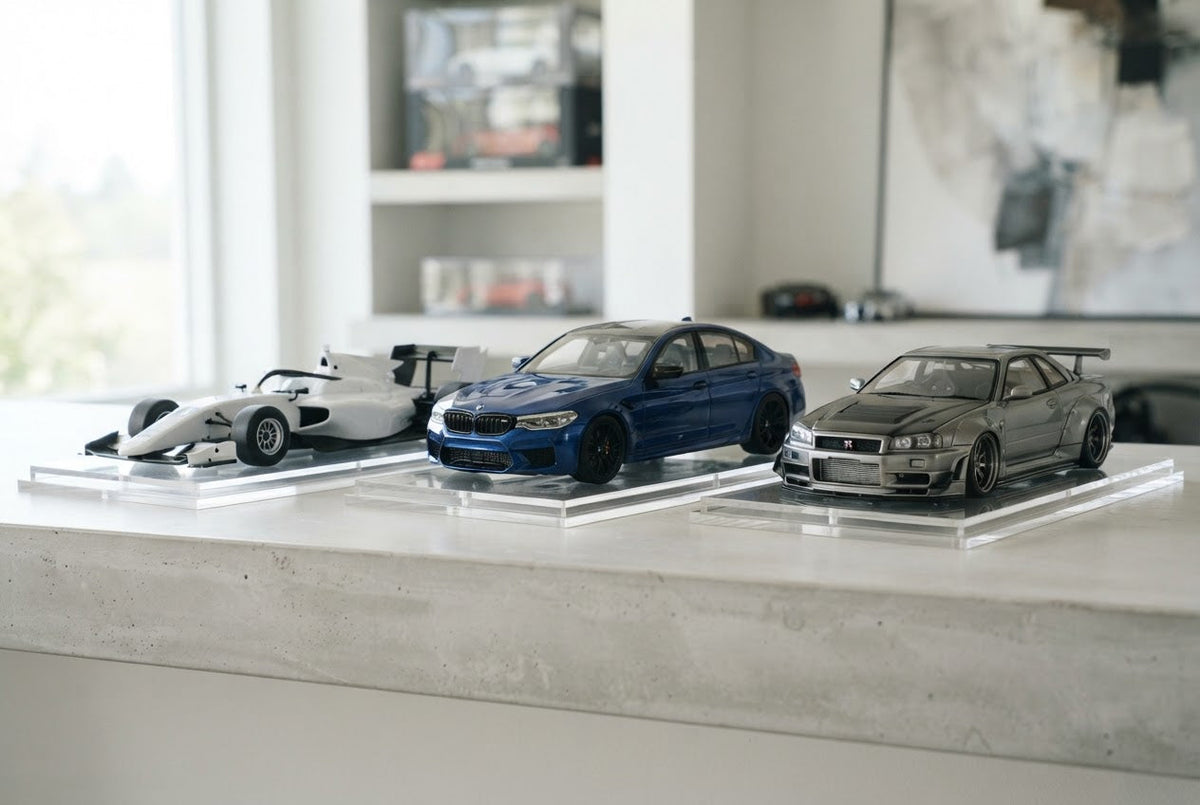
Fast and Furious model cars can represent a specific movie car, a character, a memorable scene, a vehicle family, or simply the visual style of the franchise. Those are not the same collecting goal. A bright orange Toyota Supra, a black Dodge Charger, a tuner-era Nissan, and a modern supercar may all belong under the same franchise banner, but the exact film, body configuration, graphics, wheels, scale, and product format determine what each model actually documents.
This guide explains how to identify movie-inspired releases, choose between finished diecast, build kits, slot cars, and dioramas, and organize a collection that remains understandable as more films and vehicles are added. The goal is not to chase every package carrying a franchise logo. It is to choose models that accurately support the story you want the shelf to tell.
Organize Fast and Furious model cars by film or character
A film-by-film collection is the clearest structure when the franchise timeline matters. Label each model with the movie, character, vehicle, and scene or role. A character collection follows one person’s cars across several films. A vehicle-family collection can compare Supras, Chargers, Skylines, muscle cars, or tuner builds without trying to complete every cast member.
Start with a small anchor pair. The 1:24 Dom’s Charger and Brian’s Toyota Supra set immediately establishes the central road-and-tuner contrast. From there, add only models that extend the story: another film, a changed build, a new character, or a different product format with a clear purpose.
Verify the movie car, not only the franchise logo
Read the full listing for year, make, model, color, graphics, wheels, character, and film. A generic orange Supra is not automatically the same release as Brian’s movie car. A black Charger can represent several versions across the franchise. Packaging art may be shared across a product line, so the vehicle itself must match the named subject.
Compare the front fascia, hood, body kit, spoiler, wheels, paint, graphics, interior color, and license-plate treatment visible in the product photos. The Brian’s Toyota Supra 25th-anniversary model in 1:24 has a specific collector identity. Record that edition rather than filing it only as “orange Supra.”
Choose the product format before choosing the scale
Finished diecast models arrive assembled and painted. They are suited to collectors who want immediate display and consistent presentation. Plastic or metal build kits make assembly part of the experience and may require tools, paint, decals, or finishing. Slot cars are operating models designed for a compatible track system. Dioramas package vehicles with a scene or display context.
The 1:24 metallic orange Toyota Supra build kit should be purchased as a project, not as a ready-to-display model. The 1:32 Scalextric Fast & Furious Toyota Supra belongs to a powered slot-car system. Both portray a Supra, but they solve entirely different hobby needs.
Use scale to control the size of the story
A 1:64 collection can include many characters and films in a compact area. A 1:43 or 1:32 display gives more room for livery and body detail while staying manageable. A 1:24 model has enough presence for opening parts, interiors, and paired displays. A 1:18 car becomes a centerpiece and should be chosen selectively because a complete franchise lineup at that size quickly overwhelms a cabinet.
Do not assume two models are compatible for a paired display simply because the boxes look similar. Confirm the scale. A 1:24 Charger and a 1:32 Supra will not read as an accurate side-by-side scene, even if each is individually appealing.
Build scenes without turning the shelf into clutter
A scene-based display works when the vehicles, backdrop, and spacing support one moment. The Fast & Furious Final Race diorama provides a defined composition rather than a loose pile of related cars. If you create your own scene, use one or two focal vehicles, a simple road surface, restrained signage, and enough empty space to see the silhouettes.
Keep figures, props, and lighting subordinate to the cars. Avoid placing tall packaging directly behind a low model where the art competes with the vehicle. A plain light shelf or clean case often makes detailed graphics and wheel choices easier to appreciate.
Inspect movie-car details and model quality
Check stance, wheel size, tire fit, body-kit alignment, wing angle, glazing, light printing, graphics, and paint boundaries. On opening models, doors and hood should sit flush when closed. On smaller cars, the major color blocks and graphics should be crisp even when tiny sponsor marks are simplified.
Movie accuracy and manufacturing quality are separate questions. A model can represent the correct car but have a crooked wheel or damaged graphic. It can also be beautifully assembled yet use a generalized livery. Inspect both the identity and the execution before adding it to a character or film-specific collection.
Separate Toyota Supra collecting from franchise collecting
The Supra appears in the franchise, but not every Supra miniature is a Fast and Furious release. A casting collection may include stock, custom, racing, Tooned, premium, and movie-inspired Supras. A franchise collection should include only releases tied clearly to the films or a deliberate display comparison.
For generation and casting identification outside the movie context, use the Hot Wheels Toyota Supra casting guide. Keeping those two intentions separate prevents every orange or modified Supra from being mislabeled as the same movie car.
Document editions, packaging, and paired sets
Record maker, item number, scale, vehicle, year, character, film, edition, color, format, and whether the package includes another car, figure, base, or scene. Anniversary packaging and paired sets can create variants that look similar when removed from the box.
Keep packaging when it supplies the film or character identification. Photograph the front, back, base, and item number before opening. If a paired set is separated, label both cars so the original relationship is not lost.
Fast and Furious model cars buying checklist
- Confirm the exact film, character, year, make, model, color, graphics, and body configuration.
- Identify whether the product is finished diecast, a build kit, a slot car, or a diorama.
- Check the scale before planning paired scenes or mixed displays.
- Inspect stance, wheels, body kit, wing, glazing, graphics, opening parts, and paint.
- Compare item numbers and editions to avoid duplicate anniversary or packaging variants.
- Record the movie identity and keep packaging that proves the release.
Frequently asked questions
What are the best Fast and Furious model cars to start with?
Choose two vehicles central to the story you care about, such as the Charger and Supra, then add cars by film or character rather than buying unrelated franchise packaging.
Are Fast and Furious build kits already assembled?
No. A kit is a project and may require assembly, tools, decals, and sometimes paint. Check the product format before ordering.
Can 1:24 and 1:32 models be displayed together?
They can share a cabinet, but they will not look correctly proportioned in one realistic scene. Group each scale or use clear separation.
Is every orange Toyota Supra a Fast and Furious car?
No. Verify the franchise branding, character or film identity, graphics, wheels, body treatment, and exact product release.
Build a focused Fast and Furious model cars collection
The most compelling Fast and Furious model cars display has a plot. Organize by film, character, scene, or vehicle family; verify the exact movie identity; and choose the product format that matches how you enjoy the hobby. A smaller, well-documented collection will communicate the franchise far better than a crowded shelf of vaguely related cars.

