

Diecast Model Guides
Good Ol’ Boys 11082 Old Dirt Track Racers Decals: Scale, Subject & Display Guide
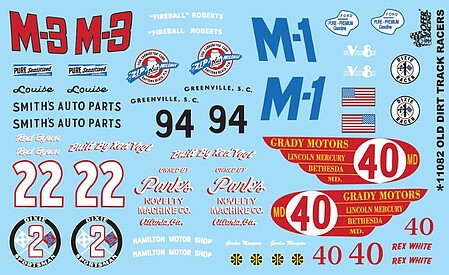
Good Ol’ Boys 11082 Old Dirt Track Racers Decals works as both a miniature and a display piece. Scale determines how it sits beside other models, while finish and delicate details determine how it should be handled and stored.
What to know before getting started
Good Ol’ Boys 11082 supplies Old Dirt Track Racers graphics with racing numbers and sponsor markings. The pictured decal sheet includes multiple colorful designs for model race-car projects.
The identifying item number is GOF11082. It is useful when nearby products have similar names.
Start with subject and scale
The represented vehicle, aircraft, machine, ship, or figure and its stated scale determine how the model fits beside the rest of a collection. The year in a vehicle name usually describes the real subject, not necessarily the year the miniature was produced.
Look closely at finish and features
Paint, graphics, glazing, wheels, mirrors, antennas, bases, and moving parts all affect the model’s display appeal. Opening panels, lighting, steering, or removable pieces should be expected only when the product description says they are present.
Plan enough display space
Scale alone does not give the final footprint. Allow room for stands, open doors, wings, trailers, mirrors, or other projecting details. A protective case also needs space around the model so delicate parts are not pressed against the cover.
Handle and store the model carefully
Lift the model by strong structural areas rather than mirrors, wings, or antennas. Keep it away from prolonged sunlight, moisture, and materials that may react with tires or paint. Packaging can be stored separately when it matters to the collection.
Planning the display
Measure the available shelf or case space and allow room for mirrors, antennas, wings, doors, stands, or other projecting details. Handle the model by its strongest areas and keep tires or painted surfaces away from materials that may react over time.
Opening features need extra clearance
Doors, hoods, trunks, wings, trailers, and display stands can expand the model’s footprint beyond its closed dimensions. Support moving parts rather than leaving them under stress for long periods.
Keep the original information with the model
Scale, manufacturer, item number, finish, and package details are useful even when the model is displayed loose. Store the box and inserts in a dry place if they matter to the collection.
Study the exact product photographs

Use one final reversible check
Before the item is permanently altered, place it in the intended project, display or operating setup without adhesive or destructive work. Confirm access, clearance, visual scale and the ability to remove or maintain it later. When electrical or powered use applies, begin with the lowest-risk controlled test allowed by the instructions.
Write down any unresolved point rather than improvising an answer. A short pause for the correct dimension, material or interface is usually less expensive than repairing a product that was forced into the wrong role.
A final product-specific decision checklist
- Match the identity: compare the complete title, manufacturer, item number and selected option with the current package or product label.
- Confirm the contents: separate items explicitly included from tools, scenery, vehicles, paint or accessories shown only to explain use.
- Measure the real space: check footprint, clearance, scale, wheelbase, connector or mounting dimensions wherever fit affects the project.
- Use the correct instructions: rely on the current manufacturer document for assembly, operation, material compatibility, care and safety.
- Test reversibly: dry-fit, place temporarily or run a controlled low-risk test before cutting, gluing, painting, wiring or discarding packaging.
- Document the result: save one arrival photograph and record the actual fit, condition or operating outcome separately from the original specification.
This checklist is deliberately tied to the exact item rather than a broad category assumption. Two products can share a subject, brand or nominal scale while differing in quantity, materials, interfaces or included hardware. Resolve those differences before permanent work. If a required fact is absent from the current listing, mark it as unresolved and obtain it from the manufacturer or the physical instructions instead of guessing.
After use, keep any spare pieces, labels and instructions together. For a build, note the materials and changes that produced the finished result. For operating equipment, record maintenance and compatibility observations. For a collectible, record package and item condition separately. Those notes make the guide useful later without rewriting an owner observation as a factory claim.
Preserve a useful starting record
Save the receipt, the product URL and one clear arrival photograph under GOF11082. Record only what can be observed directly: package condition, included pieces, color, size, fit, damage or missing components. Do not turn an assumption about a similar product into a fact about this one.
After the first inspection, add project or collection notes separately. That keeps the original product evidence intact while still allowing the owner to document assembly choices, display location, operating results, custom work or maintenance.
Collector questions worth recording
What identifies this exact release?
The full title, product reference, finish, wheels, graphics, packaging and photographs should agree. A vehicle name alone is not enough.
Should package and model condition be combined?
No. Record card, box or blister condition separately from the visible condition of the model inside.
Does a series name guarantee rarity or value?
No. Identity, originality, condition, demand and genuinely comparable completed sales all matter, and market results can change.
How should the item be stored?
Support it without pressure on mirrors, wings, axles, blisters or painted surfaces, and keep it away from direct sunlight and large temperature swings.
View Good Ol’ Boys 11082 Old Dirt Track Racers Decals at Muncle Mikes
Use one final reversible check
Before the item is permanently altered, place it in the intended project, display or operating setup without adhesive or destructive work. Confirm access, clearance, visual scale and the ability to remove or maintain it later. When electrical or powered use applies, begin with the lowest-risk controlled test allowed by the instructions.
Write down any unresolved point rather than improvising an answer. A short pause for the correct dimension, material or interface is usually less expensive than repairing a product that was forced into the wrong role.
A final product-specific decision checklist
- Match the identity: compare the complete title, manufacturer, item number and selected option with the current package or product label.
- Confirm the contents: separate items explicitly included from tools, scenery, vehicles, paint or accessories shown only to explain use.
- Measure the real space: check footprint, clearance, scale, wheelbase, connector or mounting dimensions wherever fit affects the project.
- Use the correct instructions: rely on the current manufacturer document for assembly, operation, material compatibility, care and safety.
- Test reversibly: dry-fit, place temporarily or run a controlled low-risk test before cutting, gluing, painting, wiring or discarding packaging.
- Document the result: save one arrival photograph and record the actual fit, condition or operating outcome separately from the original specification.
This checklist is deliberately tied to the exact item rather than a broad category assumption. Two products can share a subject, brand or nominal scale while differing in quantity, materials, interfaces or included hardware. Resolve those differences before permanent work. If a required fact is absent from the current listing, mark it as unresolved and obtain it from the manufacturer or the physical instructions instead of guessing.
After use, keep any spare pieces, labels and instructions together. For a build, note the materials and changes that produced the finished result. For operating equipment, record maintenance and compatibility observations. For a collectible, record package and item condition separately. Those notes make the guide useful later without rewriting an owner observation as a factory claim.

