

Matchbox
Matchbox Classic Pickups: Ranchero, GMC Stepside or 1935 Ford?
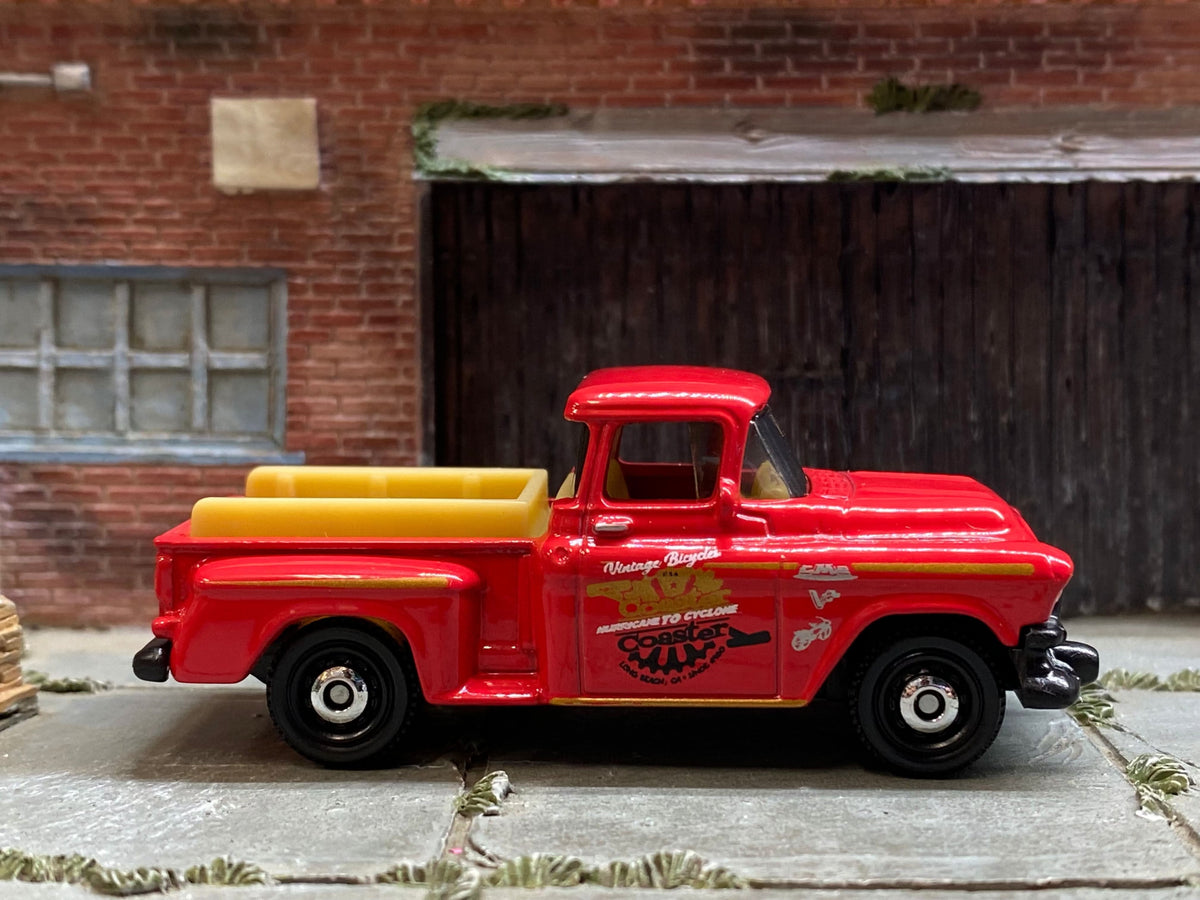
A classic-pickup collection can be interesting with just three well-chosen models. MM's Matchbox catalog includes a light blue 1961 Ford Falcon Ranchero, a red-and-gold 1957 GMC Stepside with wood bed sides, and a satin green 1935 Ford pickup in Matchbox Construction livery. These are different named vehicles, not three interchangeable variations of one truck.
Choose by silhouette and purpose
| Vehicle | Catalog finish | Display idea |
|---|---|---|
| 1961 Ford Falcon Ranchero | Light blue | A road-car and pickup crossover in a street row |
| 1957 GMC Stepside | Red and gold, wood bed sides | A focal point with contrasting bed detail |
| 1935 Ford pickup | Satin green, Construction | An older-style truck in a worksite scene |
Each is listed loose without original card or packaging. The represented years organize the vehicles in a display, but they do not date the miniatures' production. The word wood in a product name should not be treated as proof of the miniature component's physical material; inspect the listing and photographs for what is actually offered.


Inspect the bed, sides and tail
A pickup's rear section can carry as much visual character as its cab. Review the bed edges, any side detail and the rear view. Check whether apparent cargo is molded detail, a separate included item or simply absent. Do not infer an opening tailgate or a tipping bed from a seam in the casting.
On the GMC, compare the bed-side presentation with the red-and-gold finish. On the Ranchero, view the cab and bed together so you can judge the full profile. On the Ford, inspect the construction decoration before choosing it specifically for a worksite theme.


Street row or working yard?
For a street display, the Ranchero can sit beside other named passenger vehicles while still adding a pickup bed to the row. The GMC can provide a brighter center point. For a worksite, the construction-themed Ford can support the story without requiring a large scene.
Use removable props and measure them before placing them near the bed. A crate that looks right next to one truck may be oversized next to another. Matchbox branding does not prove identical scale, and the represented year does not establish dimensions of the miniature. Measure model length, width and height if your layout depends on precise fit.

Compare factory decoration and project potential
If you buy a truck for its original livery, save photos and condition notes before cleaning or handling it extensively. If you want a custom, identify the desired stance before buying wheels. Larger tires can change the character of a pickup, but a successful swap still needs clearance at the arches and enough space across the axle.
Do not assume that a truck advertised in the same approximate scale supplies a compatible donor axle. Measure the actual Matchbox casting and check the parts listing. The custom guide helps organize that decision.
For a three-truck collection, one of each body shape gives more variety than three similar pickups bought without a plan. Choose individual condition and appearance over an unsupported rarity label, and keep the represented vehicle name with each model.
Find your next Matchbox project
Explore MM custom Matchbox cars and Matchbox DIY kits, checking each listing for the parts included. For original loose and vintage models, browse loose Matchbox cars or vintage Lesney Matchbox. Return to the Matchbox collector hub for more guides.

