

Matchbox
Matchbox Land Rovers: Defender 90 or Gen II Safari?
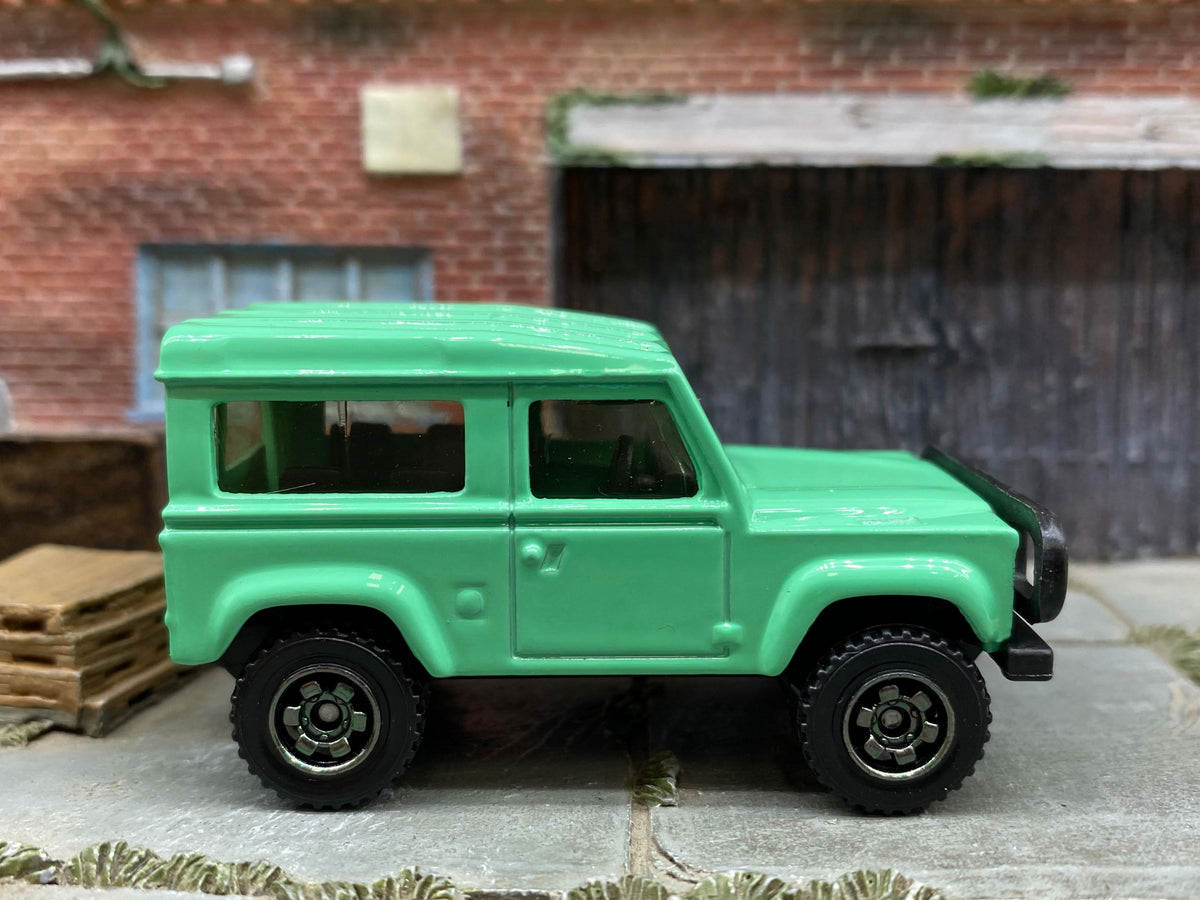
Matchbox Land Rover collecting becomes clearer when you separate the named model from the decoration and accessories of a specific release. MM lists a mint green Land Rover Defender 90 and a blue 1965 Land Rover Gen II Safari, both loose. These give you two distinct starting points for a Land Rover shelf or an off-road scene.
Use the full names
| Catalog vehicle | Finish | Start by checking |
|---|---|---|
| Land Rover Defender 90 | Mint green | Body profile, roof and visible wheel configuration |
| 1965 Land Rover Gen II Safari | Blue | Roof-area details, decoration and included components |
Do not turn a search result for another Land Rover edition into a specification for these cars. A premium collector release can have different decoration, packaging or accessories from a loose example with a similar vehicle name. Only the current listing and its gallery establish the contents of the offered item.


Roof detail needs a close look
View each car from above and from both sides. A roof rack, luggage shape or other upper-body detail may be molded, fixed or separate depending on the actual model. Do not assume removability or interchangeability unless it is established for the specific offer. The two MM descriptions identify the named vehicles and loose status; they do not promise a removable accessory.
Check the roof area for visible damage and compare how the car sits on its wheels. A tall body can obscure the wheel gaps in a thumbnail. If your intended use requires smooth rolling, confirm that separately from the photo-based condition inspection.

Choose the display story
The Defender 90 can form a focused row with other off-road vehicles, while the Gen II Safari's named identity lends itself to an expedition-style scene. Those are display suggestions, not claims that every pictured miniature component matches a particular real expedition vehicle.
Use a simple track and backdrop first. Add measured props only after you have checked the car's size and visible features. Keep detachable scenery separate so the model can be removed without scraping the paint or straining an upper-body component.

Do not assume a single scale or tooling
A shared brand and vehicle manufacturer do not prove identical miniature scale. Nor does the Land Rover name establish that two castings have matching axle lengths, roof components or base construction. Measure the actual car if you are choosing wheels, a parking bay or a carrier.
For release identification, gather readable base text, wheels and exact decoration. The 1965 label belongs to the represented Gen II vehicle name here; it is not a date for when that miniature was made. Keep packaging status in the record, because both offers lack original card or packaging.
Original collection or custom project?
If you value the particular mint green or blue finish, preserve photos and avoid unnecessary alteration. If the car is for a custom, write a short parts plan before opening it: wheels you intend to keep or replace, measured clearances, finish changes and any components that must remain untouched.
Use the Matchbox custom guide for the planning questions and the casting-revision guide for identification. Neither loose Land Rover offer automatically includes a modification kit or collector-edition accessory.
Find your next Matchbox project
Explore MM custom Matchbox cars and Matchbox DIY kits, checking each listing for the parts included. For original loose and vintage models, browse loose Matchbox cars or vintage Lesney Matchbox. Return to the Matchbox collector hub for more guides.

