

Matchbox
Matchbox MGB GT: Red and Yellow Coupe Buying Checks
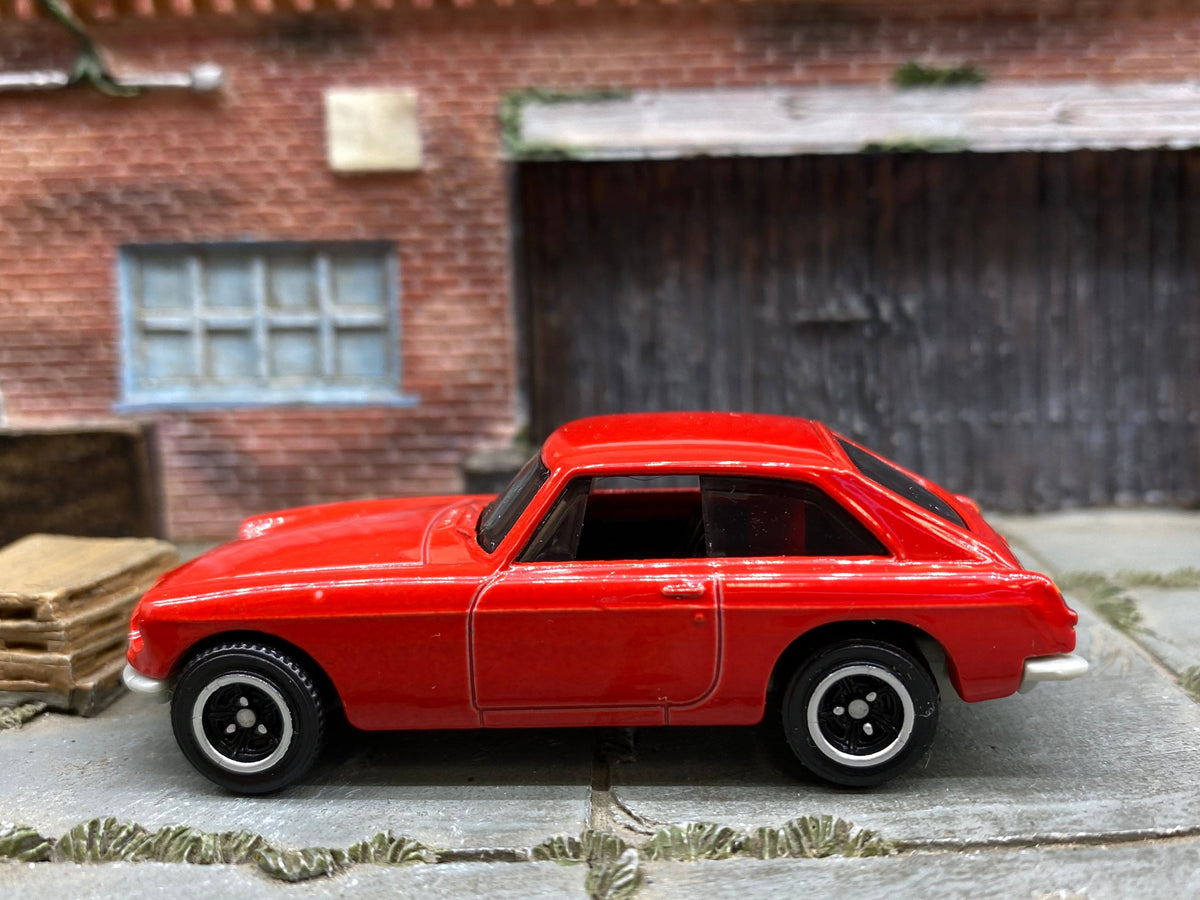
Shopping for a Matchbox MGB can lead to several different questions: which body style, which finish, and what condition? The two MM examples covered here are named 1971 MGB GT Coupe, in red and yellow. That coupe label matters if your display calls for a roofed sports car rather than an open roadster.
Start with the body style
Use the full model name when comparing offers. A listing for another MGB body style or a miniature from another manufacturer is not an interchangeable reference for this car's parts, dimensions or release history. Check the roof and rear profile in the photographs before treating two search results as the same casting.

Red or yellow?
| Finish | Display use | What to compare |
|---|---|---|
| Red | A familiar sports-car focal point | Roof edges, nose and visible side marks |
| Yellow | A bright contrast against darker cars | Surface marks and consistency across photo angles |
| A pair | A small casting-focused group | The same inspection angles on each car |
Both descriptions specify one loose vehicle without original packaging. Neither establishes a complete variation list or a rarity ranking. If you collect documented releases, you need more evidence than red versus yellow: base markings, wheel configuration, decoration and packaging or a reliable release reference.

Inspect the coupe where it will be seen
A roofed car can look different in a low shelf row than in an overhead display. Check the roof and glazing as carefully as the sides. Reflections can hide scratches or make a window look cloudy, so compare several gallery images. Do not infer opening doors, a moving hood or a removable roof from a panel line; the two product descriptions do not promise those features.
Check both axles visually and look for wheels sitting at an odd angle. If you plan to move the car through a diorama, rolling function needs confirmation. If you plan a fixed display, concentrate on the visible condition from the angles you will actually use. A small chip on a hidden underside and a large mark on the roof may have very different consequences for your display.
Build a compact sports-car comparison
A black Matchbox 2015 Mazda MX-5 Miata offers another named sports car for a small group. Arrange the MGB GT so its roofed shape remains visible instead of placing it directly behind the other car. Vehicle names can organize the display; identical miniature scale should not be assumed without measuring.
If you want a custom MGB GT, preserve a record of the original example before changing it. Take photos, note visible condition and measure wheel diameter, tire width and axle clearance. A finished custom should be documented as modified, especially if later mixed into a shelf of factory finishes.
Buying note: the year is not the toy date
The number 1971 is part of the represented car's name in these listings. It does not tell you when either miniature was manufactured. A loose car without its original packaging can still be a satisfying collection piece, but its release history should remain unassigned until you have evidence. Use the casting-revision checklist if identification is your next goal.

