

Model Train Guides
Bachmann HO Erie Lackawanna #8063 Flat Car: Item 17304 Guide
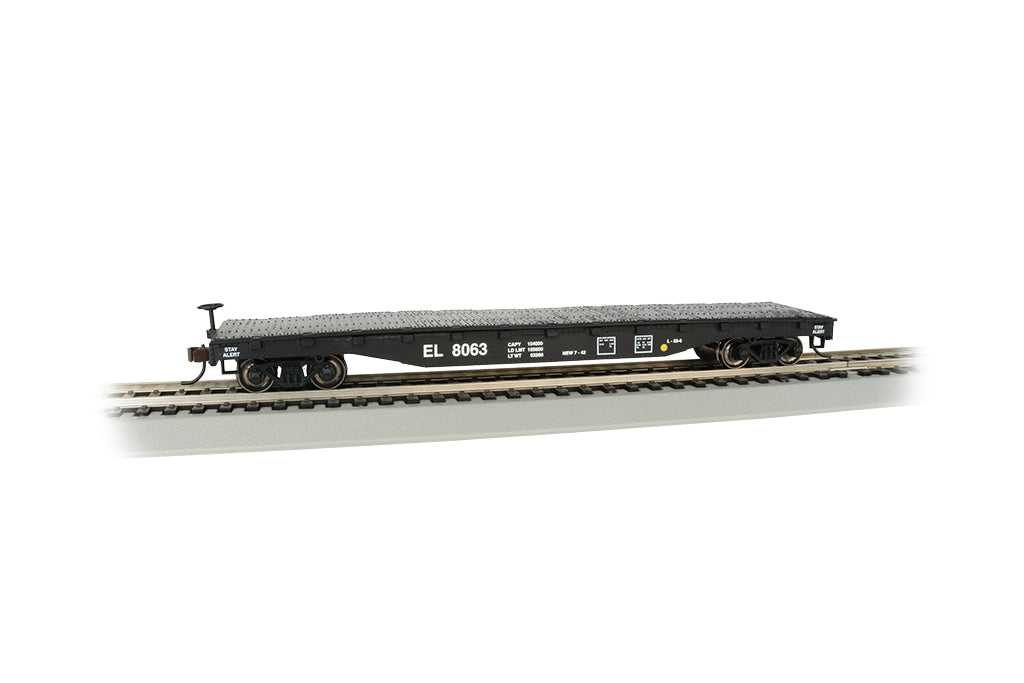
The Bachmann HO Scale 52-Foot Flat Car, Erie Lackawanna #8063 (item 17304) is a railroad-specific freight car for HO scale layouts and collections. Bachmann’s product index identifies the Erie Lackawanna #8063 version in its 52-foot flat car range, while Bachmann’s catalog identifies item 17304 with that same road name and number. The current Muncle Mikes record identifies the scale as HO and the store item number as BAC17304. The item page consulted does not publish a complete specification sheet for this individual model, so this guide focuses on accurate identification and useful layout checks rather than filling gaps with assumptions.
Identify the exact release
Use the railroad name, road number, scale, and manufacturer item number together. This is the Erie Lackawanna-marked 52-foot flat car numbered 8063, Bachmann item 17304, and Muncle Mikes item number BAC17304. Other 52-foot flat cars may have a similar deck or silhouette but different reporting marks and catalog numbers. Check the product image as well as the text when comparing listings, especially where a seller uses a broad category name or a family image.
- Manufacturer: Bachmann
- Scale: HO
- Car type: 52-foot flat car
- Railroad and number: Erie Lackawanna #8063
- Bachmann item: 17304
- Store SKU: BAC17304
“52-foot” is part of the manufacturer’s car designation. It describes the prototype car class and should not be used as the model’s physical length. The sources consulted do not provide a measured model length, width, minimum curve radius, or a detailed coupler specification for this exact item. If one of those measurements determines whether the car fits a display case, siding, or operating plan, confirm it with Bachmann or measure the model directly.
What a flat car contributes
A flat car’s open deck is intended for freight that can travel without an enclosed body. In prototype railroading, flat cars commonly carry machinery, lumber, vehicles, structural materials, or intermodal equipment, depending on the car and its fittings. Those examples explain the general role of the type; they do not establish which load, if any, is included with this particular release. The consulted item sources identify the car but do not confirm a load package. Check the current photographs and packaging details before planning a loaded scene.
On a model layout, an open deck gives a train a visual break from covered cars and makes a separate load visible. An empty car can also be plausible in an operating sequence, such as returning after delivery. If adding a load, compare the load’s footprint and attachment points with the deck. Keep its height within bridge and tunnel clearances, and avoid covering the Erie Lackawanna identity if the road name and number are important to the scene.
HO scale and operating fit
HO scale represents models at 1:87. Match the car to HO locomotives and rolling stock, then check the physical operating details that matter on your layout. Coupler height and type, wheel profile, truck movement, and curve behavior can all affect reliable operation. The item sources reviewed for this guide do not specify those details for item 17304, so compatibility with a particular coupler system or tight-radius track should be confirmed rather than assumed from a different Bachmann flat car.
For visual consistency, consider the car’s position in the train, the load or empty condition, and the surrounding equipment. A road-specific model can anchor an Erie Lackawanna scene or add a named railroad to a mixed freight consist. Avoid assigning the numbered car to a precise year based only on the model title; a dated roster or photograph is needed to substantiate exact prototype service.
Practical checks before adding item 17304
- Confirm the listing says Erie Lackawanna #8063 and Bachmann item 17304.
- Check that the photograph shows the same road name and number.
- Match HO scale to the track, locomotives, and other cars in the roster.
- Verify coupler, wheel, and curve compatibility for the layout; those exact specifications are not stated in the sources consulted.
- Check whether any load is included before planning the model as a loaded car.
- Measure the model if an exact shelf, case, siding, or clearance limit is involved.
- Use prototype references before placing the road number in a date-specific historical scene.
These checks distinguish the identity that is documented from details that still need confirmation. They make it easier to select the correct Erie Lackawanna version and plan its use without inheriting claims from another flat car in the Bachmann range.
Browse Bachmann model trains
Visit the Bachmann HO Erie Lackawanna #8063 product page for current store listing information. Browse the Bachmann model train collection to find other HO freight cars and layout additions.

