

Model Train Guides
Lionel Trains for Sale: A Practical Buyer’s Guide
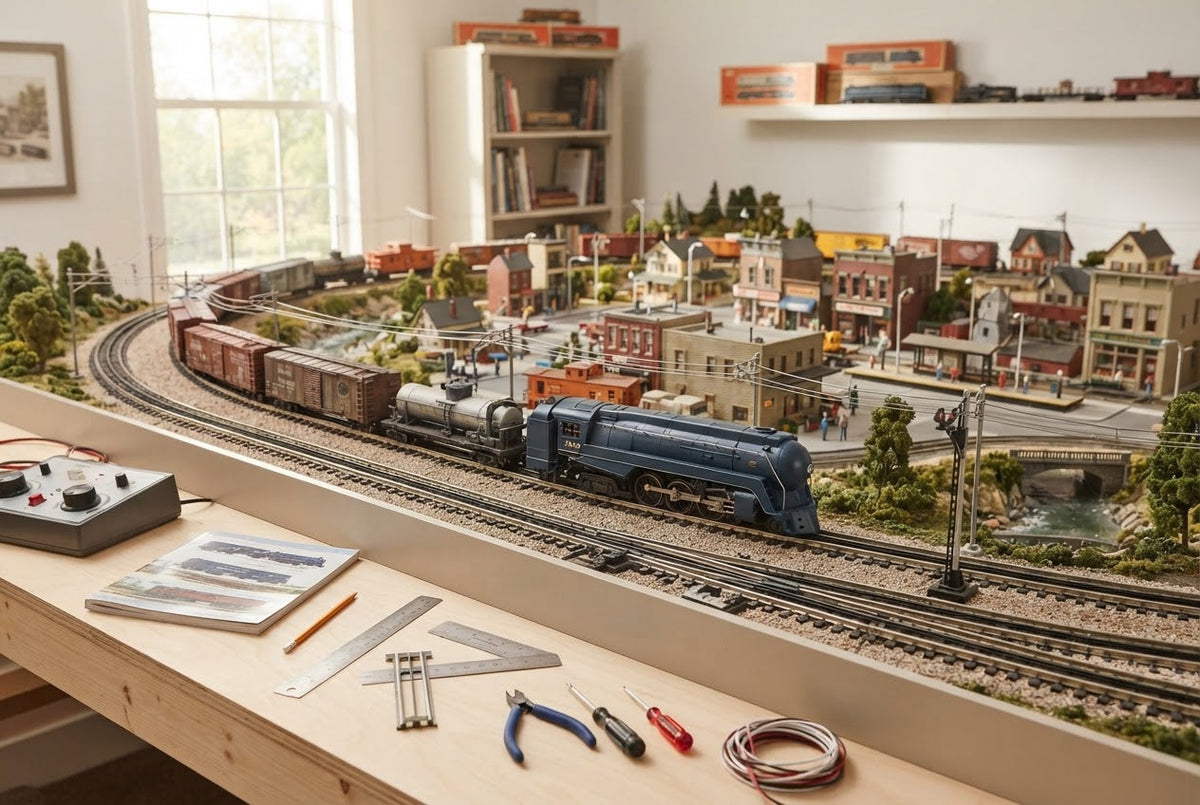
Shopping for Lionel trains for sale is easier when you stop treating every listing as the same kind of purchase. A boxed starter set, a modern command-control locomotive, a postwar engine, a piece of rolling stock, and a carton of track can all carry the Lionel name, but they solve different problems. The right choice depends on whether you want a train running tonight, a historically focused collection, a layout you can expand, or a specific replacement for equipment you already own.
This guide is built for the buyer who wants to make a sound first decision without getting buried in catalog numbers. It explains what should be included, how O gauge compatibility works, which condition details matter, and why track radius and control system should be checked before price. Muncle Mikes carries both complete trains and the individual components that make a railroad useful, so the goal here is not to push one format—it is to help you buy the format that actually fits your plan.
Decide what kind of Lionel purchase you are making
A ready-to-run set is usually the cleanest entry point. It normally groups a locomotive, cars, a basic oval, a power source, and a controller into one matched package. That removes several compatibility questions and gives a new railroader a working baseline. A themed set such as the Lionel Star Trek train set also gives the collection a clear identity from the first box. The tradeoff is that a set is designed as a beginning, not a finished railroad; curves, switches, structures, and additional cars are where the layout grows.
Individual locomotives and cars make more sense when you already own compatible track and power or when the collection is organized around a railroad, era, road number, or operating feature. A buyer building a freight consist might choose a locomotive first and add cars such as the Lionel MKT bunk car deliberately. That approach produces a more personal train, but it requires you to check minimum curve, couplers, electronics, scale proportions, and power requirements item by item.
How to evaluate Lionel trains for sale
Read the listing as if you were preparing the train for its first lap. Confirm the exact item number, production era, scale or traditional designation, minimum curve, power type, control features, included accessories, and condition. “O gauge” tells you the rail spacing; it does not automatically tell you that every car has the same body proportions or that every locomotive will negotiate the same curve. A long scale passenger car may need far more room than a compact traditional freight car even though both run on three-rail O gauge track.
For used Lionel trains, condition needs more detail than “good.” Look for cracked shells, missing handrails, wheel wear, corrosion, dry or hardened wiring, damaged pickup rollers, smoke-unit condition, and evidence of amateur repairs. Ask whether the locomotive has been tested under load, not merely whether a light comes on. Original boxes can matter to collectors, but a clean-running train without a box may be the better operating value. The Lionel Trains Pocket Price Guide is useful for identifying eras and comparing cataloged equipment, while the actual condition of the specific piece still determines what it is worth to you.
Match the train to your track and control system
Track geometry is the purchase filter most often skipped. Before buying a locomotive, find the tightest curve on the intended layout and compare it with the manufacturer’s minimum requirement. A locomotive marked for O-36 should not be bought for a layout built entirely from tighter curves. If you are starting fresh, planning around broader curves usually keeps more future options open. FasTrack is convenient for floor and temporary layouts because the roadbed and connections are integrated, while permanent layouts may use other systems for appearance or geometry.
Control is the second filter. Conventional trains respond to track voltage and direction controls. Command-equipped locomotives can offer sound, speed control, lighting, and other functions when paired with the appropriate system, but they may also have a conventional operating mode. Do not assume that the presence of electronics means every controller unlocks every feature. When expanding a layout, pieces such as a right-hand O-36 FasTrack switch should be selected by the exact track family and curve geometry, not just by the Lionel name.
New, used, vintage, or modern: choose by purpose
Modern Lionel is often the practical choice for a buyer who values current electronics, factory sound, dependable lighting, and documented specifications. Vintage equipment offers history, mechanical character, and a deeper restoration side of the hobby. Neither is automatically better. A family floor layout may benefit from a complete modern set and durable track, while a collector recreating a childhood railroad may care more about a specific postwar locomotive, transformer, or operating accessory.
If restoration is part of the appeal, budget for service materials and time rather than assuming every bargain is ready to run. The Greenberg repair and operating manual for Lionel trains can help an experienced hobbyist understand mechanisms and service procedures from the classic era. Buyers who do not want a repair project should favor clear test results, clean wheels and rollers, intact wiring, and a return policy over the lowest asking price.
Build the purchase around a railroad you can keep enjoying
The strongest Lionel collection has a rule. That rule might be one railroad, one era, holiday trains, operating cars, steam power, diesel power, or trains tied to movies and popular culture. A rule reduces duplicate buying and helps you decide which attractive items do not belong. It also makes display and storage easier because the collection has an organizing story rather than becoming a stack of unrelated boxes.
For an operating layout, buy infrastructure before novelty. Reliable track connections, adequate power, accessible switches, and sensible curves create more enjoyment than an additional locomotive that cannot run well on the existing plan. Add bridges, signals, structures, and rolling stock after the basic loop operates smoothly. This order feels slower in the shopping cart, but it produces a railroad that gets used instead of a collection that waits for missing parts.
Lionel buying checklist
- Purpose: complete first set, layout expansion, restoration project, or focused collectible.
- Identity: exact item number, road name, production era, and included components.
- Track: three-rail system, track family, and minimum curve requirement.
- Control: conventional, command capable, or dependent on a specific control system.
- Condition: tested operation, shell damage, wheel and roller wear, wiring, smoke, sound, and lights.
- Completeness: transformer or power supply, controller, track, instructions, and special accessories.
- Long-term fit: storage space, display plan, service comfort, and room to expand.
Frequently asked questions
Are all Lionel trains O gauge?
Lionel is best known for three-rail O gauge, but the company has produced equipment in other sizes and product families over its long history. Read the exact listing and item number. Within O gauge, traditional-size and scale-size equipment can also differ greatly in length and minimum curve.
Can modern Lionel trains run on old track?
Many can run on compatible three-rail O gauge track if the rails, connections, power supply, curve radius, and electrical condition are suitable. The locomotive’s minimum curve and control requirements still need to be checked. Old track that is rusty, bent, or poorly connected can make a good locomotive appear defective.
Is a Lionel starter set better than buying pieces separately?
For a first railroad, a complete set usually reduces risk because the main components are selected to work together. Buying separately is better when you already know the locomotive, road name, control system, and track geometry you want.
What matters more, the box or the train?
For a display-focused collector, an original box and paperwork can add meaning and value. For an operator, mechanical condition and reliable performance usually matter more. The best choice follows the purpose of the collection.
Choose Lionel trains for sale with a complete plan
The best Lionel trains for sale are not simply the rarest or the cheapest. They are the trains whose size, control system, condition, and minimum curve match the railroad you intend to build. Start with purpose, verify the item number, and treat track and power as part of the purchase rather than as an afterthought.
A complete set can put a train in motion quickly; individual locomotives, cars, and FasTrack pieces can shape that first loop into a personal railroad. Use the live product details on Muncle Mikes to compare exact specifications, and buy the system you will be able to run, maintain, and expand.

