

Model Train Guides
Osborn Model Kits N Scale Lobster Fishing Equipment Shed Kit – 3125: Scale, Layout & Compatibility Guide
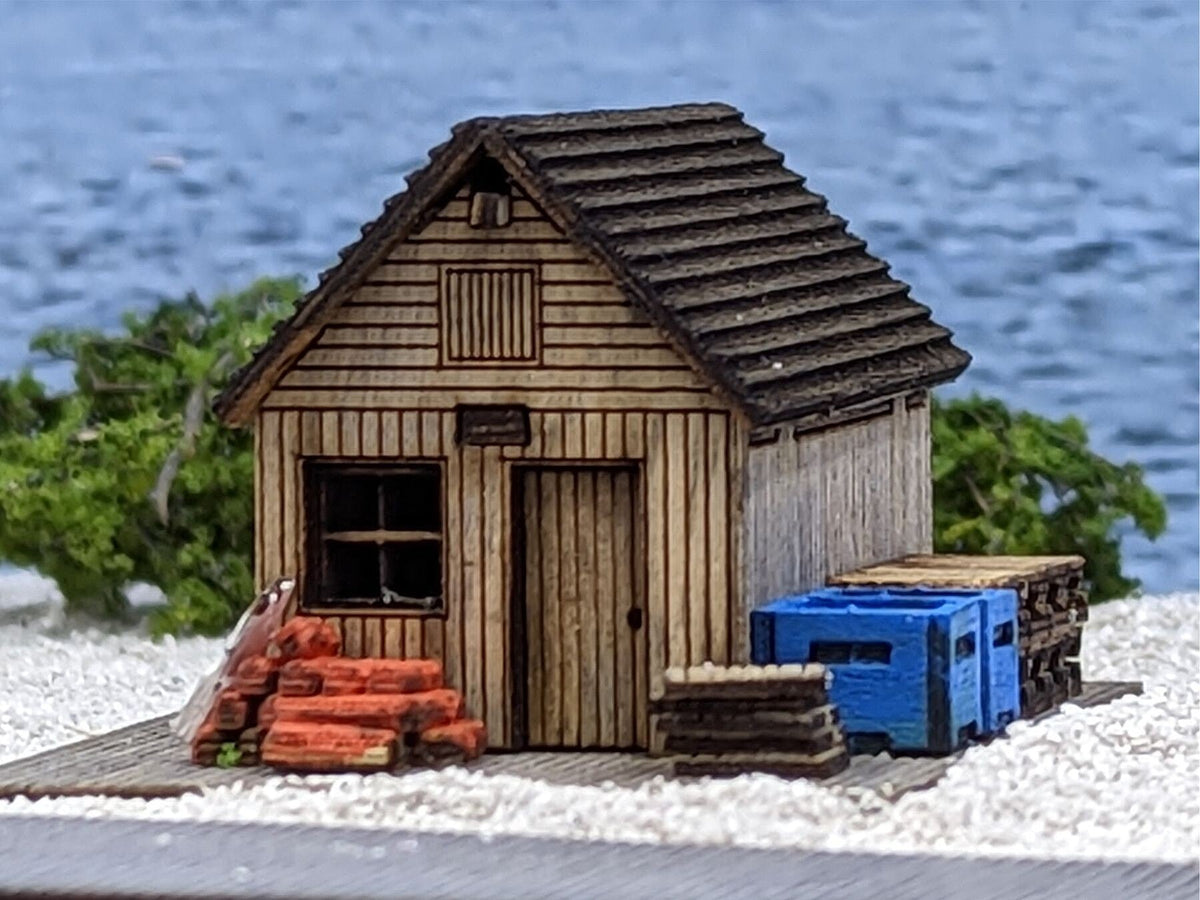
Osborn Model Kits 3125 brings a small N-scale equipment shed and a collection of lobster-fishing gear to a waterfront scene. The accessories are central to the project: they let you suggest sorting, storage and preparation around the building without needing a large harbor area.
What belongs to the 3125 kit
Osborn’s exact kit listing identifies the building and the following details:
- Eight lobster traps.
- Four skids.
- Two large buoys and eighteen small buoys.
- Two storage bins/work tables.
Those counts come from the manufacturer’s contents list, rather than an attempt to count every partially hidden piece in a finished scene. Muncle Mikes identifies the N-scale kit as OMK3125; use that number when checking the exact shed listing.
The published contents do not list a boat. A lobster boat, water surface, surrounding ground cover and a larger wharf are separate scene-planning decisions, not additions established by the shed’s title.
Allow working space beyond the quoted footprint
The manufacturer gives an approximate footprint of 2 × 1.75 inches, equivalent to about 50.8 × 44.5 mm. Start with a paper rectangle at that size, but leave additional space for the arrangement of traps, skids and access around the door.
Choose where the activity happens before placing every accessory. One possibility is to group traps near a work table and reserve a clear route to the entrance. Another is to keep the front less crowded and place most of the stored equipment along the side. These are layout ideas, not prescribed assembly positions.
If the shed sits near a railway siding, place a representative vehicle on the track while planning the scene. Keep the building and loose gear outside the clearance needed by your actual trains. The kit’s N-scale designation does not determine the distance from a curved track or the space required for loading access.
Use the finished photograph as a reference
The current product image shows a completed scene with weathered brown siding, a dark pitched roof, orange and blue equipment and stacks beside the doorway. It is useful for seeing how a compact arrangement can read as a working shed.
It is not a promise that the kit arrives assembled, painted or attached to that scenery. Osborn lists modeling tools and suggested paint colors, so plan for a building and finishing project. The backdrop and surrounding landscape in the example are presentation context.
The view also shows how easily a stack can obscure part of the facade. Before permanent placement, look at your arrangement from the normal layout viewing height and decide which building details you want to keep visible.
Prepare for the build without copying the colors blindly
Osborn’s tool list calls for a modeling knife, white glue, brushes and a sanding file. Its suggested colors are Hunterline light grey, blue, orange or red, and white. Treat those as the maker’s suggestions; they do not mean paint and tools are included.
Check the supplied parts and directions before choosing the assembly order. Keep the small details organized as you work, and try their positions around the building before fixing the whole scene down. We have not built or weathered this example.
For neighboring structures, browse model railroad buildings and structures. For the base and surrounding scenery project, explore model building supplies, checking each material’s intended use separately.
Plan a compact fishing-equipment scene
Review kit 3125’s shed and detail assortment, then decide how much working space your waterfront needs.

