
1970 Hot Wheels
Moving Van Hot Wheels: Trailers, Doors and Cab Guide
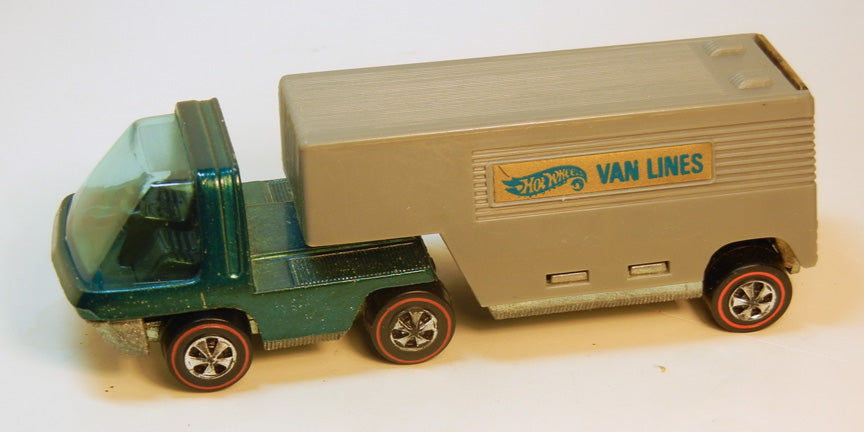
Moving Van gives you two things to inspect: the painted cab and the box trailer behind it. A bright cab can draw attention away from a cracked trailer corner or a replaced label. Turn the whole truck around before making a decision.
Moving Van reference photographs: On Line Redline Guide.
The 1970 Heavyweights van
Ira Gilford’s Moving Van was made in Hong Kong, with gray or white trailers and light or dark cab interiors. The trailer-side labels were factory applied. The cab can interchange with related two-piece Heavyweights, so a pair that fits is not necessarily a pair that has always been together.
Two rear-door moldings


The reference examples make the flat and detailed panels easy to compare. Record the door molding and trailer color separately. The detailed white example also shows the rear-light paint; its condition is another part of the comparison.
Look at the lower corners, axle area and label edges. A replacement label may look sharper than the surrounding plastic, but appearance alone does not settle its history. Ask what has been replaced.
Check the coupling without wearing it out
An underside photograph should show the cab’s mounting area and the trailer connection. Watch for glue, broken edges and a trailer that sits unevenly. Repeatedly pulling an old assembly apart is not a useful originality test.
The separate cab in the comparison photographs makes the connection visible. You do not need to dismantle a sound display simply to copy that pose.
Make room for the complete truck
Measure the assembled length before choosing a compartment, and allow enough space to retrieve both pieces without lifting by the hitch. For a packaged example, inspect the full blister and confirm that both pieces are included.
Compare Fuel Tanker as another Heavyweights subject. When browsing loose trucks, match trailer type, labels, repairs and package condition before researching prices.
Current Muncle Mikes products related to this guide

2022 Glory Chaser
Use the live listing photos and specifications to compare this product with the buying or collecting criteria in the guide.

Twin Mill — Purple & Orange
Use the live listing photos and specifications to compare this product with the buying or collecting criteria in the guide.

Mercedes AMG GT3 Custom
Use the live listing photos and specifications to compare this product with the buying or collecting criteria in the guide.
