
1971 Hot Wheels
Racer Rig Hot Wheels: Ramp, Tool Box and Trailer Guide
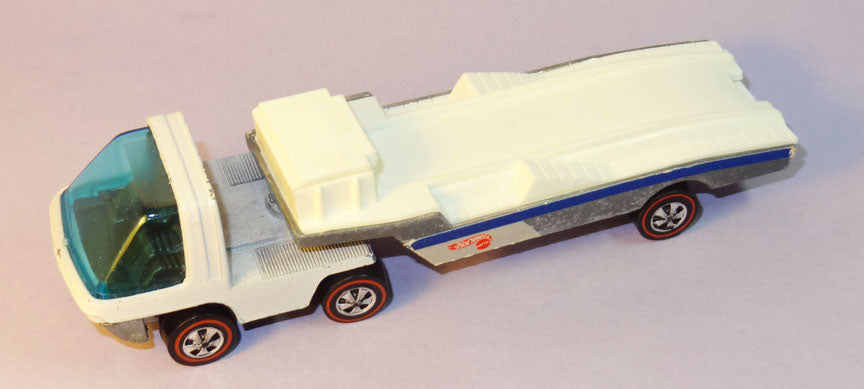
Racer Rig makes a good display even with an empty trailer. The long loading deck, little tool box and cab-over shape give it plenty of character. Before adding a race car, though, check what is actually left of the ramp.
Racer Rig reference photographs: On Line Redline Guide.
A transporter with its own trailer
The 1971 Hong Kong release came with a red Spectraflame or white enamel cab and a dark or white interior. The cab is shared with other Heavyweights, but the trailer base is unique to Racer Rig. A familiar cab attached to a different rear unit is not a complete Racer Rig.
The white example above shows the stored arrangement. Look along both edges of the deck and beneath the rear before deciding that every loading part is present.
See the ramp extended

The ramp pulls out, and the tool box opens. Ask for clear photographs of the ramp’s end, its guides and the tool-box lid. A low side view can conceal a missing corner or a broken lid mounting.
On a sound loose truck, gentle movement can show how the parts work. A cracked vintage ramp does not need to carry another collectible to prove its condition. The reference car illustrates loading; it is not a promise that a race car comes with every Racer Rig offer.
The coupling matters too
Ask for an underside view that includes both the cab and trailer. Check the connection, wheel alignment and any glue around the plastic deck. Record replacement parts alongside repainting, rather than folding everything into a single condition grade.
For a display case, measure the assembled truck and leave room to pick it up beneath the cab and trailer. Lifting by the coupling puts the load on a small connection.
Build a support-team display
The Crew Car supplies a very different take on trackside tools, while the Fuel Tanker has its own hose-completeness checks. Keep their parts and release identities separate.
For a packaged Racer Rig, photograph the entire blister and every included piece. When comparing loose trucks, a sound ramp, intact tool box and disclosed repairs are more useful distinctions than the word “mint” by itself.
Current Muncle Mikes products related to this guide

2022 Glory Chaser
Use the live listing photos and specifications to compare this product with the buying or collecting criteria in the guide.

Twin Mill — Purple & Orange
Use the live listing photos and specifications to compare this product with the buying or collecting criteria in the guide.

Mercedes AMG GT3 Custom
Use the live listing photos and specifications to compare this product with the buying or collecting criteria in the guide.
