

1972 Hot Wheels
Hot Wheels Special Delivery: 1972 Listing, Blue Paint & Sticker Checks
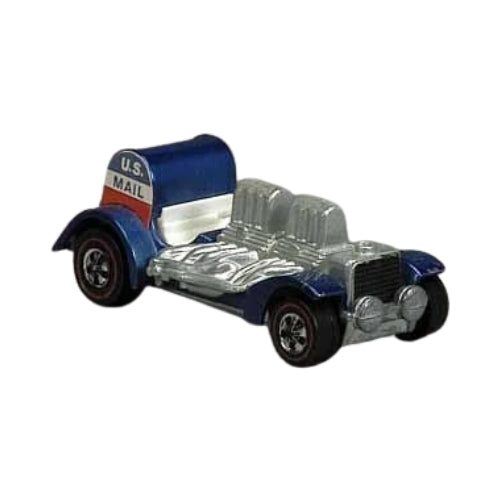
Photo example: Blue Special Delivery with a U.S. Mail sticker and exposed engine.
A Special Delivery listed as 1972 needs evidence for that date, not another invented release history. Start by identifying its finish, cabin and graphics as they actually appear.
The original reference
The On Line Redline Guide records the Hong Kong model under 1971, in blue shades with a white interior and user-applied stickers. It also photographs paint fading.
This establishes a useful configuration to compare. It does not make every later sale a new tooling version or confirm an undocumented opening rear gate.
Sticker position versus factory variation
Because the graphics were applied by the owner, placement alone should not be treated as a factory printing error. Record which stickers are present, their condition and any known replacements.
Ask for both sides and the rear in consistent light. A pale-looking panel may warrant another photograph rather than an immediate rare-color label. Do not scrape, peel or polish an uncertain area to force a color conclusion.
What supports the year?
Request a readable base and complete package where supplied. Ask whether 1972 is a package identification, a purchase date or a database estimate. Keep those meanings separate in the collection record.
An associated old card beside a loose car does not prove that the combination was originally sealed. Inspect the closure and ask about the item's known history when the price depends on original packaging.
Inspect before comparing price
Check body edges, cabin details, wheel seating and signs of repairs. Operate only a feature confirmed on the actual casting; a previous generic description is not a reason to pry a molded panel open.
Compare against the documented original configuration above. Match completed transactions by finish condition, sticker originality, parts and packaging rather than giving an unsupported date a premium.
Browse loose Hot Wheels or carded collectibles for current offers and exact contents.
Read stickers as a history of the individual car
Photograph the sticker edges and nearby paint without lifting them. Note position, missing sections and visible aging, then keep those observations separate from a claim about who applied them. A user-applied sheet allows different arrangements; one layout is not automatically an additional factory edition.
To evaluate the 1972 offer, request the date evidence as well as the physical photographs. Store a decorated van with space beside its panels so stickers are not scraped by a tight compartment. If restoration is contemplated, preserve a complete record of the existing arrangement first. The condition of the surviving car can be described usefully while its exact retail year remains unresolved.
 Illustrative image; archived product not currently available for purchase.

