

1973 Hot Wheels
Hot Wheels Grass Hopper: Removable Top, Two Engines & Original Parts
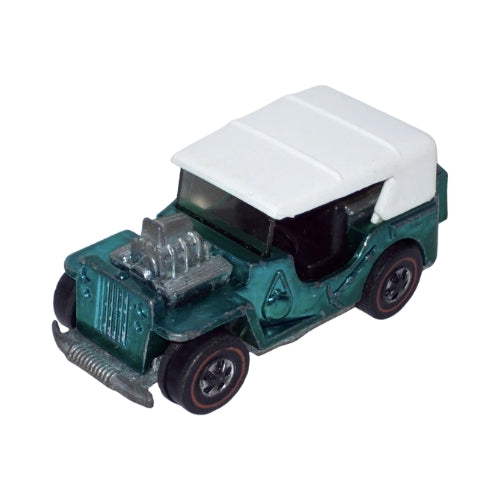
Photo example: Aqua Grass Hopper with a white removable top.
The original Grass Hopper combines a removable white top with two exposed engines and equipment molded around its Jeep-inspired body. Those features are more useful identification checks than a generic oversized-tire description.
Identify the original release
The Grass Hopper reference credits Larry Wood and records the first version as U.S.-made in 1971. It documents a black interior, lightly tinted glazing, an engine at each end and body details including tools and a fuel can. Later production was revised and made in Hong Kong.
Roof and body-equipment inspection
Request overhead and side photographs that show the whole cover and its seating. Check roof edges and mounting points for cracks, glue or missing sections. Ask whether the top is original, replaced or of uncertain history.
Inspect small body details from both sides. A broken projection can disappear in a distant photograph, so retain close-ups alongside a full-car view. Do not pull an old roof off merely to improve the image.
Originality and condition
Read the complete underside and inspect every wheel. Record repainting, altered running gear and repairs separately from ordinary paint chips. A correctly fitting part is not proof that it belongs to the original assembly.
Choose whether the goal is an untouched collector model or a restored display example before comparing prices. Both can be deliberate choices, but their descriptions should not be interchangeable.
Check the year before buying
A 1973 listing needs evidence for that date; it does not establish a new debut. Keep the casting’s introduction separate from a package or remembered purchase year.
Read the collector-guide directory. Match completed sales by version, top originality, body completeness and package. Browse loose Hot Wheels or carded collectibles for current individual offers.
Distinguish removed equipment from a revised release
Inventory the roof, both engines and the body-mounted details visible on the early reference. If an offered car lacks a feature, determine whether that absence belongs to a documented later construction before calling it damage. A familiar Jeep-like profile alone cannot decide whether the model was incomplete, altered or intentionally revised.
Keep the evidence for each version beside its own photographs. Do not transfer the early removable-top description to every later Grass Hopper. For a complete original, allow a cover to clear the top and both engines; for a later version, measure its actual arrangement. Label any restoration parts and retain a pre-work photograph so a display change does not silently rewrite originality.


