

1975 Hot Wheels
American Victory Hot Wheels: Blue 9 and Magenta 10
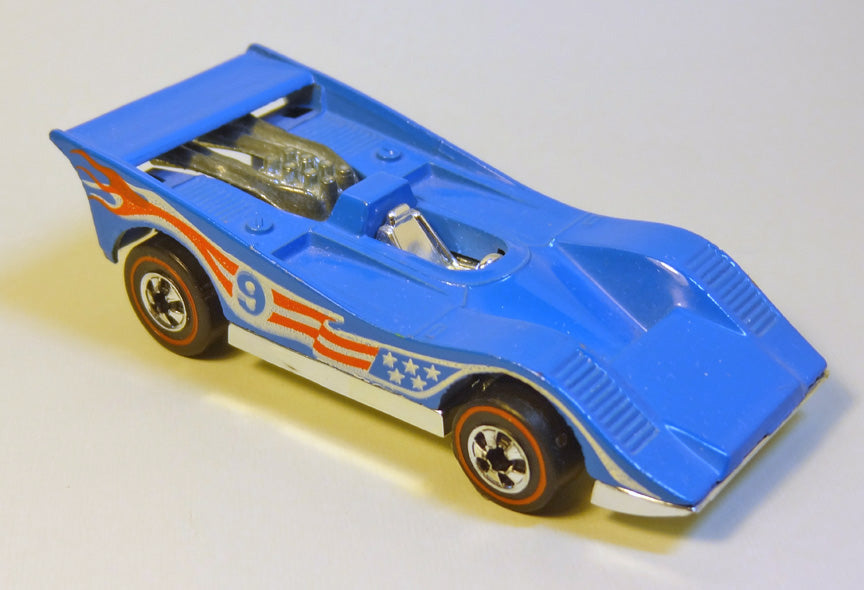
American Victory puts its engine in the open, behind a small chrome cockpit and ahead of the rear wing. The blue number-9 car wears stars and stripes down the sides. Beside a magenta number 10, the shared shape is clear, but the finish, decoration and wheels tell different release stories.
Light-blue American Victory reference photograph: On Line Redline Guide.
The first car was blue, not magenta
The 1975 Flying Colors American Victory is a Can-Am-style concept racer, item 7662. It has light-blue paint, number 9 and flag decoration, chrome-colored interior and Hong Kong base, and redline wheels. The engine component is shared with Peeping Bomb.
The 1977 blue number-9 release has blackwall wheels. A blue body and flag are therefore only part of the identification. Photograph the wheel faces as well as the side graphics.
Magenta number 10

The 1978 version changes to magenta with yellow, orange and red racing decoration, number 10 and blackwalls. The picture shows its Speedway Specials presentation. This was a later release of an existing casting, not American Victory’s debut.
Later records include French-made magenta and dark-red examples, plus green Speed Machines versions. A base photograph is especially useful when a loose car resembles an earlier release.
Inspect the open engine bay
Ask for an overhead view large enough to see the exposed engine and the edges around it. Check for broken projections, glue and worn plating. Bright reflections can hide damage, so a second angle helps more than simply turning up the light.
Look along both sides of the rear wing and across the pointed nose. Those edges deserve their own condition notes. Do not lift the car by the wing or engine while inspecting it.
Keep the numbers with the photographs
Save both side views, the underside and a top view under one inventory number. Record the racing number and wheel type explicitly instead of relying on a filename such as “blue racer.” If decoration is missing, photograph the worn area before deciding it left the factory that way.
Peeping Bomb is a different casting, so compare its engine detail separately instead of treating the two models as identical. Use the collector-guide directory for related Hot Wheels identification resources. Compare loose examples by release and condition, keeping repaired cars separate from documented originals when researching prices.
Compare the three early American Victory releases
| Documented release | Paint and number | Wheel type |
|---|---|---|
| 1975 Flying Colors, item 7662 | Light blue with number 9 and flag graphics | Redline wheels |
| 1977 Flying Colors, number 28 in the assortment | Light blue with number 9 and flag graphics | Blackwall wheels |
| 1978 Speedway Specials, item 7662 | Magenta with number 10 and yellow, orange and red racing graphics | Blackwall wheels |
These records describe documented releases, not a rule that color alone dates a loose car. Later France-made and Speed Machines variations need their own comparison. Read the underside markings, photograph the wheel faces and check any original card before assigning the car to a particular issue.
Buyer questions about American Victory
Does a light-blue number-9 car have to be from 1975?
No. The 1975 Flying Colors reference has redline wheels, while the documented 1977 Flying Colors number-9 car has blackwalls. Compare the wheel type and the actual car’s condition; a wheel replacement or an unsupported year claim can mislead a buyer.
How can I tell a later magenta number 10 from the blue racer?
Compare both side numbers and the complete racing decoration, then check the wheels and underside. The documented 1978 magenta number-10 car uses blackwalls, but a loose car still needs its own identification evidence.
What photographs should I request before buying one?
Ask for both sides, wheel close-ups, a readable base and an overhead view of the exposed engine. Request separate photos of the rear-wing edges and nose if condition affects the price. Store it without pressing on the engine or wing, and note any repaired or replaced parts in the listing.

