

Collector Guides
Bachmann E-Z Track Guide: Steel vs Nickel Silver, Curves and Expansion
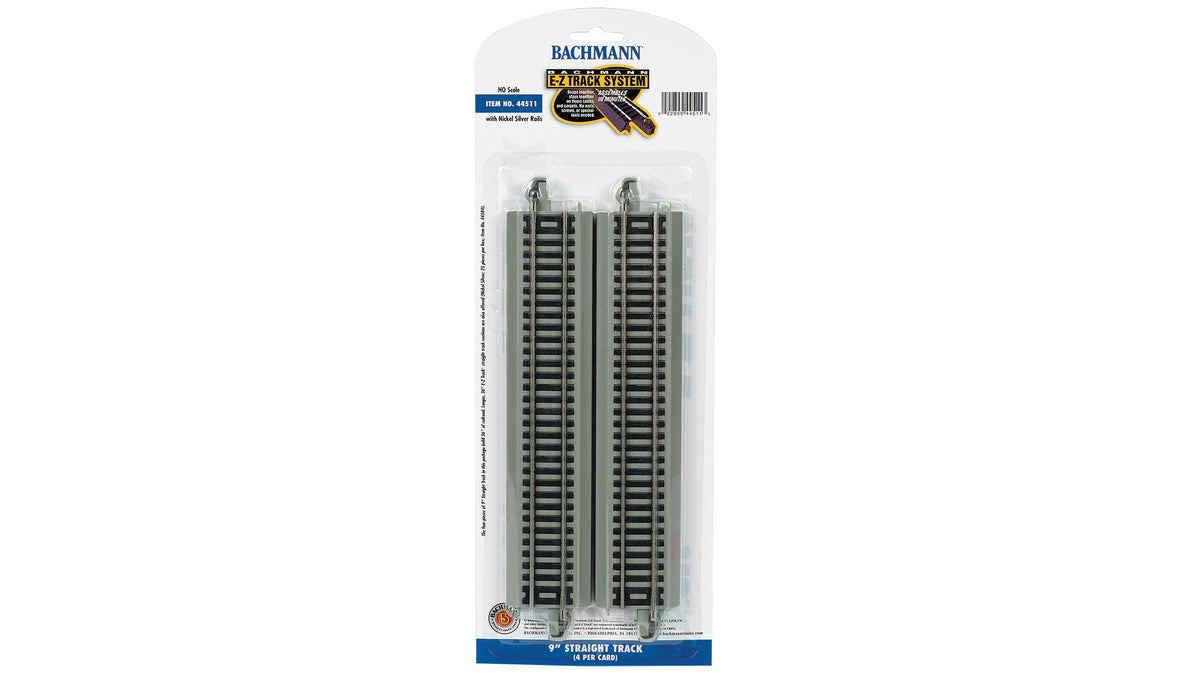
Bachmann’s HO E-Z Track comes in two familiar combinations: steel alloy rails on black roadbed and nickel silver rails on gray roadbed. For a new layout you plan to keep expanding, we would choose nickel silver. Its advantage is easier upkeep at the wheel-to-rail contact, not a promise of faster trains. If you already have a working steel alloy starter oval, first identify its pieces and plan the next addition; replacing the whole loop is a separate decision.
This guide covers the HO system. E-Z Track also appears in other scales, so the name alone does not establish a match.
Start with the part number, then check the roadbed
Two 9-inch straights make the comparison straightforward. Bachmann 44411 is the steel alloy version with black roadbed. Bachmann 44511 is nickel silver with gray roadbed. Each retail pack contains four sections, giving 36 inches of straight track when joined end to end.
That makes color a helpful identification clue, but keep the package number with your track inventory. Paint, scenery and secondhand mixed lots can hide the original roadbed color. A photograph of gray ballast also cannot tell you the radius of a curve or which turnout mechanism is included.
What changes in use?
The NMRA’s track-laying guide explains the material difference: oxidation on steel can interfere with electrical contact, while nickel silver’s oxide allows better pickup. That supports choosing nickel silver when buying new track for regular running. Both still need clean railheads and sound joints. Changing the metal will not correct a loose joiner or an uneven connection.
Keep the purchase decision practical. Count the additional pieces your plan requires in each material, then compare current pack contents and prices. Do not pay for extra curves simply because a pack looks like a bargain when the missing piece is a short straight or a turnout.
The roadbed can click while the rails miss
HO steel alloy and nickel silver E-Z Track sections can be connected within the system. The change of roadbed color remains visible, and each rail joint still needs inspection. This does not make an HO section compatible with N scale or turn another manufacturer’s roadbed connector into an E-Z Track connector.
The useful distinction is between the plastic connection and the electrical connection. The roadbed aligns and holds the sections; the metal rail joiners carry current. A joiner can slip underneath a rail even when the plastic has snapped together.
- Turn off track power and bring the sections together on a level support.
- Watch both rail ends enter their joiners before closing the plastic connection.
- Check that the railheads meet evenly, without a step or sideways kink.
- Test the connection before fastening track or adding scenery.
Bachmann illustrates the misplaced-joiner problem in its E-Z Track assembly and care instructions. The click is useful feedback, but it is not the final check.
An 18-inch curve and a 22-inch curve use different counts
A radius is measured from the center of the circle to the track centerline. Doubling it gives the centerline diameter, not the finished table width. Roadbed, vehicle overhang and clearance from the edge need additional room.
18-inch radius: Bachmann 44501
The 44501 nickel silver curve pack contains four sections forming 120 degrees. Twelve of those same sections form a complete 36-inch centerline-diameter circle. Three four-packs therefore supply the curves for that plain circle. An oval, terminal section or turnout changes the shopping list.
22-inch radius: Bachmann 44503
The 44503 nickel silver curve pack also has four sections, but they form 90 degrees. A full circle takes sixteen sections—four packs—and measures 44 inches across the track centerline. Moving from 18 to 22 inches adds 8 inches to that diameter before allowing for roadbed and clearances.

Bachmann publishes these arc measurements for 44501 and 44503. The full-circle counts above are calculated from those measurements. Choose the radius against the manufacturer’s minimum requirement for every locomotive and car you intend to run. Neither size is a universal approval for all HO equipment.
Buy the next operating move, not another random oval
Decide what you want the train to do next. More running length needs matching straights on opposite sides of an oval. A place to leave a freight car needs a siding. Passing one train around another needs a plan with enough usable track between its turnouts. Those are different projects.
Draw the complete addition and label each piece by part number, quantity and orientation. Check how the tracks meet again before ordering. Fixed sections should close the plan without being forced sideways. Include the turnout’s actual geometry, its required control equipment and a way to reach the joints later. Our HO #4 vs #6 turnout planning guide explains how to compare the branching route before committing to a siding.
Assemble the addition temporarily and try the longest locomotive and car through every route at low speed. Check the space between vehicles on adjacent curves as well as clearance from buildings. Leave permanent scenery until the track works reliably. For the next shopping step, browse Muncle Mikes model trains and track accessories with that parts list in hand.
When the train stops, narrow the problem to a place
If the locomotive hesitates at the same joint, stop and inspect that connection first. Look for a rail riding above its joiner, a loose connection or a bump. Repeated assembly and disassembly can loosen joiners; a snapped roadbed connection does not prove electrical continuity.
For routine care, Bachmann specifies wiping the rails and accessible wheel surfaces with a soft lint-free cloth or cotton swab after eight hours of use. Use a recommended model-track cleaner when needed and follow its directions. Keep lint and loose debris away from the mechanism. Bachmann warns against steel wool and common solvents that may damage plastic.
If the problem follows the locomotive to a different section, broaden the check to its wheels, pickup and power connection. Work through one possible cause at a time. Buying nickel silver track is a material choice; diagnosing a stall still starts with the exact place and connection that failed.
Find the nickel-silver straights for your plan
Bachmann 44511 contains four 9-inch HO straights. Check your parts list before choosing the next pack.

