

Hot Wheels
Hot Wheels ’83 Chevy Silverado: Casting and Release Guide
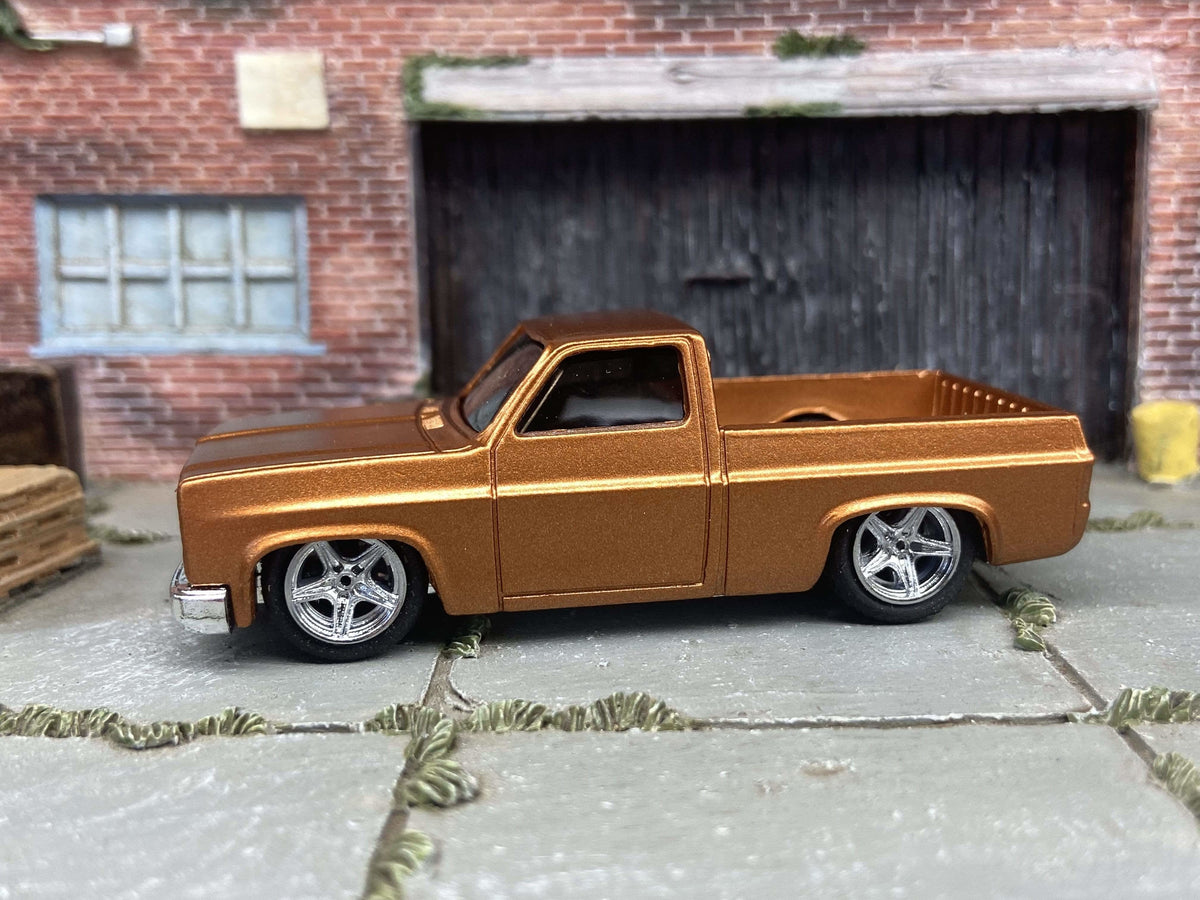
A Hot Wheels 83 Chevy Silverado record should identify the exact factory release, not just the truck shape. Base markings, body color, graphics, wheels, interior, windows, chassis, package series and product code work together to distinguish one version from another.
The hero image on this guide shows a Muncle Mikes custom 1983 Chevrolet Silverado C10, not a factory reference variation. Its flat metallic orange paint, IROC-style wheels and rubber tires demonstrate why custom work must be documented separately from the original Hot Wheels release.
Start with the casting name and base
Read the name printed on the package when available, then inspect the base. Record the wording exactly, including the apostrophe in ’83 when it appears. Base copyright dates and production codes are evidence fields, but a copyright date should not automatically be treated as the release year of the car in your hand.
| Field | What to capture | Why it matters |
|---|---|---|
| Casting name | Exact package or verified catalog wording | Prevents merging related Chevrolet pickups |
| Base marks | Brand, legal text, country, codes and molded details | Supports casting and production identification |
| Body and finish | Color, metallic, matte, gloss or bare metal | Separates visible variations |
| Graphics | Logos, stripes, numbers and placement | Distinguishes releases sharing a base color |
| Wheels | Style, color, size and front/rear arrangement | Identifies variation or customization |
Photograph the truck from every useful angle
Use a straight side view on both sides, front, rear, roof, bed, underbody and wheel close-ups. The pickup bed and roof can reveal graphics or wear that a single three-quarter image hides. Photograph the package front and back if it is carded.
- Both sides: compare tampo placement and completeness.
- Front and rear: capture grille, lights and bumper color.
- Roof and bed: record stripes, logos and interior bed finish.
- Base: make every molded mark readable.
- Wheels: photograph front and rear styles separately.
- Package: save series name, card number, barcode and product code.
Separate color, graphics and component variations
Two trucks can share a body color while using different graphics, wheel colors, interiors or bases. Conversely, two cars can share graphics while using different paint. Create a variation record only after comparing every field rather than relying on one visible difference.
- Body: hue, finish and exposed metal.
- Graphics: text, logos, stripes, numbers and position.
- Windows: clear, tinted or colored.
- Interior: cabin and bed insert color when visible.
- Chassis: color and material appearance.
- Wheels: design, color, diameter and stagger.
Tell factory assembly from a custom build
A custom can be excellent collectible work, but it answers a different question. Look for evidence of opened rivets or screws, replacement axles, nonstandard rubber tires, repainting, decal edges, polished metal or parts from another casting. None of these signs is negative when the item is honestly described.
When a custom begins with a known factory car, preserve both identities: the donor release and the completed build. If the donor cannot be verified, record it as unknown rather than assigning a factory variation by appearance.
| Observation | Factory-release record | Custom-build record |
|---|---|---|
| Original paint and tampo | Record exact variation | Record donor evidence if known |
| Replacement wheels and tires | Do not treat as factory wheel variation | Record diameter, style, tire and axle work |
| Repainted body | Original color may be unknown | Record paint system and finish |
| Opened base | Condition note | Record fastening and reassembly method |
| Added decals | Not a factory graphic unless documented | Record design and placement |
Use package evidence without overreading it
The card can identify series, collector number, product code and market. Package artwork may change while the vehicle remains similar, so photograph both card and truck. A loose truck can still be identified, but uncertainty should remain visible when package-level evidence is missing.
Do not call a truck rare, exclusive or a chase based only on an unfamiliar card. Those claims need release-specific evidence.
Create a durable collector record
Use one canonical record for the exact release and attach condition or custom history as revisions. A good title can follow this order: brand, casting, body color, graphics, wheel style, series and item code. Avoid stuffing every visual detail into a vague keyword list.
Compare current factory releases in the Hot Wheels collection, finished builds in Custom Hot Wheels, and builder projects in the DIY Hot Wheels kits. Availability changes; the identification method does not.
Condition is not the same as variation
Paint chips, bent axles, wheel wear, marker, dust and package damage describe condition. They do not create a manufacturer variation. Record condition after identity so a worn example does not become a false catalog entry.
- Factory identity: what release is it?
- Modification status: original, repaired or custom?
- Completeness: truck, package and any included pieces.
- Condition: paint, wheels, axles, base and package.
- Evidence: photos, product code and provenance notes.
Frequently asked questions
Does 1983 on the vehicle name prove the toy was released in 1983?
No. It identifies the represented Chevrolet model year. Determine the toy release from package and catalog evidence.
Do rubber tires prove a premium factory release?
No. Rubber tires can be factory equipment or a custom wheel swap. Inspect the exact release and assembly evidence.
Is a repaint a new Hot Wheels variation?
It is a custom build, not a new factory variation. Preserve the donor identity when it is known.
Can a loose Silverado be identified without its card?
Often, yes, using base marks, paint, graphics, wheels and components. Keep any unresolved package or release-code fields marked as unknown.
If you plan to modify the truck after identifying it, use the 1983 Silverado wheel-swap fit and assembly guide to measure tires, hubs and axles and check the complete body assembly before choosing replacement parts.

