

Hot Wheels How To
Hot Wheels Wheel Fitment: Diameter, Axles & Clearance
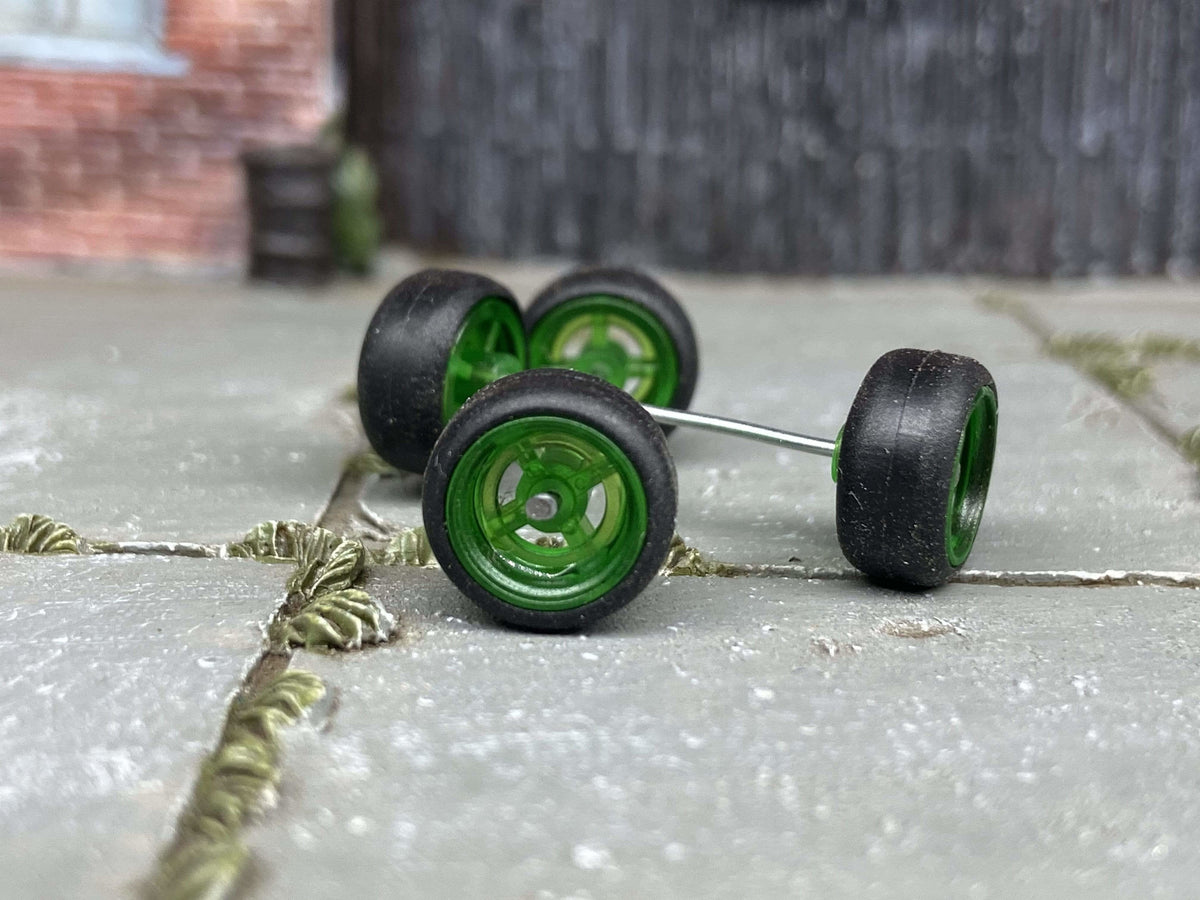
Replacement wheels fit a Hot Wheels car when the tires clear the body, the hubs clear the base, and the axle holds everything in place without pinching it. Start with the original wheel assembly as your reference, compare the front and rear separately, and test the replacement with the car fully closed. The number on the wheel listing is only one part of that decision.
A set described as 10 mm or 1:64 can still be too wide for a particular casting. This guide explains which measurements matter before you order and how to check them before final assembly. If you already have wheels that rub or wobble, use the wheel-swap troubleshooting guide to locate the contact point.
Start with the car as it sits now
Set the car on a flat surface and look at it from the side and front. Notice the tire size at each end, how far the wheels sit inside the fenders, and whether all four tires touch. If it rolls poorly before the swap, check for a bent axle or a body that is not seated correctly so you do not blame the new wheels for an existing fault.
A quick side photo is useful when you want to preserve the original stance. Then measure the outside of each tire, including the rubber or plastic tread. Calipers help with small differences; use light contact so you do not squeeze a soft tire. Measure the rear separately, even if the two ends look similar.
Compare the dimensions that use up space
| Dimension | Where to look | Why it matters |
|---|---|---|
| Outside tire diameter | Across the whole tire, rather than just the visible rim. | A larger tire needs more room above it and can change the car's stance. |
| Wheel and tire width | Across the full assembly from the inner hub to the outer face. | A wide tire or projecting hub can touch the body or base even when the diameter matches. |
| Axle length and retention | Across the wheel pair, including the ends that keep the wheels on. | Too little usable length can pinch the wheels; excess length can let the assembly shift sideways. |
| Axle thickness | The rod where it enters the hubs and rests in the base. | The rod must suit both the wheel holes and the car's axle supports. |
| Inner-hub spacing | The gap between the backs of the two wheels. | The base and its axle supports must fit between them without rubbing. |
The body width alone will not tell you the axle length you need. Two wheels with different hub shapes can place their tires differently on rods of the same length. Compare the complete wheel pair beside the original assembly before deciding where an axle should end.
Keep units consistent. If the seller supplies only a nominal diameter, ask for the missing dimension that affects your build. A photograph can help you recognize the hub shape, but it cannot replace a measurement of the space inside your own car.
Choose equal-size or staggered wheels for a reason
An equal-size set has matching listed diameters front and rear. It is a useful starting point when the original car has similar wheel openings at both ends and you want to retain that balance. A staggered set uses different front and rear sizes, often to create or preserve a more pronounced rear-tire stance.
Compare the proposed change at each axle. Larger rear tires may look right on a hot rod while meeting the body or interior when installed. Smaller front tires can leave more space in the wheel opening but also lower the nose. Choose the look you want, then check whether the assembled car has room for it.

Use the green 10 mm set as a measured comparison
The green four-spoke wheels shown at the top of this page are another matching-size example. Their product photos show both the front faces and the inner hubs. Compare those areas with your original wheels before choosing the color and spoke design.

Green four-spoke wheels · matching 10 mm sizes
This set contains four wheels with rubber tires, listed at 10 mm front and rear. The overhead view helps you see the inner hubs that need clearance beside the base. Confirm axle inclusion and dimensions before ordering for your particular car.
See the green 10 mm wheel setFor other sizes and styles, browse the wheel and tire collection. Check the current product page for contents, price and availability. A wheel set and a complete installation kit are different purchases; do not assume tools, axles or fasteners are included unless the selected listing says so.
Test fit with the body completely closed
A wheel that spins freely on an open base can bind once the interior and body are back in place. Assemble the car temporarily before trimming a final axle or using adhesive. For the opening and reassembly sequence, follow the beginner customization guide.
- Seat the axle in its supports. Make sure it rests where the original assembly sat and that both wheels remain attached.
- Install the interior and windows. Check that neither piece is trapped beneath the base or pushing against a tire.
- Close the body fully. The fit should be checked at the final assembled height, without holding the shell slightly open.
- Turn each wheel and move the axle gently sideways. Look for tire-to-fender and hub-to-base contact throughout the movement the assembled car allows.
- Roll it on a flat surface. Watch for wobble, binding or a tire that lifts off the surface. Reopen the car and locate the cause before changing parts.
For a rolling display car, all four wheels should turn and stay secure with the body closed. A static stance build can use a different compromise, but describe it as display-only if the wheels cannot roll normally. Rubber tires alone do not establish better track performance; that needs testing with the complete car on the intended track.
Correct a tight fit before reaching for glue
When the inner hub touches the base, a narrower wheel or a different hub profile may solve the problem. When the top of the tire rubs, inspect the tire diameter and whether the body is seated properly. When an axle shifts far enough to make one wheel rub, check the complete span and retention arrangement.
Change one thing at a time and repeat the closed-body check. Forcing a wheel onto an unsuitable rod or adding adhesive around a tight hub can create a new problem while hiding the first one. Keep a successful original assembly together until the replacement works.
Questions before buying replacement wheels
Will any 1:64 wheel set fit a Hot Wheels car?
No. The scale description does not specify the tire diameter, width, hub shape or axle dimensions your casting needs.
If both sets say 10 mm, can I swap them directly?
Compare the complete assemblies first. Matching nominal diameter leaves width, axle thickness, inner-hub spacing and body clearance to check.
Can I use four equal-size wheels on a car with larger rear tires?
Only after checking both ends. The change affects stance and clearance, so compare the new position with the original before fixing the wheels in place.
Do the wheels come with the right axles?
Check the selected product's included contents and axle dimensions. A rod visible in a photograph does not establish that it is included or that it fits your casting.
What should I do after the wheels fit?
Complete the secure reassembly, then repeat the rolling check. Keep a short note of the wheel set and axle arrangement if you want to repeat the build, and disclose the swap if you later sell or trade the car.
Find more project help in the Hobby Learning Center and more collecting guidance in the Hot Wheels and Matchbox collector guides.

