

Hot Wheels
Hot Wheels: Identify and Record Your First Five Cars
Five cars are enough to start a collection you can keep track of. Give each one a simple record with its name, color, condition and a few clear photos. You will be able to spot a duplicate before buying it, remember where a favorite came from and return to an unfinished identification without starting over.
Use the cars you already own. A notebook or spreadsheet, a phone camera and five slips of paper will do. If you are still deciding what to buy, start with our comparison of Hot Wheels singles, multipacks and sets, then come back when your first cars arrive.
Give each car its own place in your collection
Write HW001 through HW005 on the slips and place one beside each car. These are your personal collection numbers, so choose a system you can keep using. Photograph the car with its slip before moving on to the next one. Keep the slip beside the car rather than sticking a label on its paint or packaging.
Two cars with the same name still deserve separate entries. One might have a paint chip, different wheels or a card you want to keep. A record for each physical car makes those differences easy to find later.
Keep the first few entries short. You can add specialist details as your interest grows; the useful starting point is being able to match a note to the right car.
Record these details before looking up a release
| Field | What to write |
|---|---|
| Your collection number | HW001, HW002 and so on; use the same number for the photos. |
| Brand and model name | Copy the readable name from the car or its packaging. Keep Hot Wheels and Matchbox separate. |
| Color and graphics | Describe the body color, stripes, numbers, logos and obvious details. |
| Wheels and base | Note the visible wheel style and copy legible base markings without guessing at blurred characters. |
| Packaging | Loose, or supplied with its card and blister. Record any writing you can read on the package. |
| Condition and changes | Describe paint marks, bent axles, damaged packaging or known custom work. |
| Where it came from | Seller or gift giver, date received and the amount you paid, if known. |
| Identification reference | Save the matching product or guide link and any detail you still need to check. |
“Blue with a white number 2” is a useful observation. “Rare version” is a claim that needs more support. Plain descriptions make your notes more reliable and help you compare cars with similar names.
How a vehicle name differs from a Hot Wheels release
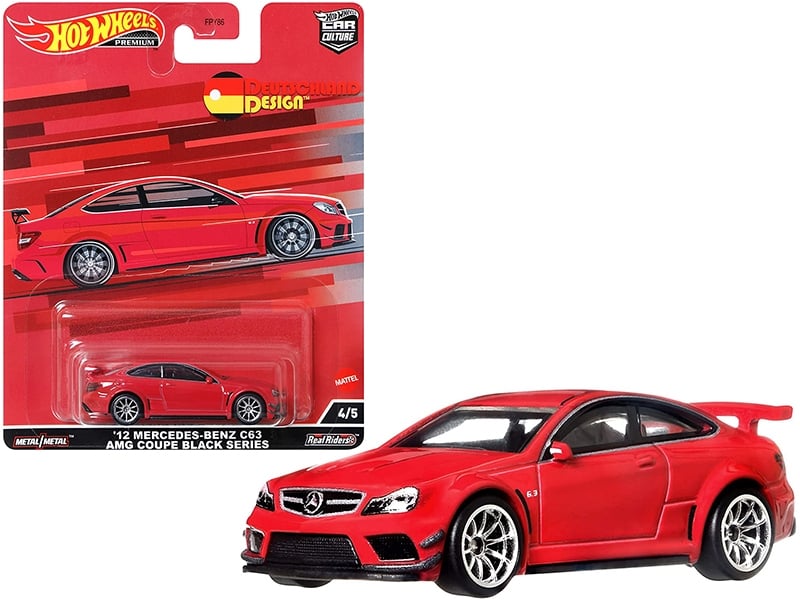
The red Mercedes-Benz C63 AMG Coupe Black Series HCJ79 illustrates why the different names and numbers matter. The vehicle represented is a 2012 Mercedes-Benz. Deutschland Design is the release series named in the listing, and HCJ79 identifies the manufacturer item.
Write those in separate fields. The 2012 in the vehicle name does not tell you when that particular miniature was released. Likewise, a date or code on a base needs to be understood before you use it as a release year. A clear photo is useful even when you have not decoded every marking.
| Detail | Entry |
|---|---|
| Vehicle | 2012 Mercedes-Benz C63 AMG Coupe Black Series |
| Series | Deutschland Design |
| Color | Red |
| Manufacturer item | HCJ79 |
| Toy release year | Check a release-specific reference before filling this in. |
Now compare your own car with the reference: body shape, graphics, wheel appearance and any packaging code. A similar red Mercedes is a starting lead, not enough on its own to attach HCJ79 to your record. Our Hot Wheels identification guide explains how to work through those clues.
Loose and carded cars need slightly different notes
With a carded car, you can record the printed model name, series and item code while keeping the packaging with the car. Also note the card corners, blister and seal. An unopened package can still have visible wear.
A loose car gives you access to the base and an unobstructed view of the body. The missing package means some release details may take longer to establish. For the purple and orange Twin Mill, for example, the listing supports the casting name, finish and loose format. It does not supply an original card to record.
| Format | Useful clues | Keep in mind |
|---|---|---|
| Carded car | Printed name, series, item code and visible packaging condition. | The package photo may illustrate the release; ask about condition if a particular card detail matters. |
| Loose car | Body, base, wheels, graphics and visible condition from several angles. | Do not fill in a missing series or release year just because another car looks similar. |
| Customized car | The starting casting and the changes actually described or visible. | Keep the custom finish and replacement parts separate from the factory release details. |
Photograph the details you will want to see again
Take a view from each side, then photograph the roof, base and any packaging. Move the light or camera if glare hides the lettering. Check the image at full size before putting the car away; a bright photo is not always a readable photo.
Add a close-up of a mark you mention in the condition notes. “Small chip at the right front corner” tells you more than “good condition,” especially if that corner has its own photograph. Name the files with your collection number, such as HW003-right-side and HW003-base.
If you open a carded car, photograph it first and keep those pictures. Update the record to say it is now loose. You will retain the original package information without confusing the old condition with the car as it is today.
Compare two different additions to your collection
These two cars show the difference between a release with a named series and item number and a loose car recorded by its visible features. Choose the one that suits your collection, then use the product page to check the current photos, price and availability.

Mercedes-Benz C63 AMG · HCJ79
The red Deutschland Design release is a useful example of matching a vehicle name, series and item number. Check the listing for the car offered.
View photos & current price
Purple and orange Twin Mill
This loose Twin Mill has no original packaging. Its photos show the two exposed engines and the purple and orange finish you can describe in a collection record.
View photos & current pricePrefer to choose a different casting? Browse loose Hot Wheels or carded Hot Wheels and Matchbox. You do not need to buy an example from this guide to use the same record-keeping method.
Leave room for the answers you do not have yet
If you cannot identify a release, enter “not yet identified” beside that field and write down the next useful step: take a sharper base photo, compare the wheel design or check the package code. Keep the rest of the record. You can still know which car you own and where it is stored.
Finish by checking the five cars against their five entries. Each should have its own number, matching photos and a description you recognize. The collector guide directory gives you a place to continue when you want to explore a year list, another casting or a new collecting theme.
Questions about recording your first Hot Wheels
Do I need a collection app?
No. A notebook or spreadsheet is enough for five cars. Choose something you can search or browse easily, and keep a backup of digital records and photos.
Should two identical cars have separate records?
Yes, if you want to track their condition, cost or history separately. You can use the same model details while giving each physical car its own collection number.
Can I identify a release from its color alone?
Color helps narrow the search, but compare graphics, wheels, base markings and packaging when available. Several releases can share a color and casting name.
What if the car has no packaging?
Record it as loose, photograph the base and body, and fill in only the details you can support. You can add a release year or series later.
Should I record wheel swaps and repaints?
Yes. Describe known changes so a custom is not mistaken for its original factory version. If you only suspect a change, say that in your notes.
Should I estimate a value for every car now?
You can start with the amount you paid. A current value estimate is a separate task that needs comparable examples; it is not required to organize your first five cars.

