

Hot Wheels
Hot Wheels Car-Brand Collaborations: Licensed Models, Projects & Editions
A Hot Wheels collaboration can mean several different things. A miniature may represent a licensed real vehicle, a joint project may connect two design teams, or a full-size car may wear a Hot Wheels special-edition treatment. Read the particular announcement instead of assuming one universal development process.
A joint project: DeLorean Alpha5
DeLorean's 2022 announcement described its designers collaborating with the Hot Wheels team on a 1:64 Alpha5. It identified a four-month project and the use of digital and physical development work. That is a record of this collaboration, not a promise that every licensed car involves the same schedule or factory visits.
For a collector, distinguish the real concept vehicle from the exact miniature subsequently offered. A development image and a final retail model may not be identical.
A full-size edition: Chevrolet Camaro
Chevrolet's 2012 announcement introduced a production Camaro Hot Wheels Edition with a blue-and-black visual treatment and branded details. This placed the toy identity on a full-size car rather than simply creating another miniature.
Keep the full-size model year, announcement date and related toy release year separate. A later miniature can commemorate an earlier real-car edition.
A licensed miniature still needs its own specification
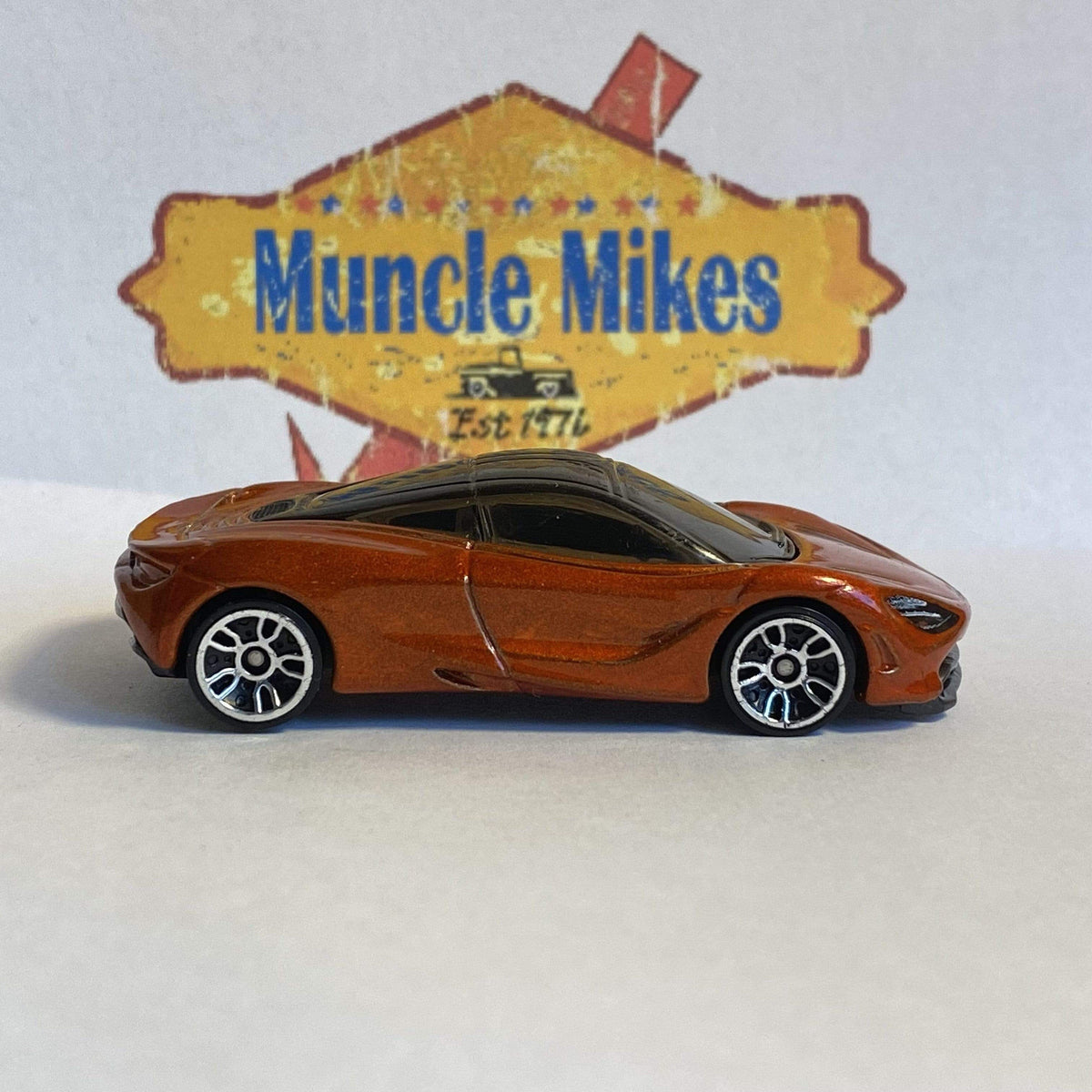
The pictured orange McLaren 720S is a particular loose Hot Wheels listing. Its manufacturer, casting, decoration and condition identify the offer; the road-car badge alone does not describe every component.
Check scale, wheels, body and base materials, opening features and package contents where the product record supplies them. Do not transfer a premium edition's specification to an ordinary version of a similar car.
Separate official work from a personal custom
An aftermarket wheel swap or repaint can be a thoughtful interpretation of a real vehicle. It should still be labeled as custom work rather than an official collaboration with the carmaker.
Likewise, an unusual finish does not establish a prototype or a limited factory run. Use the prototype evidence guide when a purchase depends on that claim.
Build a collaboration-focused checklist
Record the partner, project, actual miniature edition and source. Note whether the model represents a concept, road car, race vehicle or custom build.
Then compare the actual offer's condition and complete delivered cost. A licensed badge does not guarantee future value or compatibility with every track.
Choose your collecting direction
Browse factory-carded releases for a specific edition or finished customs for disclosed aftermarket work. The real-car connection guide provides another way to organize the stories behind a display.
Sort a collaboration before interpreting it
Use three categories: licensed miniature, joint development project and full-size branded edition. Put the source’s described relationship into one category before describing the work. A manufacturer badge on a toy does not by itself document a joint design schedule, while a personal custom is not automatically licensed work.
Keep the collaboration source beside the exact miniature record. Check whether a photograph shows a concept, finished retail item or a later secondary-market example. Record the real vehicle’s year and the toy’s release separately. This makes a collaboration display more informative without implying a premium specification, current availability or resale advantage that the actual edition does not establish.
Photographs for the comparison


