
Hot Wheels
Hot Wheels Packaging: Cards, Protectors & Collector-Edition Variants
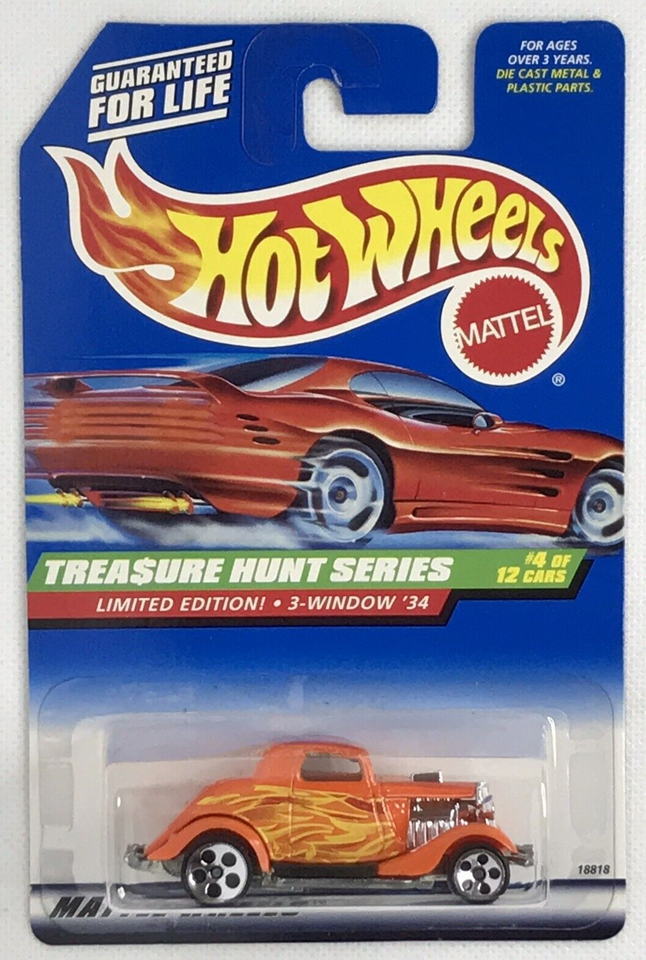
Hot Wheels packaging is part of the offer, but it needs its own identification. Separate the car, printed card, attached blister and any outer protector. An added clamshell does not establish that the card inside is undamaged or that the car is original to it.
The header shows the store's carded 1998 orange 3-Window ’34 Treasure Hunt. It is one catalog example, not an illustration of every packaging era.
A documented packaging variant
Mattel's 2022 RLC 20th-anniversary Custom Camaro HRY34 was supplied on an illustrated card or a randomly distributed foil-card variant, with a Kar Keepers clamshell. The manufacturer distinguished the package variants without promising that each buyer would receive the foil version. Original release description.
This shows why a package difference and a different vehicle configuration are separate questions. Record exactly what varies rather than describing every unusual card as a regional car variation.
Check the release, not a universal packaging rule
The 2025 RLC sELECTIONs Custom Plymouth Barracuda JCP17 specifies an illustrated blister card and a Kar Keepers clamshell. Those contents belong to that offer, not every Hot Wheels product. Manufacturer packaging reference.
For any purchase, verify the exact edition, item code and complete supplied package. Do not assume a premium name automatically includes a protector, certificate or numbered sticker.
Read both sides of the card
Request uncropped front and back photographs. Record the vehicle name, series, readable codes, warnings and any regional labeling. Keep card dimensions separate from the size of an outer protector.
Artwork can help compare a release, but it is not a substitute for checking the vehicle through the blister. A similar picture does not prove the package and car belong together.
Inspect four condition areas
Examine card corners and hanger area, the main printed surface, the blister and its attachment area. Note creases, fading, cracks, separation or disclosed resealing individually.
Keep an original package, a reproduced card and a resealed example in different comparison groups. A seller's protective case does not erase those distinctions.
Decide whether packaging matters to your collection
For a card-art display, the package may be central to the purchase. For a casting display or deliberate custom project, a loose example can better fit the goal. Decide before paying a package premium or opening a collectible.
Compare completed sales for the same configuration and condition rather than borrowing a pristine carded example's price for a damaged or loose car. Use the packaging-condition checklist for a closer inspection.
Choose the complete offer you want
Browse carded collectibles or loose cars. Keep the package's identity and condition visible in the purchase record, rather than treating an old card as automatic proof of rarity.
