

Hot Wheels
Custom Hot Wheels Ambulance: Build Planning & Diecast Alternatives
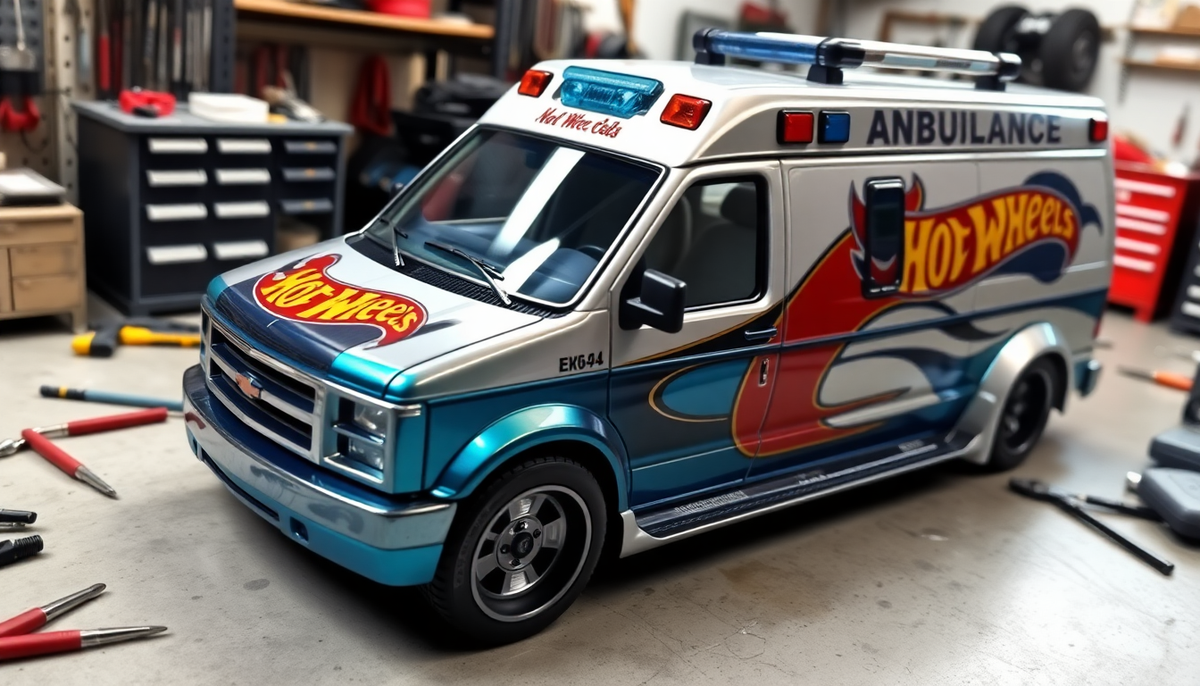
Build a convincing emergency-vehicle display, one detail at a time.
A custom Hot Wheels ambulance starts with identifying the exact donor—not assuming every toy described as an ambulance uses the same body, base or wheels. Decide whether you want to modify a car you already own or buy a finished emergency-vehicle model for your display.
This guide helps you plan the body finish, markings and wheel fit. The shopping example below is clearly identified as a GreenLight model, not a Hot Wheels release or prepared DIY kit.
The header is an existing guide image, not a product-contents guarantee. The examples below span different brands, scales and formats; review each listing.
Choose a donor for the job you actually want to complete
Record the casting name, manufacturer and version before removing anything. Photograph the base, windows, roof details and rear body. Keep original parts identified so you can inspect how they fit together later.
For a wheel-only change, choose a body finish you already like and check axle access. For a repaint, inspect how the windows and roof pieces can be protected or separated. A seller's “diecast” description is not enough information to choose a stripping chemical or a disassembly tool.
Set aside a potentially important vintage original until you have identified it and decided whether to preserve it. A collectible ambulance is not automatically the best practice donor simply because its body shape suits the idea.
Distinguish the four purchase formats
| Format | What you are choosing | What to verify |
|---|---|---|
| An existing Hot Wheels donor | The specific car you intend to modify. | Originality, parts condition, base assembly and axle access. |
| A prepared DIY kit | A casting explicitly sold for further finishing and assembly. | Actual casting and included components; an ambulance kit is not implied by a general DIY collection. |
| A completed diecast model | A finished vehicle from the named manufacturer. | Brand, scale, features and packaging. |
| A larger plastic model kit | A separate assembly project in its stated scale. | Skill requirements, tools, paint and parts compatibility. It is not a Hot Wheels wheel-swap kit. |
Plan the body color, markings and roof details together
Choose a specific reference vehicle for a replica, or develop a fictional service scheme for an original display. Sketch the stripe position, door lettering and roof treatment before applying paint. Keep markings aligned with the actual panels rather than forcing an oversized design around door handles and wheel openings.
Choose a decal made for the intended surface and follow its application instructions. A waterslide decal and an adhesive sticker are different products. Test any setting solution or clear coat on a spare sample of the chosen finish before treating the completed body.
Protect clear and colored plastic pieces
Inspect windows, roof beacons and other trim before painting. Do not force a brittle part out of its mount or assume it will tolerate the same preparation method as bare metal. Avoid filling locating surfaces with paint; the original components still need to fit at final assembly.
For the wider sequence, use the step-by-step customizing guide. Work in an appropriate ventilated setup and follow product warnings. Adults should handle sharp parts, powered tools and chemicals.
Working lights are a separate project
A painted light bar does not imply operating lights or a siren. Electronic modifications require a separate plan for components, insulation, power and service access. No plug-in light, sound or smoke kit is advertised as included or available through this guide. A static display can be a complete project on its own.
Compare emergency-vehicle directions before choosing the project
Ambulance collecting can mean a custom Hot Wheels project, a realistic 1:64 model, a movie vehicle or a vintage Matchbox collectible. Those are different goals.

Hot Wheels
Yellow & silver Ambulance
A loose Hot Wheels ambulance for collecting or a possible donor project after checking condition.

Movie display model
Ghostbusters Ecto-1
A larger 1:24 display model based on a Cadillac ambulance body.

Vintage collectible
Lesney No.54 Cadillac Ambulance
An older collectible best treated preservation-first unless it is deliberately chosen as a donor.
Choose wheels that fit the ambulance's body and purpose
- Measure both axles. Record the complete tire diameter and width at the front and rear. Do not copy a size from an unrelated emergency vehicle.
- Check inner clearance. Compare wheel faces and hubs with the chassis as well as the room under the body.
- Confirm the axle arrangement. Identify how the existing wheels are retained and how replacements would be secured.
- Test the complete assembly. Seat the interior and body, then check free rotation, tire seating and contact on a flat surface.
Shop replacement wheels and tires by the actual listing's sizes and contents. A compatible-looking wheel face is not proof of fit, and a rubber-tire upgrade is not a guarantee of improved track performance.
Use the wheel-swap troubleshooting guide when a replacement rubs or wobbles. Diagnose the contact point before cutting the body.
A finished ambulance alternative: GreenLight's Ford Econoline

The catalog listing identifies a red-and-white 1969 Ford Econoline Ambulance from Fire & Rescue Series #5, with Los Angeles Fire Department decoration, rubber tires, a metal body and chassis, and blister packaging. It offers a ready-made display option when you would rather choose the finished model than customize a donor.
Check the current product gallery, price and availability. The listing does not promise working emergency lights or a siren; do not infer electronics from the roof details.
Custom ambulance questions
Is every ambulance model on the site a Hot Wheels?
No. Check the brand and scale in the individual listing. The featured Ford is GreenLight, while the other examples identify their own manufacturers and formats.
Does this guide offer a complete Hot Wheels ambulance kit?
No complete ambulance-specific donor bundle is claimed. Browse the available listings and confirm their contents before ordering.
Do I need working lights for a good display?
No. Body color, consistent markings, intact roof details and suitable wheels can be the whole project. Electronics are a separate modification.
Can I use the same wheels as a custom gasser?
Only after comparing the particular donor's dimensions and axle system. An emergency-vehicle body and a gasser need their own fitment checks.
Should I repaint a vintage Matchbox ambulance?
Identify it and decide whether preserving its original condition matters first. Do not choose a rare or fragile original as a practice donor without understanding what you are altering.
Choose your emergency-vehicle project with the details in view.
Ask about a specific model or part using its product link and the measurements relevant to your project.
The finished-model specifications and photo come from the linked Muncle Mikes product record. They do not authenticate an unseen donor, establish aftermarket fitment or guarantee a particular item remains in stock.
Custom project hub
For a broader build workflow, use the Custom Hot Wheels Ultimate Guide. For parts, browse wheels and rubber tires; for a prepared project, browse DIY Hot Wheels kits.

