

Model Rocket Guides
Estes Rockets: Mini Mod, Tri-Flyer or Roto Rocket?
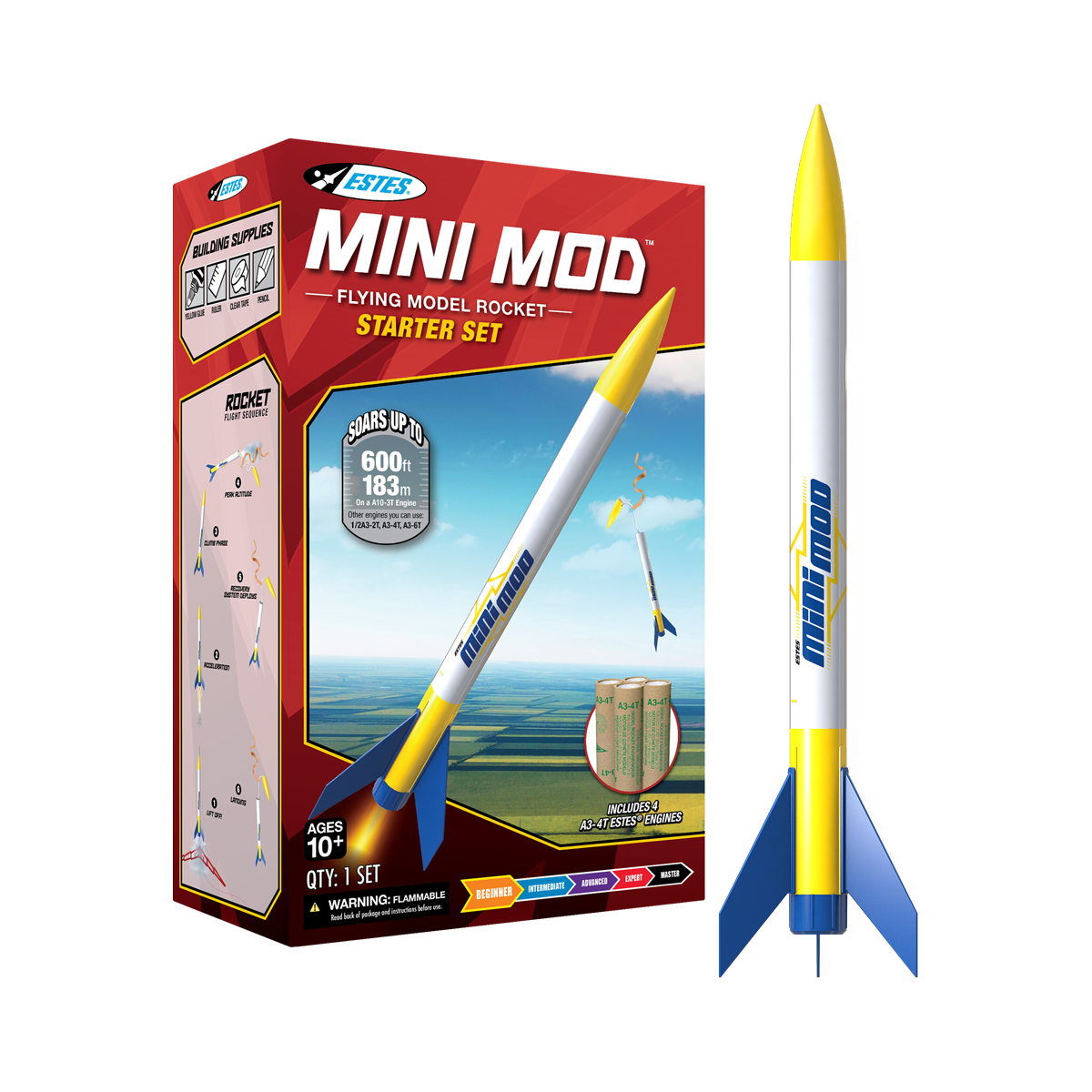
Choose Mini Mod #0643 for a first Estes setup, Tri-Flyer #0647 for fin experiments, or Roto Rocket #0648 for helicopter-style recovery. Each offers a different reason to build and fly. The right choice depends on whether you want to get comfortable with a configurable rocket, explore how fins affect a flight, or watch a rotating section return to the ground.
The Mini Mod starter set shown above is one example from the Estes range. Here is how these three packages compare, what each makes interesting, and what to check before you buy.
Which Estes rocket fits your project?
| Package | Choose it for | Recovery |
|---|---|---|
| Mini Mod #0643 | A configurable first rocket and four included A3-4T motors. | Streamer |
| Tri-Flyer #0647 | Three interchangeable fin sets and guided STEM activities. | Parachute |
| Roto Rocket #0648 | Two rotor-blade sets and a distinctive return flight. | Rotating section plus body parachute |
Mini Mod: a practical first setup
The Mini Mod Starter Set puts one configurable rocket, a Porta-Pad II launch pad, an Electron Beam controller, four A3-4T motors, and the listed starters, plugs, and recovery wadding in one package. It is a strong starting point if you want the main launch equipment together and enough included motors to plan more than one flight.

Estes Mini Mod Starter Set #0643
Why choose it: one rocket with six possible configurations, plus the listed launch equipment and four motors. Glue, controller batteries, and other preparation supplies are still required. View Mini Mod contents and availabilityThe six configurations come from the supplied fins and body extensions. You get different ways to assemble the same rocket, rather than six separate rockets. This gives a first project room to grow without making an unfamiliar recovery system the central challenge.
Check your workbench before ordering: Estes lists yellow glue, a ruler, a pencil, and clear tape among the required supplies. Set aside time for assembly and follow the adhesive instructions before planning the first launch.
Tri-Flyer: put the fins at the center of the project
Choose Tri-Flyer when the experiment matters as much as the launch. The #0647 STEM kit provides three interchangeable fin sets and five activities. The rocket returns under a parachute, leaving the fin choices as the feature to explore.

Estes Tri-Flyer STEM Kit #0647
Why choose it: three fin sets create a clear starting question for a family or school project. Follow the included activities and check the exact package contents and assembly supplies before buying. View the Tri-Flyer STEM kitThat focus can help a learner explain the project: which fin set are you trying, and what do you expect to observe? Use the manufacturer's activity instructions to guide the comparison. Keep conclusions tied to what the flights actually show; one different result does not establish a rule for every rocket.
Roto Rocket: make the descent the memorable part
Roto Rocket changes what you watch after the climb. Its rotor section descends in a helicopter-style rotation while the body returns under a parachute. The #0648 STEM kit supplies two rotor-blade sets and five activities, making recovery the natural subject of the project.

Estes Roto Rocket STEM Kit #0648
Why choose it: rotating recovery and two blade sets to explore. The #0648 package includes a pad, controller, one C5-3 motor, and one C6-3 motor; build tools, adhesives, and batteries are separate. View Roto Rocket contents and availabilityIf the builder is drawn to moving mechanisms and unusual recovery, this is the most directly relevant choice of the three. Keep the exact instructions with the kit so the blade configuration, motor recommendations, and recovery preparation can be checked together.
What to prepare beyond the box
A launch package is the beginning of a plan. Before checkout, check three things:
- Assembly supplies: use the adhesives and tools listed for the exact kit, and allow the specified drying time.
- Controller power and launch supplies: confirm the required batteries, included motor codes, and supplies needed for the flights you intend to make.
- A suitable launch site: follow the current instructions, the NAR Model Rocket Safety Code, local site rules, and the stated age and supervision guidance.
Use only complete motor designations approved for the exact rocket. A shared brand or motor letter does not establish compatibility. MM's launch-day checklist helps organize the remaining preparation; the Model Rocket Finder helps if you are still choosing the type of setup.
Questions before choosing an Estes rocket
Which is the clearest starting point for a first-time buyer?
Mini Mod #0643 is a practical choice when you want a configurable rocket, launch equipment, and four included motors in one package. Choose either STEM kit when its specific experiment is what interests the builder.
Does a starter set include everything?
Check the exact contents. Mini Mod #0643 includes the listed launch equipment and motors, but glue, batteries, and other preparation supplies are separate. A similarly named rocket-only kit can contain a different assortment.
Can the three rockets share motors?
Do not assume they can. Match the full motor code to the approved list for the exact rocket and configuration. Mini Mod's included A3-4T motors differ from the C5-3 and C6-3 motors in the Roto Rocket package.
Should I choose the highest advertised flight?
Choose a project that fits the builder and the available launch site. A stated maximum is not a promise for every flight; the motor, weather, and recovery area also matter. The differences in this guide are useful even when maximum height is not your goal.
Find the package that matches your plan
Use the product cards to check current contents and availability, or browse all Estes rockets and supplies at MM. For a wider comparison of kits and launch setups, return to the Model Rocket Finder.

