

Model Train Guides
Staging Yard vs Classification Yard: What Each Does
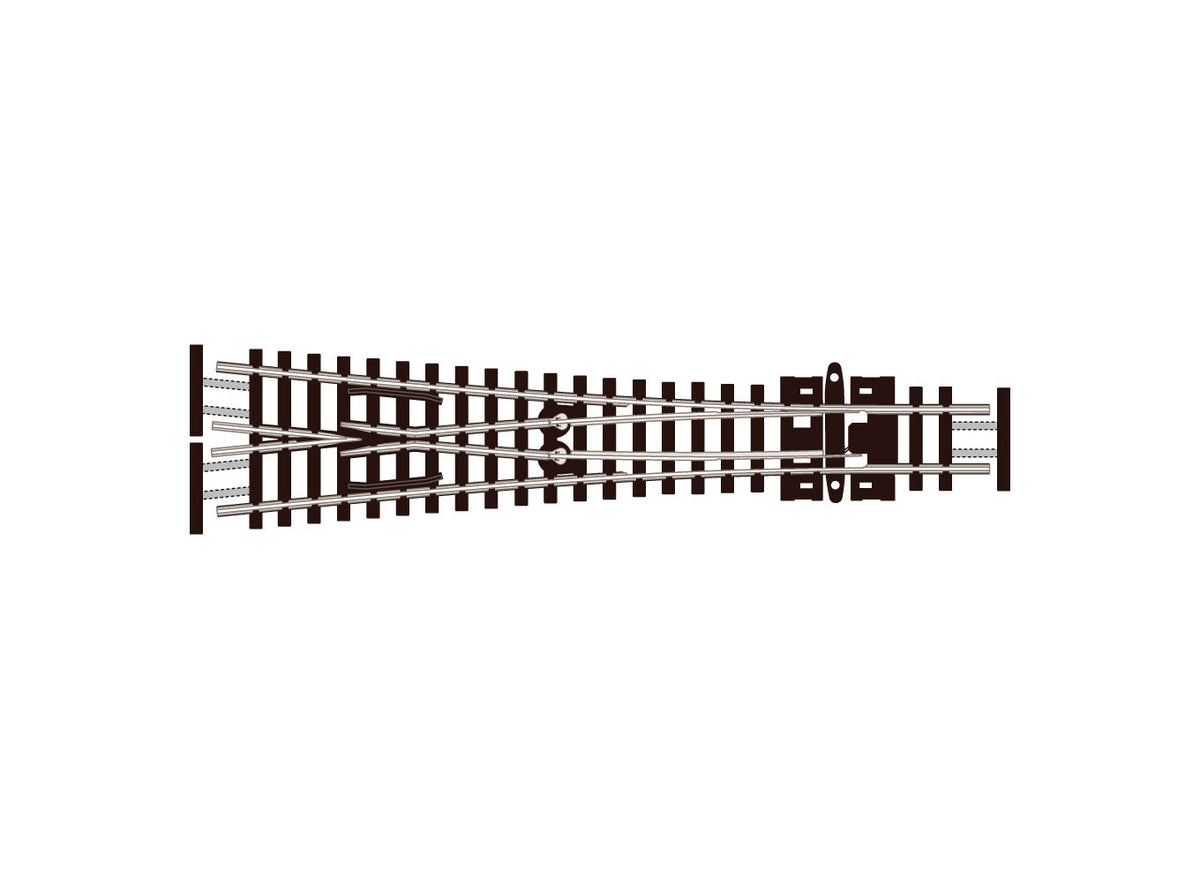
A staging yard and a classification yard can both look like parallel tracks joined by turnouts, but they solve different problems. Staging holds complete trains until they enter or leave the modeled railroad. Classification breaks arriving cars into destination blocks and builds departing trains.
Choose the job before drawing the tracks. A long storage siding may hold a train perfectly well yet leave nowhere to sort its cars. A busy classification yard can offer plenty of switching while still needing somewhere for complete trains to wait.
Staging stores the trains that are off scene
A staging track represents the railroad beyond the part you have modeled. An arriving freight can wait there already assembled; a departing passenger train can disappear there until its next scheduled appearance. Staging can be hidden, behind a scenic divider or fully visible. Its purpose is what matters.
Measure the complete train, including locomotives and any caboose. Then mark the usable track length between the points where that train can stand clear of neighboring routes. The distance from a turnout's toe to the far end of a siding overstates capacity if part of the train would foul another track.
Hidden staging also needs practical access. From the normal operating position, can you identify the occupied track and confirm that a turnout has moved? Can you reach a derailment without leaning on scenery? Leave that access in the plan before closing the area with a backdrop.
Classification needs room to move cars
In a classification yard, an arriving train is separated into blocks for different destinations and those blocks become new departures. The plan needs places to receive or depart trains, hold the sorted cars and make the switching moves. A small yard may share some of those functions between tracks; it does not need a separate track for every label.
A yard lead gives the switcher room to pull cars beyond the ladder and push them into another track. Size it for the cut of cars you intend to move, including the locomotive. A short lead can still work with shorter cuts, but it increases the number of moves. If every pull-out uses the main line, another train may have to wait while the yard works.
Storage capacity and working capacity are different. Filling every classification track may leave nowhere to place the next arriving block. Draw one arrival and its sorting moves on paper before adding more parallel tracks.
| Yard arrangement | What it does during a session | Space that must stay useful |
|---|---|---|
| Staging tracks | Hold complete trains before they enter or after they leave the modeled scene. | Enough clear length for each assigned train, plus reliable access to tracks and turnouts. |
| Classification yard | Sort individual cars into destinations or blocks and assemble departures. | Working room for the switching moves, rather than every track filled with stored trains. |
| Cassette or fiddle staging | Exchange or rearrange trains by hand at the edge of a small layout. | A secure handling area and repeatable alignment with the running track. |
Let one sample operating session test the plan
Start with the trains you want to run, not the maximum number of turnouts that will fit. Follow a freight from staging to the yard, divide its cars by destination, then assemble its departure. Mark which tracks are occupied at each step and whether an arriving train can reach the yard while the switcher is busy.
A small layout may use a cassette or an accessible fiddle area instead of a hidden ladder. You gain flexibility but take on manual handling and track alignment. Staging and classification can also work together: one supplies complete trains, while the other gives those trains a reason to stop and exchange cars.
Questions about yard planning
Can staging be visible?
Yes. A visible shelf of holding tracks still provides staging if trains wait there before entering the modeled operation. Hiding it is a scenic choice, not a requirement.
How long should a staging track be?
Long enough for the complete assigned train to stand clear of adjacent routes. Measure the actual consist and the turnout clearance points; do not count the whole drawn track centerline as storage.
Can a classification yard store complete trains?
It can, but each stored train removes working space. Decide when it will depart and where the next arriving cars can go before relying on that track for both jobs.
Does every small yard need a separate lead?
A separate lead helps yard moves stay clear of the main line. A compact layout can share track if its operating plan allows those interruptions; test the actual moves before accepting the compromise.
If a yard entrance also curves, plan the transition into that curve before fixing the ladder. Browse model trains and layout supplies, or return to the Model Train Guides to continue planning.

