

Model Train Guides
Train Sets Compared: Scale, Control, Space and Expansion
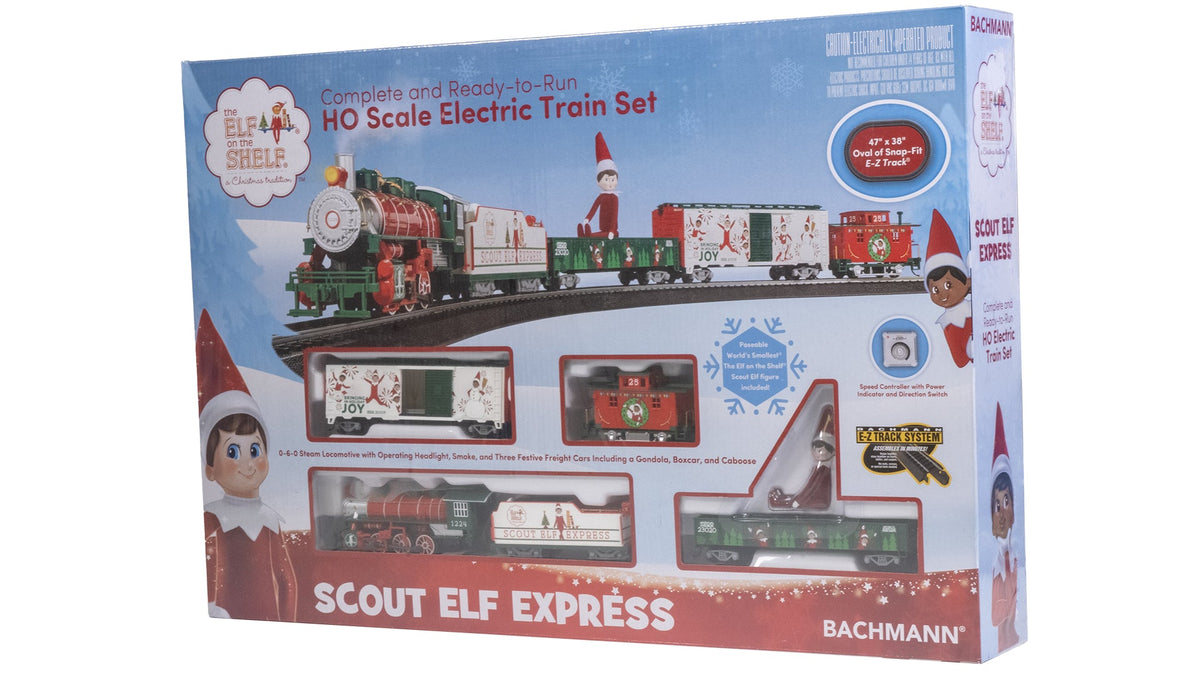
Train sets can look similar on a shelf while leading to very different long-term railroads. One may be a compact HO starter loop built around conventional power; another may be a larger O gauge package with remote control, sound, lighting, and a much wider curve. Comparing the boxes by locomotive style alone misses the choices that determine whether the set fits the room, the operator, and the expansion plan.
This guide compares train sets as systems. It focuses on scale, footprint, control, track family, operating style, and future growth. For the basic contents a first box should include, start with the train set buying guide. Here, the goal is to decide which kind of railroad you want before choosing an exact set.
Start with the railroad you can actually operate
The most satisfying set is one that has a clear place to run. A permanent table supports scenery, wiring, and gradual expansion. A temporary floor layout favors sturdy roadbed track, quick assembly, and pieces that tolerate repeated handling. A shelf or switching layout may need straights and turnouts rather than the oval supplied in a starter box. Define that operating pattern first.
Measure the usable area and note doors, furniture, walkways, pets, children, and electrical outlets. Then compare the set’s assembled footprint, not the package dimensions. Wider curves generally look better and help longer equipment operate more smoothly, but they consume space quickly. Leave access on every side or provide a center opening so a stalled train is never out of reach.
Compare the common scales
N scale: more railroad in less room
N scale is useful when the plan calls for longer trains, broader scenery, or multiple towns in a compact area. The smaller size rewards careful trackwork and clean wheels. It may be less comfortable for very young hands or anyone who prefers larger details, but it can deliver an impressive operating railroad in a modest room.
HO scale: the flexible middle ground
HO balances manageable size with visible detail and broad availability. It suits tabletop ovals, switching layouts, and larger permanent railroads. Muncle Mikes carries Bachmann HO train sets as well as the broader Bachmann model-train collection, making it practical to compare a complete starter package with separate locomotives, cars, and track.
O gauge: presence, sound and larger controls
O gauge equipment has a substantial visual and physical presence. Larger locomotives and cars can be easier to handle, and many sets emphasize sound, lighting, animation, or licensed themes. The tradeoff is space: the track and clearances are larger, so a loop that seems simple can dominate a room. The Lionel Frozen 2 LionChief set is a useful example of a themed O gauge package that should be evaluated as both an operating system and a display centerpiece.
Conventional, remote and command control
Conventional control changes track voltage to control speed and direction. It is direct, understandable, and sufficient for many one-train layouts. Remote systems move basic control into a handheld device, which can make floor layouts and family operation more convenient. Command systems send instructions to equipped locomotives and can support independent control, sound functions, lighting, and multiple trains.
The label on the box matters less than the exact included system. Verify whether a remote is included, whether it needs batteries, whether Bluetooth is supported, and whether advanced features require separate hardware. A set that can use an app is not automatically better than a wired controller; it is better only when the intended operator wants that workflow.
Track systems are not interchangeable by appearance
Two track pieces can share a gauge and still differ in rail height, roadbed shape, joiners, electrical connection, and curve geometry. Pick a track family with the pieces your future plan needs: straight sections in several lengths, curves in several radii, turnouts, crossings, terminal tracks, rerailers, and replacement joiners. For Bachmann HO, the E-Z Track collection makes the family visible before expansion begins.
Do not force mismatched systems together. Adapter sections exist for some combinations, but an adapter does not erase differences in height or geometry. When a layout uses more than one track family, plan the transition deliberately and test it with the longest locomotive and car.
Freight, passenger, theme or operating play
Freight sets encourage switching, car collecting, industries, and varied consists. Passenger sets highlight coordinated cars and station scenes. Licensed or holiday sets can be emotionally engaging and may be run seasonally. A prototype-oriented set appeals to operators who want a specific railroad, era, or locomotive. None is inherently superior; the best theme is the one that supports repeated use.
Look beyond the first loop. A freight buyer may want compatible boxcars and a siding. A passenger buyer may need longer curves for full-length cars. A holiday buyer may prioritize easy annual setup and reliable storage. A child may value recognizable characters and simple controls more than prototype accuracy.
Evaluate expansion cost without using a price shortcut
The least expensive box is not always the least expensive railroad. A set built on a widely supported track family may save frustration when turnouts or replacement pieces are added. A set with a suitable controller may avoid an immediate upgrade. Conversely, paying for advanced electronics that will never be used can divert the budget from track, rolling stock, or a stable table.
Make a first-year list instead of comparing only box prices: the set, any required batteries, a safe base, one expansion pack, a cleaning method, storage, and perhaps one additional car. This exposes the real commitment while avoiding stale price claims.
A decision matrix for train sets
- Small space: consider N scale or a compact HO plan, then verify the exact curve footprint.
- Balanced detail and availability: compare HO systems and expansion track.
- Large visual impact: consider O gauge, but measure curves and clearances first.
- Young or shared operator: favor durable track, simple controls, and easy rerailing.
- Permanent layout: prioritize track geometry, turnouts, wiring options, and access.
- Seasonal setup: prioritize repeatable assembly, storage, and clearly labeled parts.
- Multiple trains: investigate the control ecosystem before buying the first locomotive.
Build a compatible path
After choosing a format, keep a simple system record: scale, gauge, minimum curve, track family, controller, coupler style, and locomotive type. Photograph the labels on the box and power supply. When adding equipment, compare those facts rather than relying on a general category name.
Bachmann buyers can continue with the Bachmann trains guide. O gauge buyers should use the Lionel train sets guide for space and control questions. The intent is to let each guide own a distinct decision while helping the pages reinforce one another.
Frequently asked questions
Are all train sets ready to run?
Many are marketed as ready-to-run, but that phrase does not mean the same accessories are included in every box. Confirm track, power, controller, batteries, assembly needs, and any separately sold items in the exact listing.
Can HO and O gauge trains use the same table?
They can be displayed in the same room, but they cannot use the same track. Their scale, gauge, curve requirements, power systems, and clearances differ.
Is a larger set always a better value?
No. More cars or accessories help only when the space, controls, and track system suit the operator. Compatibility and repeat use matter more than piece count.
Muncle Mikes tip: Choose the operating system first and the paint scheme second. A beautiful locomotive cannot compensate for track that does not fit the room.

