

News
MINI GT Classic F1: Lotus 78, Lotus 99T or Toleman TG184?
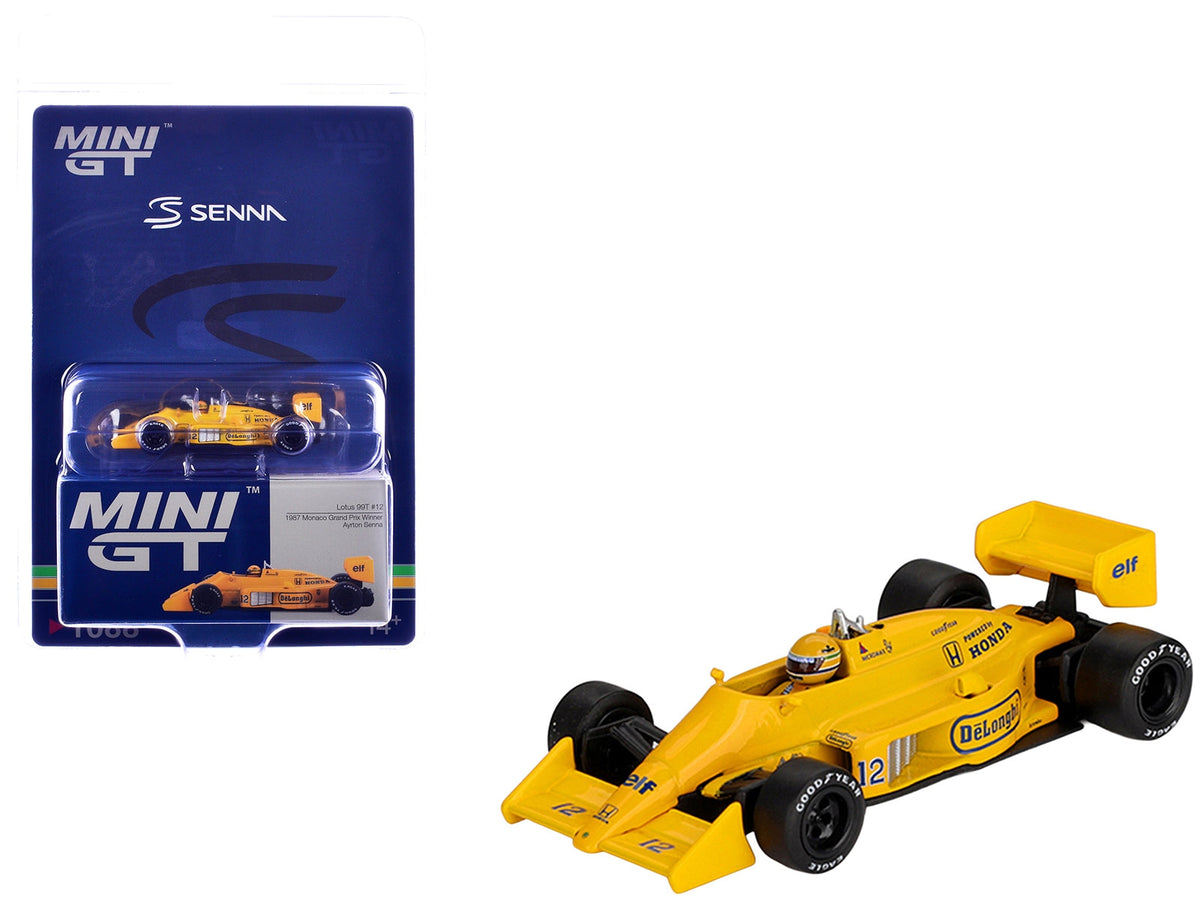
Choose the Lotus 99T pair for a two-driver Monaco 1987 display, the red Lotus 78 for the Nilsson release, or the white-and-blue Toleman TG184 for Cecotto’s Monaco 1984 edition. These four MINI GT classic F1 models share a stated 1:64 scale, but their driver identities, bodies and documented extras differ.
Start with the complete item code. Senna’s number 12 and Nakajima’s number 11 are separate Lotus 99T purchases; a TG184 name alone does not identify the driver. The comparison below keeps each named release with its actual photographs and published dimensions.
Four releases: match the driver, car and event
| Item | Driver and car | Named release | Approximate car length |
|---|---|---|---|
| MGT01088 | Ayrton Senna · Lotus 99T · number 12 | Monaco GP 1987 winner | 2.75 inches / 7.0 cm |
| MGT01148 | Satoru Nakajima · Lotus 99T · number 11 | Monaco GP 1987 | 2.75 inches / 7.0 cm |
| MGT00808 | Gunnar Nilsson · Lotus 78 · number 6 | Japanese GP 1977 | 2.875 inches / 7.3 cm |
| MGT01193 | Johnny Cecotto · Toleman TG184 · number 20 | Monaco GP 1984 | 2.75 inches / 7.0 cm |
The event wording identifies the MINI GT edition. Only MGT01088 is named as a winner in this comparison. The lengths are approximate published specifications; the centimeter figures are rounded conversions, not measurements taken by MM.
Compare the actual colors, helmets and body shapes
Each card opens the matching individual product. Compare the two yellow Lotus 99Ts with the red Lotus 78 and the white-and-blue Toleman.
 Lotus 99T · Senna number 12
Choose MGT01088 for the yellow Lotus identified as Ayrton Senna’s 1987 Monaco winner. The photographs show blue Honda and DeLonghi markings, the number 12 and a yellow helmet in the cockpit.
The blister and loose-car views show one offered model. This is also the release in the main photograph.
View MGT01088 and its gallery
 Lotus 99T · Nakajima number 11
Choose MGT01148 for Satoru Nakajima’s separately identified Monaco 1987 release. Its white-and-red helmet and number 11 distinguish it from the Senna model, despite the shared yellow body and blue lettering.
One model shown in and outside its blister. This exact listing specifies a Camel waterslide decal.
View MGT01148 and its gallery
 Lotus 78 · Nilsson number 6
Choose MGT00808 for the red Lotus 78 identified with Gunnar Nilsson and the 1977 Japanese GP. Gold Imperial International lettering, silver-colored wheel rims and exposed rear engine detail give it a different appearance from the two yellow 99Ts.
The actual gallery shows a helmeted driver in the cockpit, including the packaged view.
View MGT00808 and its gallery
 Toleman TG184 · Cecotto number 20
Choose MGT01193 for Johnny Cecotto’s Monaco 1984 edition. White bodywork, blue Candy side panels, a red-and-white helmet and visibly patterned tires distinguish this Toleman from the Lotus examples.
The blister and loose-car views depict one number-20 model. It is a Cecotto release.
View MGT01193 and its gallery
The 99T pair gives you a close visual comparison: both have yellow bodywork and similar blue sponsor markings, while the numbers and helmet designs identify different drivers. Decide whether you want one named driver or an intentional two-car team display; ordering either reference does not supply both.
The Nilsson Lotus has a red body and visible mechanical detail behind the cockpit. The Toleman adds a different white-and-blue silhouette, with a prominent rear wing above the exposed mechanical area. Their images have different framing, so use the listed lengths rather than comparing how large the cars appear inside the cards.
Driver figures: read the description and the photograph together
The Senna MGT01088, Nakajima MGT01148 and Cecotto MGT01193 descriptions explicitly say “with Driver Figure.” Their photos show helmeted drivers seated in the cockpits. That wording does not establish a removable figure, articulation or a separate standing figure to place beside the car.
The Lotus 78 description does not have the same figure-inclusion line, but its actual gallery clearly shows a helmeted driver in the cockpit. It would therefore be misleading to choose between these four by assuming the Lotus 78 is photographed without a driver. For a diorama that requires a standing person or a removable seated figure, confirm that exact requirement before buying.
The Nakajima decal is a specific inclusion
MGT01148 expressly lists a Camel waterslide decal. Treat that as an item-specific extra when deciding how you want to present the model. A supplied decal is not the same statement as a marking already applied to the car.
The checked Senna, Nilsson and Cecotto descriptions do not list the same decal inclusion. The current photographs show the decoration used for each pictured model, but they do not establish identical decal sheets across the range. If a particular marking is essential to your display, confirm the contents and finish of the exact release.
Plan for the wings and the package, as well as length
The Lotus 78’s listed 2.875-inch length is one-eighth of an inch, about 3.2 mm, longer than the 2.75-inch figures for the other three. That is a useful catalog distinction, but none of these length-only specifications gives the width, height or handling space needed for a fitted compartment.
Look at the front wings, rear wings and exposed wheels when planning the arrangement. Leave enough space to lift the model without pressing those details against a wall or its neighbor. For an angled display, check the complete footprint rather than using the straight-line length as the shelf depth.
All four exact product descriptions list rubber tires, diecast metal bodies and chassis, and blister packaging. The galleries show those blisters; the Lotus 78 gallery also includes a separate box-and-model view. Decide whether you will display the car loose, boxed or still in the blister, then measure that complete presentation. Use the complete package dimensions to choose a blister protector; blister packaging alone does not establish that a separate acrylic case is included.
The four photographed blister cards show 14+. Check the age guidance on the exact package when choosing a gift. If your main question is storage, the MINI GT size and display-fit guide explains how to compare vehicle and package space.
Choose the collection you want to see
For one driver, keep the name and car number together in your shopping notes. For a Lotus pair, the two 99Ts share the named event and year. For a display of different classic bodies, compare the Lotus 78, one 99T and the Toleman without treating them as one season’s lineup.
If you want later race cars, the MINI GT F1 driver and Grand Prix guide compares different 2023 and 2024 releases. For a separate street-car theme, the MINI GT Mustang comparison helps distinguish GTD, Dark Horse, Mach 1 and convertible subjects.
Questions before choosing a classic F1 model
Do the blister and loose-car photos mean two cars are included?
No. Each card illustrates one separately sold model in more than one presentation. The two yellow Lotus releases require two distinct item selections if you want both drivers.
Does the event year tell me when the miniature was manufactured?
No. The 1977, 1984 and 1987 wording identifies the represented edition. It does not establish the production date of the miniature or the age of the package being offered.
Does “Limited Edition” tell me how many remain?
No numeric production total is established for these four offers in the checked specifications. Limited-edition wording does not provide current stock, a particular serial number or a resale guarantee. Use the selected product’s current offer when deciding to buy.
Compare exact references in the MINI GT collection, or return to the Hobby Guides & Collector Learning Center to plan the next part of your display.

