

1973 Hot Wheels
Hot Wheels Noodle Head: Pipes, Body and Base Checks
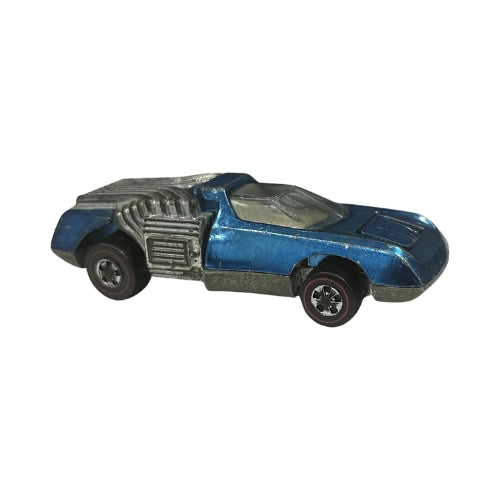
Start a Noodle Head inspection with the projecting exhausts, then compare the body and base together. A good paint photograph can leave a damaged pipe, an unclear casting detail or an altered component outside the frame. Ask for the views that answer those questions before deciding whether the particular car suits your collection.
The blue example in the featured photograph shows the curling exhausts beside the cockpit and the car’s low front body. It is useful for recognizing the shape. It does not show the complete underside or every exhaust end, so it cannot settle all the checks below.
Inspect the exhausts from both sides and above
Look along each visible pipe to its end. Compare the two sides for a missing tip, an unexpected bend, a rough join or an area hidden by glare. A close view of one side is helpful, but it leaves the other side unresolved.
Ask for an overhead photograph as well as level side views. The overhead angle shows how far the pipes extend beyond the body and whether one sits differently from the rest. If an area looks repaired, request a close-up and an explanation of any known work. An unclear mark should stay a question until the photograph or history explains it.
When handling a loose example, support the main body. Avoid lifting it by an exhaust or pressing the pipes against a storage divider. Photograph an existing bend or repair before attempting to change it; restoring the appearance would also change the condition you are trying to assess.
Compare the body triangle with the underside
The On-Line Redline Guide’s original comparison photographs document two useful U.S.–Hong Kong differences: the dots within the small triangular body detail and raised humps on the base. Its glazing and interior descriptions add a third comparison.
| Area | U.S. reference | Hong Kong reference | Useful photograph |
|---|---|---|---|
| Triangular body detail | Several dots | One dot | Sharp overhead close-up without a bright reflection across the triangle. |
| Base | No corresponding humps | Raised humps | Complete underside, followed by a closer view of the shape around the axle supports. |
| Glazing and seats | Clear glazing; white interior | Blue glazing; dark-brown or white interior | An angle that shows the seats as well as the glazing color. |
Match those observations to the country wording on the same car’s base. The body, base and interior need to make sense together. Replaced parts, repainting or previous disassembly can complicate the combination, so ask about them rather than treating one familiar feature as proof of an untouched original.
A hidden dot is not necessarily an absent dot. Change the light or request another angle before counting. If glare or dirt still hides the detail, leave it unresolved rather than filling the gap with a guess.
Keep the year claim separate from the physical inspection
Mattel’s 1968–2003 Vehicle List records 6000 Noodle Head under 1971 Hot Wheels. That supports a documented 1971 entry; it does not date every individual car or establish when a particular example was purchased.
If an offer is described as 1973, ask what that date refers to and what supports it. A seller’s title, a remembered purchase year, a copyright marking and a documented release are different kinds of information. Use the car and any original package together when judging the claim.
The Hot Wheels packaging guide explains how to inspect the vehicle, printed card, blister and added protector separately. A loose car photographed next to a card is not enough to connect the two.
Check condition beyond the paint and bright finish
Look through the cockpit glazing for scratches, cracks and visible seat details. Check every wheel and the areas where the axles sit, including the side away from the main photograph. Ask whether the car sits evenly and whether a rolling check has actually been made if that matters to your intended use.
Record paint loss separately from broken or repaired components. A worn car with complete pipes and a repainted car with repaired pipes can appeal to different collectors; they are different offers. No racing reputation or attractive color establishes the condition of the individual example.
An unusual combination also needs context. The guide to checking factory-error claims explains why a visible difference and its cause are separate questions. Request evidence for a factory-origin claim before treating a mismatched part as a special release.
Leave room around the exhausts when displaying the car
Measure the complete car’s length, height and widest point across the pipes. Compare those measurements with a case’s usable interior and its opening, allowing room to place and remove the car without touching the exhausts. Outside dimensions alone cannot establish the space available inside.

A clear case can make the whole outline visible, but a 1:64 label does not guarantee a fit. Check the exact case and car before ordering. Keep this display decision separate from the car’s identification: a case that fits does not establish the age or originality of its contents.
Questions before buying a Noodle Head
Can one body dot or a country inscription authenticate the whole car?
No. Compare the body detail, base shape, glazing and interior, then ask about repairs and replaced parts. A single observation can support the comparison without establishing the history of every component.
Does a 1970 copyright marking conflict with a 1971 release reference?
The original reference’s underside photographs show 1970 copyright wording, while Mattel’s list places Noodle Head in 1971. Record the copyright marking and the release reference separately; they answer different dating questions.
What if the pipes look bent but the photograph is unclear?
Ask for an overhead view and a close side view of that area. Keep the uncertainty in your buying decision if it remains unresolved. Do not assume that the bend will be easy to straighten without changing or damaging the part.
Does the empty case pictured here prove a Noodle Head fits?
No. The photograph illustrates a clear case, with no car inside. Confirm usable internal dimensions and clearance around your particular example’s exhausts before choosing a case.
Compare individual loose-car offers
Browse the loose Hot Wheels collection for current individually described cars. This is a multi-model category, not a promise that a Noodle Head is available. Open the exact listing to compare its photographs, contents, condition and current availability.
For year lists and more identification guidance, return to the collector guides.

