

Hot Wheels How To
Build Your Own Hot Wheels: DIY Kit & Parts Buying Guide
Build Your Own Hot Wheels buyer guide
Choose the right starting point: finished custom, DIY kit, or parts-only build.
A search for a Build Your Own Hot Wheels kit can mean three different purchases. You may want a prepared casting to paint and assemble, replacement wheels for a car you already own, or a completed custom that gives you the look without the workshop. Treat those as separate product types before you order anything.
Always use the individual product page for exact included parts, current stock and current price.
Which kind of custom Hot Wheels purchase do you need?
| Route | Best when | What to verify |
|---|---|---|
| Finished custom | You want a completed wheel-swapped or modified car ready to display. | Actual photos, casting, disclosed modifications, wheel/tire setup and condition. |
| DIY Hot Wheels kit | You want painting, detailing and assembly to be part of the hobby. | The exact pieces included with that casting and which wheels, paint, decals or tools are separate. |
| Parts-only build | You already own a donor and mainly want wheels, tires or another upgrade. | Wheel diameter, width, axle method and body clearance before buying. |
The biggest buying mistake is assuming a prepared DIY project includes every upgrade shown in another project. A DIY casting, a wheel set, tire-only parts and workshop supplies are separate purchases unless the listing explicitly says otherwise.
Compare real DIY Hot Wheels starting points
Pick a casting because you like the vehicle and can picture the finished build—not because one generic kit happens to be first in a search. Different body shapes change wheel clearance, stance and the amount of finishing work you may want to do.

Gasser wagon
1964 Chevy II Nova Gasser wagon
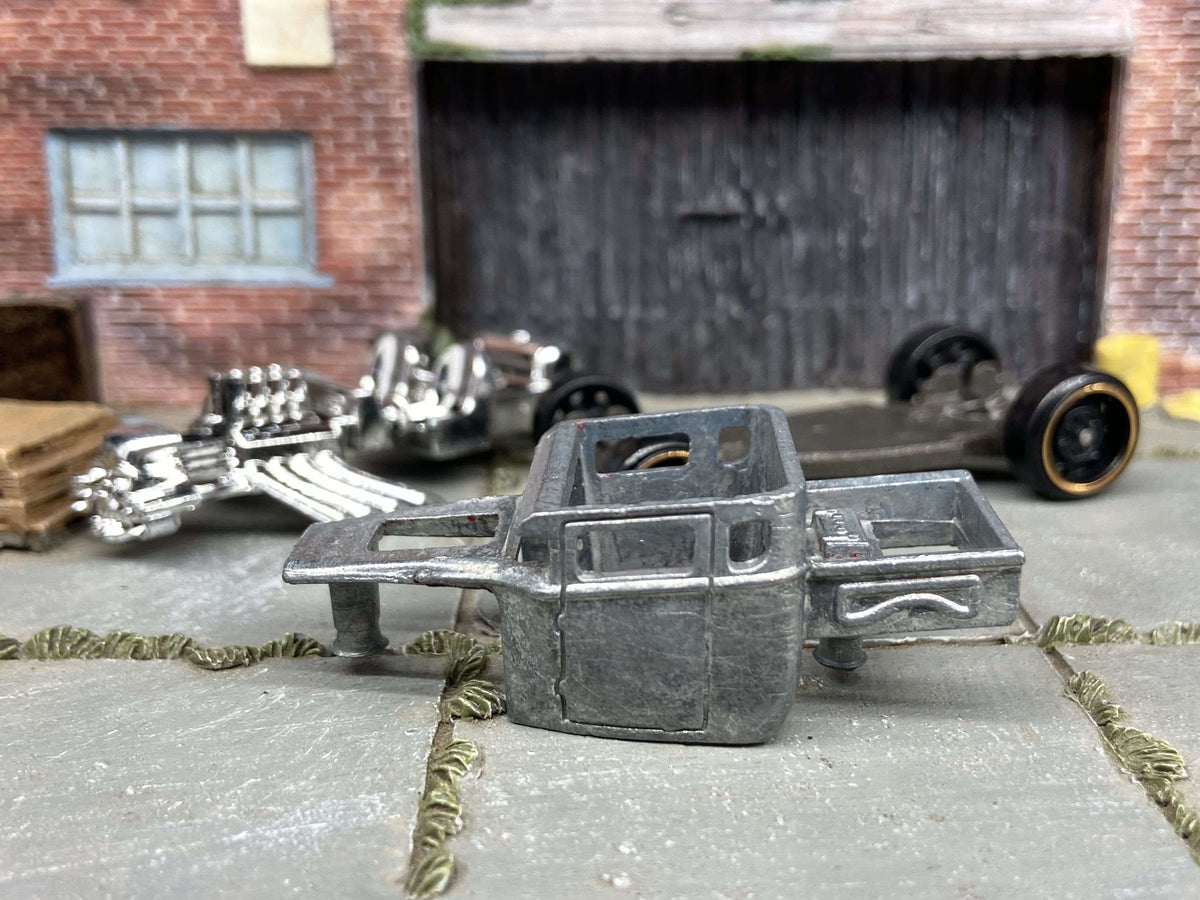
A prepared DIY project for a classic gasser-style project where paint, wheel choice and stance can all shape the result.

Truck project
2019 Ford Raptor DIY kit
A pickup/truck donor gives you a different ride-height and tire-clearance decision than a low car.

Muscle car
1967 Shelby GT500 DIY kit
A classic muscle-car shape for builders who want a more traditional street or race-inspired custom.

Modern muscle
2018 Challenger SRT Demon DIY kit
A modern muscle donor for a builder who wants a newer body style rather than a vintage gasser or classic pony car.
Browse the full Build Your Own Hot Wheels collection when you want to compare more castings before choosing the project.
Add wheels and tires after choosing the donor
Wheel style is easier to shop after you know the casting. Measure the complete tire diameter, wheel width and available axle span. Check front and rear independently; a gasser or drag-inspired build may not want the same diameter at both ends.

Wheel option
Red 10 mm 5-star wheel set
A matching 10 mm front/rear option. It is an example of a separate wheel purchase, not a component automatically bundled into every DIY kit.

Fitment guide
Replacement wheels & axles guide
Use the fitment guide before ordering when you need help comparing 10 mm, 12 mm, tire-only and axle requirements.
Parts to compare for a Nova Gasser Wagon project
Start with the 1964 Chevy II Nova Gasser Wagon DIY kit. Its current listing describes a stripped, ready-to-paint casting with a click-together design; custom wheels are sold separately.
- Prepared donor: read the kit’s current contents and assembly notes before choosing finishing supplies.
- Separate wheel option: the gold 5-spoke deep-dish wheel set supplies four wheels with fitted tires, two listed at 10 mm and two at 12 mm.
- Fit check: the kit’s listed 10 mm / 12 mm factory-wheel reference does not prove that this replacement set fits. Compare tire width, hub projection, axle dimensions and clearance before ordering.
Record those dimensions with the wheel-swap measurement worksheet, then compare other wheel and tire options. Keep paint, tools and any optional decoration in your project budget as separate purchases.
A practical first-build shopping plan
- Choose one casting. Start with the body style you actually want to display when finished.
- Read the exact kit contents. Note which original pieces are included and which upgrade parts are not.
- Pick a simple finish. One paint concept and one wheel setup are easier to diagnose than changing every feature at once.
- Measure before buying wheels. Compare front/rear diameter, width, axle span and assembled-body clearance.
- Dry-fit before finishing. Make sure the body, interior, base and wheels work together before fresh paint is at risk.
- Document the custom. Keep the donor identity and modifications with the car so it is never confused with a factory variation.
For the complete sequence from donor choice through paint and assembly, use How to Customize Hot Wheels. For the bench and supply checklist, use the Hot Wheels Customizing Starter Kit guide.
Not sure you want to build it yourself?

Finished custom
Mercedes AMG GT3 custom
A finished wheel-swapped car is the better route when you want the result but not the painting and assembly work.

Browse finished builds
Custom Hot Wheels collection
Compare current finished cars by casting, wheel style and actual product photos instead of committing to a DIY project.
Build Your Own Hot Wheels FAQs
Does a DIY Hot Wheels kit include wheels and tires?
Only if the individual listing expressly says so. Treat custom wheels, rubber tires, paint, decals and workshop tools as separate until the product page confirms otherwise.
Are DIY kits good for beginners?
They can be a manageable starting point because the donor is already selected and prepared for a project. A simple one-color finish and measured wheel choice keeps the first build easier to troubleshoot.
Can I use any 1:64 wheels?
No. Measure the donor and confirm wheel diameter, width, axle arrangement and assembled clearance.
Do I have to repaint the car?
No. If you already own a suitable donor and want to keep the original body finish, a wheel-only modification may be enough.
Can I buy a finished custom instead?
Yes. The finished custom Hot Wheels collection is the direct route when you want a completed car rather than a workshop project.
Start with the casting. Build the parts list around it.
A better DIY purchase starts with a car you want, then adds only the compatible wheels, tires and finishing supplies needed for that exact build.

