

Hot Wheels How To
Treasure Hunt vs. Super Treasure Hunt: Identification Guide
Use the correct year and the complete release—not one clue.
A regular Treasure Hunt and a Super Treasure Hunt are different releases. The identification language and packaging changed over time, so a flame graphic, rubber tire or shiny finish by itself is not proof.
Mattel’s official 2020 Super Treasure Hunt set history states that 12 Treasure Hunts were released in 1995. Modern identification rules should not be projected backward onto those first cars.
Start with the casting and dated release
Record the casting name, year or series, collector number, package region and visible color. Compare the exact version with a reliable dated reference. Packaging varies by era and market, and loose cars require more emphasis on the vehicle’s markings, wheels and known release details.
The carded 1998 3-Window ’34 below is identified as Treasure Hunt series #4 of 12 and collector #752. It belongs to an earlier Treasure Hunt context; it should not be relabeled a Super using later terminology.

Modern Super Treasure Hunt clues work together
For recent releases, compare the release-specific TH marking, Spectraflame finish and Real Riders wheels with the correct official or established reference. Supporting card clues may help, but no single symbol replaces the complete match.
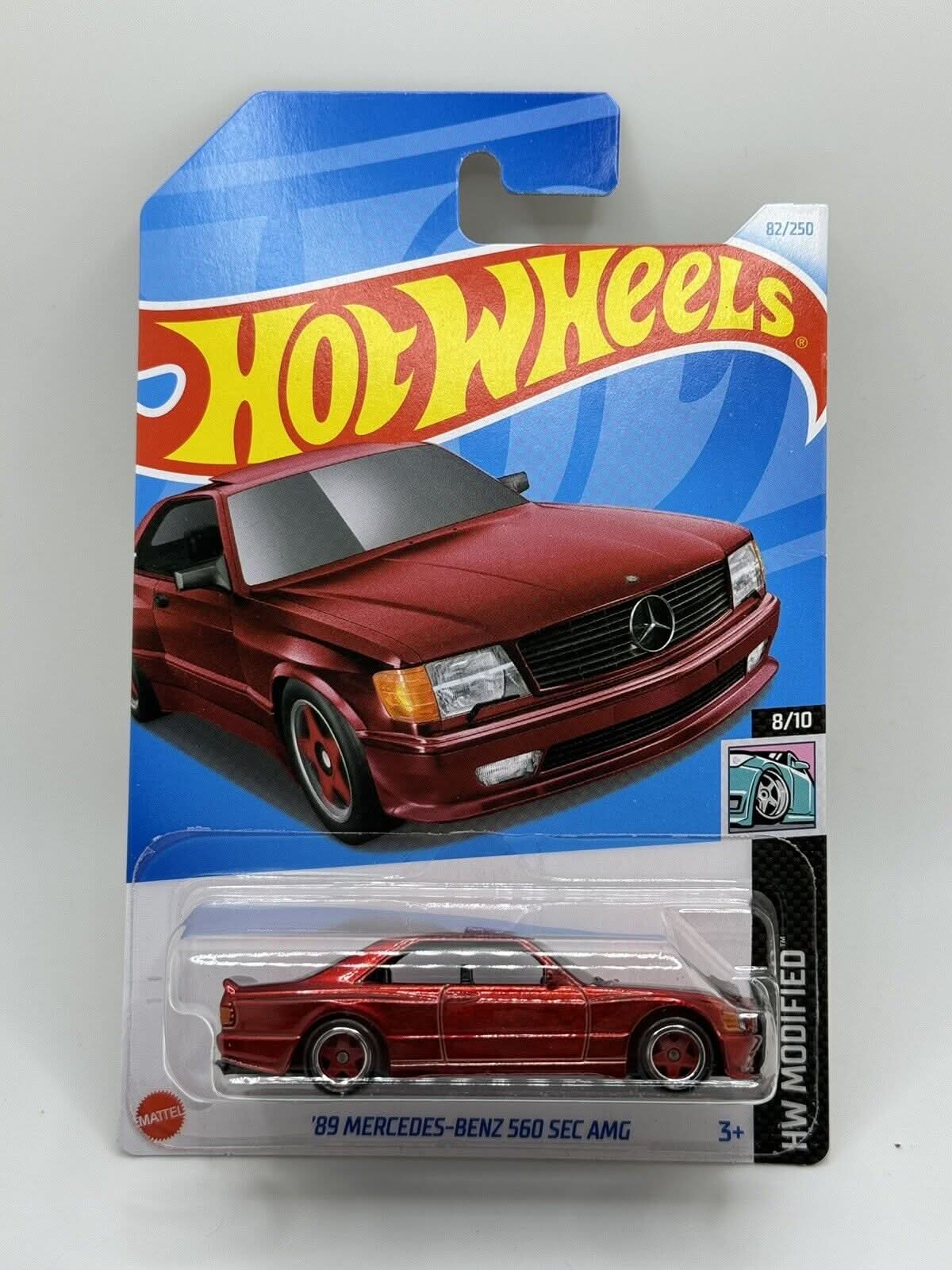
Mattel’s 2024 Super Treasure Hunt set documentation states that its 15 included cars have Spectraflame paint and Real Riders wheels and names the ’89 Mercedes-Benz 560 SEC AMG among them. That record confirms the defined 2024 release—not the originality of every similar Mercedes offered elsewhere.

Regular Treasure Hunts also require year-aware evidence
Modern regular Treasure Hunts may use the circle-flame symbol with standard-style paint and wheels, but confirm the exact dated variation. The 2013 Bad To The Blade listing identifies its series, collector number and X1756 toy number. The transparent Stockar listing identifies a 2014 Treasure Hunt variation and shows the actual loose car from three angles.


Separate originality, condition and value
First identify the factory release. Then assess whether the particular car remains original. Ask about repainting, replacement wheels, axle work, opened rivets, resealing and reproduction packaging. A custom with Spectraflame-inspired paint and rubber tires can resemble part of a Super’s appearance without becoming a factory Super Treasure Hunt.
Assess the car and package separately. Record card bends, blister cracks, lifting, repairs and disclosed resealing. A protector can help storage but does not prove the seal beneath it. Do not scratch paint, open packaging or damage a car to test it.
Only after identification and originality checks should you compare market evidence. Use recent sold examples of the same version and similar condition; do not treat an asking price as a completed sale.
A repeatable inspection order
- Identify casting and dated release.
- Compare release-specific markings and graphics.
- Compare finish, wheels and tires.
- Check card, blister or loose-car evidence.
- Investigate modifications and resealing.
- Document condition before discussing value.
For a structured printable process, the digital identification guide and value checklist is an educational download, not a physical car.
Compare known examples
Use the exact photographs and current description for every listed car. Collection membership alone is not proof of availability, originality or value.
Use three dated examples instead of one universal symbol rule
The current catalog provides three useful kinds of evidence. The 1998 3-Window ’34 is recorded as Treasure Hunt series #4/12, collector #752. Bad To The Blade is recorded as the 2013 HW Racing Track Aces regular Treasure Hunt, #124/250, toy X1756. The 2024 Mercedes Super is recorded with card #82/250 and HW Modified 8/10. These identifiers belong to their own releases; the numbering systems are not interchangeable.
| Question | Use the evidence for… |
|---|---|
| Which dated release is this? | The car, series, identifiers and year-specific reference together |
| Is this copy original? | Disclosed modifications and actual-car/package observations |
| What condition is it in? | Wear and damage on this copy, separately from chase category |
| What is it worth? | Matched completed transactions after identity and condition |
For the loose examples, package evidence is absent and the photographed vehicle matters more. For the carded Mercedes, do not infer a package grade or included protector: its current listing assigns no grade and excludes a separate protector. A correctly identified chase car can still have a worn card, damaged blister or changed parts. Keep those observations beside the release identity instead of letting the chase label answer every question.

