

Hot Wheels
Custom Hot Wheels Trucks: C10, F150 & Silverado DIY Build Guide
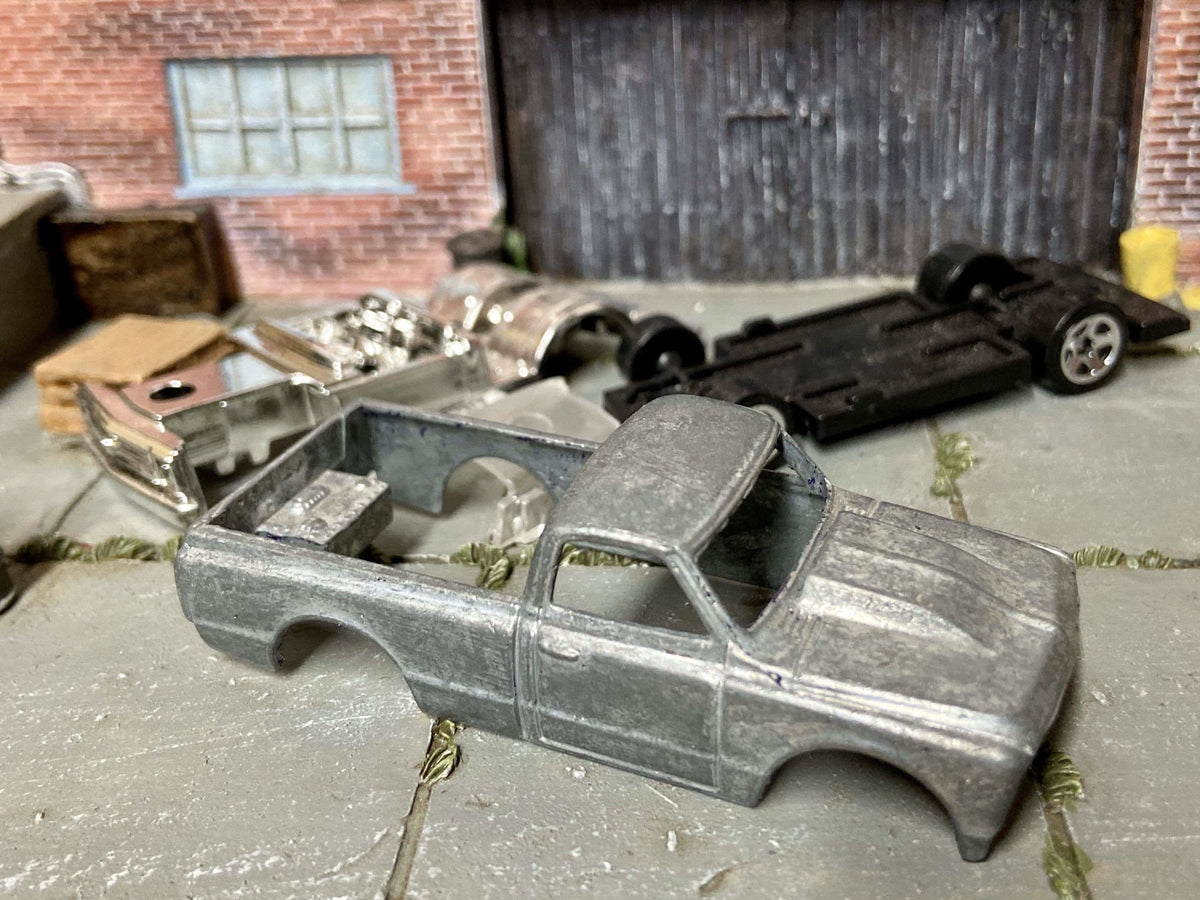
Build the pickup you want to see on your shelf.
A custom Hot Wheels truck can be a classic street pickup, a clean modern daily-driver display, or an off-road-inspired build. Start with the donor's body and base proportions, then choose a wheel setup that fits the actual truck.
The C10, F150 and Silverado examples below show why a pickup name or “1:64” label does not establish one universal tire size. Choose the casting first; measure before changing its stance.
Header photo: the linked bare-metal C10 donor. These are diecast build ideas, not motorized performance or working-suspension upgrade claims.
Compare three pickup DIY kits
Each listing describes a stripped, ready-to-paint project. Original wheel, window and interior details may vary as noted by the listing. Custom upgrade wheels, tires, axles and finishing supplies are separate unless explicitly included.

1967 Chevy C10
Choose a classic-pickup starting point. The kit lists a 10 mm / 12 mm wheel combination.
Check front and rear width and axle fit before choosing a staggered replacement set.
View the C10 kit
2015 Ford F150 4x4
A modern Ford pickup donor. Its listing specifies 10 mm / 10 mm wheel sizing.
Do not assume its larger-looking truck body needs larger tires than the C10.
View the F150 kit
2019 Silverado Trail Boss LT
Start an off-road-inspired display with the Silverado donor. The listing specifies 12 mm / 12 mm wheel sizing.
Compare tire width and clearance as well as the nominal diameter.
View the Silverado kitThe numbers above reproduce each donor listing's sizing guidance; they are not independent measurements of every release or a guaranteed match to any aftermarket set. Product pages provide current price and stock.
Decide on the truck's stance before changing parts
| Display style | Plan first | Avoid |
|---|---|---|
| Clean street pickup | A coherent wheel finish, centered tires and a balanced side profile. | Wheels pushed against the body solely to make them look tucked. |
| Low-looking custom | Body-to-wheel proportions and clearance in the assembled model. | Calling smaller tires a complete suspension conversion. |
| Off-road-inspired display | Tire profile, wheel-opening space and the base's actual geometry. | Oversized tires that bind or an unsupported claim of better off-road performance. |
Front and rear tire size are only part of the look. The axle mounting position and body/base relationship also matter. Evaluate the assembled truck from the side rather than choosing tires from an isolated product photo.
Five fitment checks for a custom pickup
- Measure the actual donor. Record tire outside diameter, width and axle spacing separately at the front and rear.
- Inspect the underside. Locate axle channels and the retention method. Cab and bed styling do not reveal how the base is assembled.
- Compare the replacement hub and axle. Make sure the wheel can be secured while retaining clearance to rotate. The correct-looking tire does not fix an incompatible hub.
- Check body and chassis contact. Look at fenders, steps, inner wheel faces and any detail near the rotating assembly. Seat the body and interior before deciding the fit is complete.
- Roll-test and inspect from both sides. A wheel that wobbles, an axle that sits crooked or a tire that lifts off the surface needs diagnosis before final fastening.
The wheel-swap troubleshooting guide gives more checks for rubbing and poor rolling. Small parts and cutting or drilling require adult handling, suitable protection and a secured workpiece.
Use paint and details to make the pickup yours
Choose a restrained first finish: one body color with selected trim or a simple two-color idea you can practice. Check compatibility among the surface preparation, primer, paint and any clear coat. Follow the products' instructions rather than using one universal curing schedule.
Keep finish buildup off mating surfaces and away from moving parts. Dry-fit the truck before painting, then inspect again after the finish is ready for assembly. For the sequence, read the step-by-step Hot Wheels build guide.
Bed accessories, custom chassis and other modifications require their own fitment plan. This article does not advertise motors, working suspension kits or custom-fit interiors as included products. Buy only components documented by the chosen listing.
Prefer a finished custom truck?
Browse finished custom Hot Wheels and check the individual casting and photos. A DIY kit needs finishing and assembly; it is not the completed truck pictured in an unrelated custom listing.
Custom Hot Wheels truck FAQs
Do all pickup castings use the same wheels?
No. The three donor listings above specify different front/rear size combinations. Compare your exact truck's measurements and axle arrangement.
Can larger tires give my truck a lifted appearance?
They can change the proportions, but they also change clearance. Do not equate a larger tire with a complete or working suspension modification.
Do the kits include custom rubber-tire wheels?
No blanket inclusion is made. Check the donor's stated original components; custom wheel, tire and axle upgrades are separate unless expressly listed.
Can I build a low-looking truck without body cutting?
It depends on the donor and the result you want. Compare the original geometry and suitable wheel options before committing to irreversible modifications.
Where do I ask about a particular replacement set?
Send the truck's casting name, base photos and measurements along with the product you are considering.
Choose the pickup. Then choose the parts.
Review the DIY kit contents guide before adding separately required tools and finishing supplies.
Truck build resource path
For the 1967 C10 specifically, use the 1967 Chevy C10 DIY guide. For the larger workflow, read Make Your Own Hot Wheels, then shop DIY kits and wheels and rubber tires.

